-
 Space Forge Tests World’s First Commercial Semiconductor Factory in Space12 January 2026
 -
NASA’s Expedition 73: Astronauts Study Brain, Balance, and Immunity on ISS24 August 2025
-
Axiom Mission 4 Successfully Docks on International Space Station; Shubhanshu Shukla Becomes First Indian to Reach Milestone26 June 2025
-
NASA-ISRO Launch Joint Space Biology Experiments on Axiom Mission 48 June 2025
-
NASA Studies Flame and Combustion in Space to Understand Effect of Microgravity19 April 2025
- Home
- Science
- Science News
- ISS Microgravity Experiment Reveal How Particles Behave Without Gravity
ISS Microgravity Experiment Reveal How Particles Behave Without Gravity
ISS microgravity experiments reveal how particles cluster, helping science on Earth and future space missions.
Written by Gadgets 360 Staff | Updated: 29 December 2025 23:00 IST
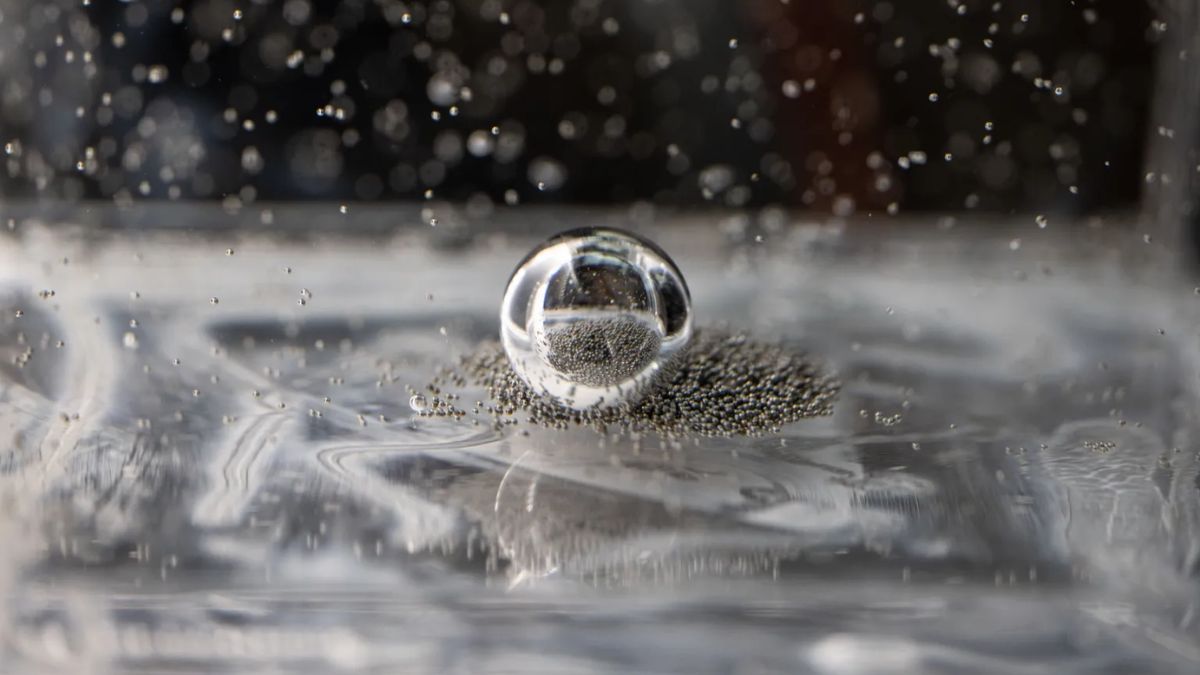
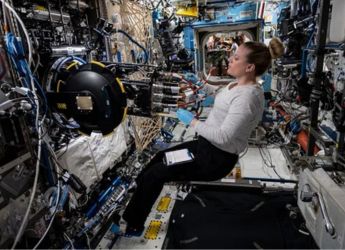
Photo Credit: NASA/Zena Cardman
Particles floating and clustering during a microgravity experiment aboard the ISS.
Click Here to Add Gadgets360 As A Trusted Source


Advertisement
Scientists studying physics in microgravity aboard the International Space Station are gaining fresh insights into how tiny particles behave when gravity is almost absent. In a recent experiment inside the station's Destiny laboratory, small metal ball bearings were placed in a thick fluid and shaken at different speeds. Without gravity dragging them down, the particles started clustering in unexpected ways. This simple arrangement, researchers say, offers a glimpse of hitherto hidden physical rules that are difficult to observe on Earth, where gravity always prevails over motion and structure.
NASA Microgravity Experiment Reveals How Particles Cluster and Flow in Space
According to a NASA research report, Fluid Particles, was conducted in the Microgravity Science Glovebox, a sealed work area that enables crew members to safely handle delicate investigations. A container of viscous fluid mixed with embedded particles was subject to oscillating forces, and researchers observed the way that particles clumped together and formed larger patterns when gravity didn't get in the way.
Observing particle behaviour in microgravity aids spacecraft fire safety, reduces lunar dust hazards, and supports controlled soil and water use for space habitats.
Microgravity Insights Offer Earth Benefits and Aid Future Moon–Mars Missions
Findings help Earth studies, reflecting pollen spread, algae blooms, plastics, and sea-salt storms as forces are isolated for climate research in microgravity.
Beyond immediate applications, this research is supporting long-term mission planning for Artemis Moon missions and human Mars missions, as the knowledge of microgravity physics helps astronauts for safe, extended space living and work.
Comments
Get your daily dose of tech news, reviews, and insights, in under 80 characters on Gadgets 360 Turbo. Connect with fellow tech lovers on our Forum. Follow us on X, Facebook, WhatsApp, Threads and Google News for instant updates. Catch all the action on our YouTube channel.
Related Stories




Advertisement
Follow Us




-
05:05
Goboult Mustang Racer Smartwatch Review: Should You Get This Mustang Smartwatch? -
04:58
OnePlus Nord Buds 4 Pro Review: Specs, Sound Quality, ANC, and Battery Backup Tested -
02:29
[Sponsored] Samsung Galaxy S26 Ultra First Look: AI Smartphone for Creators, Gaming & Productivity -
04:25
Vivo X200T Review - Full Camera, Gaming & Battery Test | Worth Buying? -
28:31
The Future of Productivity: Logitech's Anatoliy Polyanker On AI, Hybrid Work, And India's Tech Boom
Advertisement
Popular on Gadgets
- Samsung Galaxy Unpacked 2026
- iPhone 17 Pro Max
- ChatGPT
- iOS 26
- Laptop Under 50000
- Smartwatch Under 10000
- Apple Vision Pro
- Oneplus 12
- OnePlus Nord CE 3 Lite 5G
- iPhone 13
- Xiaomi 14 Pro
- Oppo Find N3
- Tecno Spark Go (2023)
- Realme V30
- Best Phones Under 25000
- Samsung Galaxy S24 Series
- Cryptocurrency
- iQoo 12
- Samsung Galaxy S24 Ultra
- Giottus
- Samsung Galaxy Z Flip 5
- Apple 'Scary Fast'
- Housefull 5
- GoPro Hero 12 Black Review
- Invincible Season 2
- JioGlass
- HD Ready TV
- Latest Mobile Phones
- Compare Phones
Latest Gadgets
- Nord 6
- Honor X80i
- Honor Play 80 Pro
- Redmi Note 15 SE 5G
- Redmi A7 Pro
- OPPO K15 Pro
- OPPO K15 Pro+
- Lava Bold N2 Lite
- Xiaomi Book Pro 14
- MacBook Neo
- Vivo Pad 6 Pro
- Lenovo Legion Y700 Gen 5
- boAt Valour Watch 1R
- Xiaomi Watch S5
- Xiaomi QLED TV X Pro 75
- Haier H5E Series
- Asus ROG Ally
- Nintendo Switch Lite
- Haier 1.6 Ton 5 Star Inverter Split AC (HSU19G-MZAID5BN-INV)
- Haier 1.6 Ton 5 Star Inverter Split AC (HSU19G-MZAIM5BN-INV)

- About Us
- Sitemaps
- Feedback
- Archives
- Contact Us
- RSS
- Advertise
- Career
- Privacy Policy
- Ethics
- Editorial Policy
- Terms & Conditions
- Complaint Redressal
Download Our Apps
Available in Hindi
© Copyright Red Pixels Ventures Limited 2026. All rights reserved.