- Home
- Science
- Science News
- The Next Space Frontier May Be Just 100 km Above Earth, Not the Moon or Mars
The Next Space Frontier May Be Just 100 km Above Earth, Not the Moon or Mars
Very low Earth orbit satellites could reduce space crowding while delivering faster data and sharper images.
Written by Gadgets 360 Staff | Updated: 5 January 2026 22:37 IST
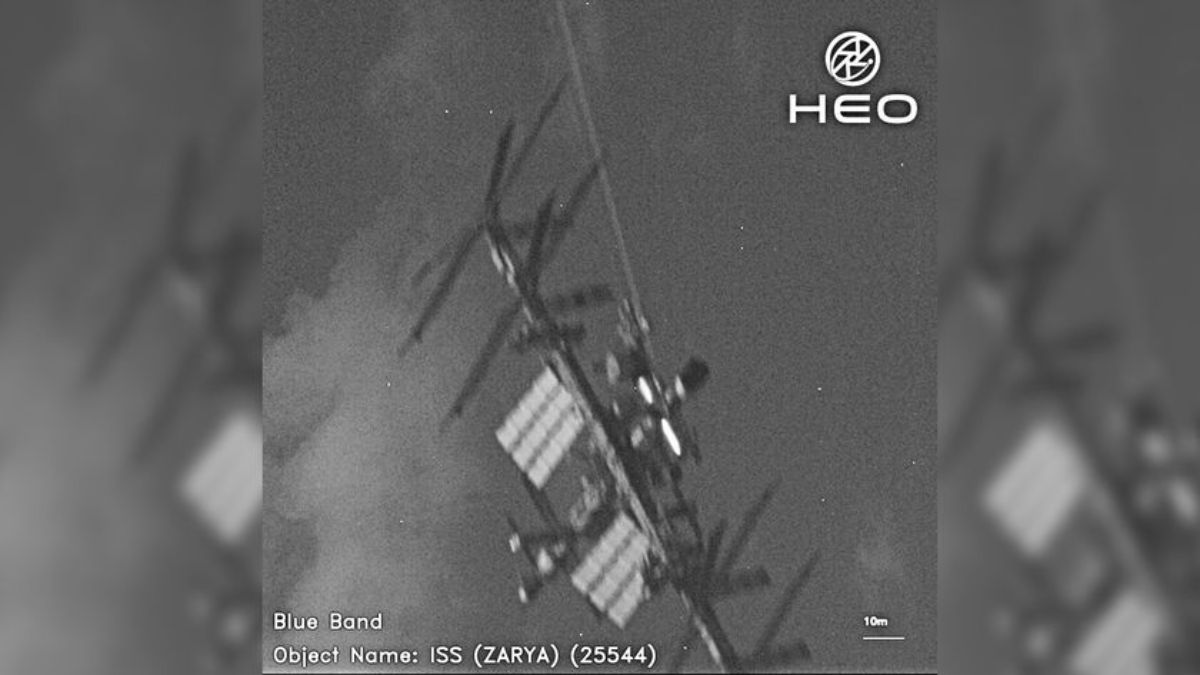
Photo Credit: Space
Very low Earth orbit satellites operate close to Earth, offering clearer images and faster communication.
Click Here to Add Gadgets360 As A Trusted Source


Advertisement
The next phase in space is playing out considerably closer to Earth than many may think, as researchers and companies set their sights on very low Earth orbit, or VLEO. With almost 15,000 satellites already orbiting the Earth, most in low-Earth orbit, a few hundred to 2,000 kilometres high, congestion is increasingly an issue. Large constellations of satellites are beginning to clutter orbit, heightening risks; and VLEO, adjacent to Earth's atmosphere 100–400 km above the surface, becomes a viable alternative with scientific and commercial advantages.
Very Low Earth Orbit Satellites Promise Sharper Imaging, Faster Connectivity, and Improved Climate Monitoring
According to a report published by The Conversation and shared via Space.com's Expert Voices, VLEO satellites can deliver clearer images, faster communication, and improved weather data because they operate much closer to Earth's surface.
Making satellites fly closer to the ground enhances agriculture, disaster response, climate monitoring, and security by capturing sharper details and reducing signal lag for smoother real-time services.
New Propulsion Breakthroughs Could Unlock the Future of Satellites Flying Closer to Earth
The primary hurdle has been atmospheric drag, as remnants of Earth's atmosphere slow satellites and tug them out of orbit. To stay in orbit, spacecraft must continuously push forward, which quickly drains fuel in conventional systems.
New propulsion concepts are altering that equation. Engineers are testing systems fuelled by atmospheric gases, keeping satellites airborne longer and operating safely in this demanding region.
Despite extreme heat and corrosive atomic oxygen challenges, rising investment and billions in funding could soon make everyday services rely on closer-flying VLEO satellites.
Comments
Get your daily dose of tech news, reviews, and insights, in under 80 characters on Gadgets 360 Turbo. Connect with fellow tech lovers on our Forum. Follow us on X, Facebook, WhatsApp, Threads and Google News for instant updates. Catch all the action on our YouTube channel.
Further reading:
VLEO, Low earth orbit, Satellites, space technology, atmospheric drag, Space Science


Advertisement
Follow Us




-
04:25
Vivo X200T Review - Full Camera, Gaming & Battery Test | Worth Buying? -
28:31
The Future of Productivity: Logitech's Anatoliy Polyanker On AI, Hybrid Work, And India's Tech Boom -
04:46
Infinix Note Edge 5G Review | Budget 5G Phone With Premium Features? -
04:54
Redmi Note 15 Review: Features, Specifications, Pros, Cons, And Everything Else -
04:38
Realme 16 Pro Review | Camera, Performance & Battery Test | Best Mid-Range Phone?
-
50MP कैमरा, 7200mAh बैटरी के साथ Vivo T5x 5G भारत में लॉन्च, जानें
-
दुनिया का पहला रोबोट गिरफ्तार? महिला को डराया, फिर पुलिस ने क्या किया
-
Samsung Galaxy M17e 5G भारत में लॉन्च: 6000mAh बैटरी के साथ गजब फीचर्स
-
11 हजार सस्ता खरीदें Oppo का 7000mAh बैटरी वाला फोन! Flipkart ने कर दिया धमाका
-
अनलिमिटेड इंटरनेट, 22 से ज्यादा OTT और कॉलिंग वाले ब्रॉडबैंड प्लान, सिर्फ 1 रिचार्ज में मिलेगा सबकुछ
Advertisement
Popular on Gadgets
- Samsung Galaxy Unpacked 2026
- iPhone 17 Pro Max
- ChatGPT
- iOS 26
- Laptop Under 50000
- Smartwatch Under 10000
- Apple Vision Pro
- Oneplus 12
- OnePlus Nord CE 3 Lite 5G
- iPhone 13
- Xiaomi 14 Pro
- Oppo Find N3
- Tecno Spark Go (2023)
- Realme V30
- Best Phones Under 25000
- Samsung Galaxy S24 Series
- Cryptocurrency
- iQoo 12
- Samsung Galaxy S24 Ultra
- Giottus
- Samsung Galaxy Z Flip 5
- Apple 'Scary Fast'
- Housefull 5
- GoPro Hero 12 Black Review
- Invincible Season 2
- JioGlass
- HD Ready TV
- Latest Mobile Phones
- Compare Phones
Latest Gadgets
- Poco X8 Pro 5G
- Poco X8 Pro Max 5G
- OPPO K14 5G
- OPPO Find N6
- Vivo T5x 5G
- Samsung Galaxy M17e 5G
- Lava Bold 2 5G
- Motorola Edge 70 Fusion+
- MacBook Neo
- MacBook Pro 16-Inch (M5 Max, 2026)
- Tecno Megapad 2
- Apple iPad Air 13-Inch (2026) Wi-Fi + Cellular
- OPPO Watch X3
- Tecno Watch GT 1S
- Xiaomi QLED TV X Pro 75
- Haier H5E Series
- Asus ROG Ally
- Nintendo Switch Lite
- Haier 1.6 Ton 5 Star Inverter Split AC (HSU19G-MZAID5BN-INV)
- Haier 1.6 Ton 5 Star Inverter Split AC (HSU19G-MZAIM5BN-INV)

- About Us
- Sitemaps
- Feedback
- Archives
- Contact Us
- RSS
- Advertise
- Career
- Privacy Policy
- Ethics
- Editorial Policy
- Terms & Conditions
- Complaint Redressal
Download Our Apps
Available in Hindi
© Copyright Red Pixels Ventures Limited 2026. All rights reserved.