- Home
- Science
- Science News
- Scientists Unveil Screen That Produces Touchable 3D Images Using Light Activated Pixels
Scientists Unveil Screen That Produces Touchable 3D Images Using Light-Activated Pixels
Scientists at UC Santa Barbara have developed an optotactile display that uses light-powered pixels to create 3D images you can both see and physically feel, opening the door to immersive touch-based digital interfaces.
Written by Gadgets 360 Staff | Updated: 8 December 2025 23:15 IST
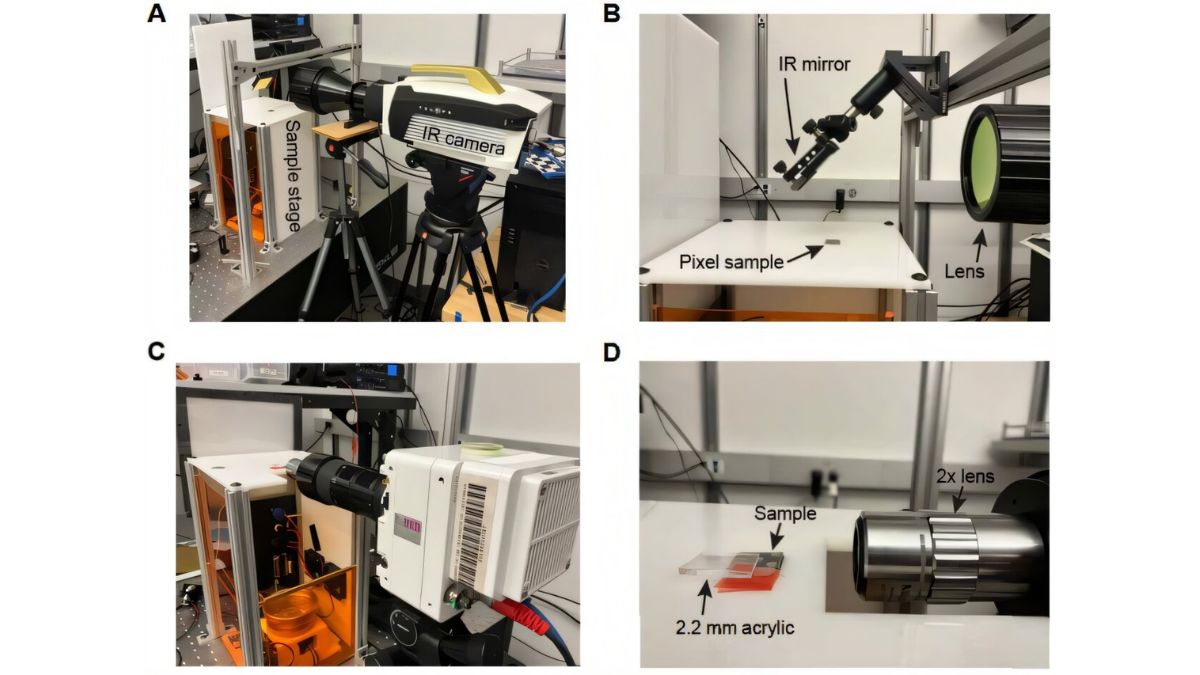
Photo Credit: Science Robotics (2025)
Optotactile display enables touchable 3D graphics using light-driven physical pixels
Click Here to Add Gadgets360 As A Trusted Source


Advertisement
Researchers at UC Santa Barbara have created a display technology that produces 3D graphics you can feel as well as see. The system uses a thin screen of tiny “optotactile” pixels: each pixel contains a light-activated film that heats trapped air and bulges into a bump when illuminated. This approach lets the same light provide both image and touch, hinting at new interfaces – from car dashboards to smartphones and smart walls – that blend sight and touch.
How It Works
According to the Science Robotics report, each optotactile pixel contains a tiny air cavity topped by a light-absorbing film. When a quick laser pulse heats the film, the trapped air rapidly expands and pushes the surface outward by about 1 mm. A fast-scanning laser beam then powers and addresses pixels one by one, creating dynamic visual-tactile animations without any internal wiring. The team built a prototype with over 1,500 pixels; in tests, people could locate and follow moving bumps precisely.
Applications and Outlook
The team sees a lot of potential for this technology. Just think about it: car touchscreens could give you a feeling like you're pressing actual buttons, while e-books could feature illustrations that you can actually feel beneath your fingers. Designers are also dreaming up smart walls and surfaces in buildings or VR spaces that react to touch. Although it's still just a prototype in the lab, this development hints at a future where digital images have a real texture – as Yon Visell, who led the research, puts it, a world where “anything you see, you can also feel.”
Comments
Get your daily dose of tech news, reviews, and insights, in under 80 characters on Gadgets 360 Turbo. Connect with fellow tech lovers on our Forum. Follow us on X, Facebook, WhatsApp, Threads and Google News for instant updates. Catch all the action on our YouTube channel.
Further reading:
optotactile, 3d display, touch tech, haptics, smart screens, vr tech, tactile ui, light pixels, future gadgets, ar devices


Advertisement
Follow Us




-
01:15
[Sponsored] Galaxy Tab S10 Lite for Students: Notes, Solve Math and More -
04:17
[Sponsored] LG NANO 4K UHD AI TV NU885: Gemini Search, Dolby Atmos & 5 Years of Updates -
00:57
[Sponsored] Samsung Galaxy Z Fold8 My Fan Cam in Action: Find the Moment, Then Share It -
01:41
[Sponsored] What Do You Need To Know Before Your Next Run? | Samsung Galaxy Watch Ultra2 -
01:32
[Sponsored] Big Day Tomorrow? Prep Today | Samsung Galaxy Watch Ultra2
-
X पर वीडियो पोस्ट करके जीतें 2.83 लाख रुपये, किकस्टार्ट बोनस शुरू, जानें
-
6500mAh बैटरी वाला फोन Amazon Sale में ₹15 हजार से भी सस्ता हुआ
-
Oura Ring 5 लॉन्च, हेल्थ और मेडिकेशन दोनों की ट्रैकिंग, 7 दिन चलेगी बैटरी
-
Amazon Great Indian Sale 2026 में ₹35 हजार रेंज में मिल रहे iQOO, Samsung, OnePlus धांसू फोन, 8000mAh तक बैटरी
-
HMD लाया सीनियर सिटिजन के लिए खास फ्लिप फोन, आइकोनिक डिजाइन और लेटेस्ट फीचर्स
Advertisement
Popular on Gadgets
- Samsung Galaxy S26 Ultra
- Motorola Razr Fold
- ChatGPT
- OPPO Find N6
- Mobiles Under Rs. 40,000
- Vivo X300 Ultra
- Asus Zenbook S14
- iQOO 15
- Vivo X300 Pro
- Lenovo Yoga Slim 7i Aura Edition
- iQOO 15R
- Vivo X Fold 5
- Sony PlayStation 5
- HP OmniPad 12
- OnePlus Nord CE 6 Lite
- OnePlus Pad 4
- OPPO F33 Pro 5G
- Cryptocurrency
- HP OmniBook Ultra 14 (2026)
- iPhone 17
- Eureka Forbes AP 355 Room Air Purifier
- Latest Mobile Phones
- Compare Phones
Latest Gadgets
- HMD 2660 Flip Senior Edition
- Lava Aura Curve
- Poco X8s
- Samsung Galaxy F70 5G
- Tecno Spark 50S 5G
- Vivo Y600s Pro
- Vivo Y32 (2026)
- Infinix Smart 20 HD
- Acer TravelLite TL44-53M-G2
- HP ZBook Ultra G3a
- Amazon Alexa Tablet 8
- Amazon Alexa Tablet 11
- Pebble Qore 2
- Amazfit T-Rex Dual Solar
- Toshiba 65-Inch 4K Ultra HD Smart Mini LED QLED TV (65Z670SP)
- Haier M70 Mini LED 65-inch
- Acer Predator Atlas 8
- Asus ROG Ally
- Blue Star 1.5 Ton 5 Star Inverter Split AC (IE518ZNURS)
- Blue Star 2 Ton 3 Star Inverter Window AC (WIE324L)

- About Us
- Sitemaps
- Feedback
- Archives
- Contact Us
- RSS
- Advertise
- Career
- Privacy Policy
- Ethics
- Editorial Policy
- Terms & Conditions
- Complaint Redressal
Download Our Apps
Available in Hindi
© Copyright Red Pixels Ventures Limited 2026. All rights reserved.