- Home
- Science
- Science News
- Viruses and Bacteria Evolve Differently in Space, ISS Study Finds
Viruses and Bacteria Evolve Differently in Space, ISS Study Finds
ISS experiments show microgravity changes virus-bacteria evolution.
Written by Gadgets 360 Staff | Updated: 19 January 2026 18:34 IST
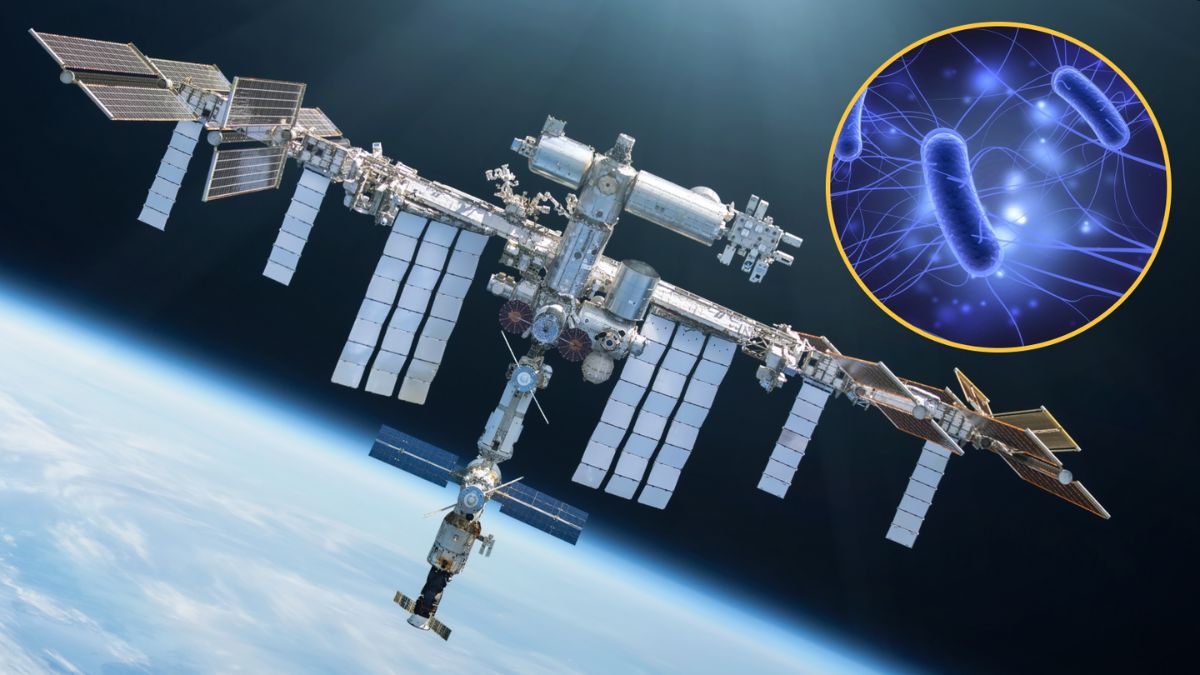
Photo Credit: Wikimedia commons
ISS study finds virus-bacteria interactions behave differently in microgravity than on Earth
Click Here to Add Gadgets360 As A Trusted Source


Advertisement
Astronomers discovered that when viruses infected bacteria were dropped to the International Space Station (ISS), they reacted and grew differently than on Earth. This study was led by Phil Huss, who examined how microgravity affects the dynamics of virus and bacteria in space. These findings are quite notable as they tell us that the tiniest evolutionary processes can be changed by the unique space environment, and offer information for both space biology and the health of humans on our planet.
How the Experiment Conducted
As per Science Daily, Scientists used T7 phages, a type of virus which infects E.coli bacteria and then checked the interactions among them in space with the same experiment held on Earth. The nature and timeline of the infection was completely different on Earth and Space. These differences are linked to how microgravity creates an influence on the bacteria. Also this affects the physical dynamism of the viruses when staying on the host.
Through genome sequencing, researchers found genetic mutations in both viruses and bacteria when interacting on space and Earth separately. The viruses in space developed the ability to attach to the bacterial cells, whereas the bacteria in space adapted the mutations that might help them to resist the infection of the viruses and survive in microgravity milieu.
More Insights on the Adaptations
Further, using deep mutational scanning it was found that there is a difference in the receptor binding protein of the virus that locks onto the bacteria to facilitate infection. Some of these changes were found in the enhanced activity of the drug resistant E. coli strains which suggests that the study of virus evolution in space can help in the phage therapies on Earth.
In a nutshell, the study focuses on how microgravity interaction of viruses and bacteria can help in the study of phage therapies on Earth too and this could be helpful for antibiotic resistance.
Comments
Get your daily dose of tech news, reviews, and insights, in under 80 characters on Gadgets 360 Turbo. Connect with fellow tech lovers on our Forum. Follow us on X, Facebook, WhatsApp, Threads and Google News for instant updates. Catch all the action on our YouTube channel.


Advertisement
Follow Us




-
04:17
[Sponsored] LG NANO 4K UHD AI TV NU885: Gemini Search, Dolby Atmos & 5 Years of Updates -
00:57
[Sponsored] Samsung Galaxy Z Fold8 My Fan Cam in Action: Find the Moment, Then Share It -
01:41
[Sponsored] What Do You Need To Know Before Your Next Run? | Samsung Galaxy Watch Ultra2 -
01:32
[Sponsored] Big Day Tomorrow? Prep Today | Samsung Galaxy Watch Ultra2 -
04:37
[Sponsored]: CP PLUS CarKam CP-F89B: 4K Dashcam With Rear Camera, GPS & Emergency Recording
-
iPhone 16 आज भी Amazon सेल में मिल रहा ₹15 हजार से ज्यादा सस्ता
-
OnePlus 15 को Amazon Great Indian Festival Sale में खरीदें सस्ता
-
₹2250 सस्ता मिल रहा Motorola का 7000mAh बैटरी वाला फोन! Flipkart पर ऑफर
-
Flipkart Sale में ₹14000 सस्ता मिल रहा Vivo का 50MP कैमरा, 9020mAh बैटरी वाला फोन
-
Redmi K100 के जल्द लॉन्च की तैयारी, 6.83 इंच डिस्प्ले
Advertisement
Popular on Gadgets
- Samsung Galaxy S26 Ultra
- Motorola Razr Fold
- ChatGPT
- OPPO Find N6
- Mobiles Under Rs. 40,000
- Vivo X300 Ultra
- Asus Zenbook S14
- iQOO 15
- Vivo X300 Pro
- Lenovo Yoga Slim 7i Aura Edition
- iQOO 15R
- Vivo X Fold 5
- Sony PlayStation 5
- HP OmniPad 12
- OnePlus Nord CE 6 Lite
- OnePlus Pad 4
- OPPO F33 Pro 5G
- Cryptocurrency
- HP OmniBook Ultra 14 (2026)
- iPhone 17
- Eureka Forbes AP 355 Room Air Purifier
- Latest Mobile Phones
- Compare Phones
Latest Gadgets
- Samsung Galaxy F70 5G
- Tecno Spark 50S 5G
- Vivo Y600s Pro
- Vivo Y32 (2026)
- Infinix Smart 20 HD
- Vivo V80
- Vivo S2 FE
- Vivo Y600K Turbo
- HP ZBook Ultra G3a
- Dell Pro Rugged 14
- Amazon Alexa Tablet 8
- Amazon Alexa Tablet 11
- Amazfit T-Rex Dual Solar
- OPPO Watch S2
- Toshiba 65-Inch 4K Ultra HD Smart Mini LED QLED TV (65Z670SP)
- Haier M70 Mini LED 65-inch
- Acer Predator Atlas 8
- Asus ROG Ally
- Blue Star 1.5 Ton 5 Star Inverter Split AC (IE518ZNURS)
- Blue Star 2 Ton 3 Star Inverter Window AC (WIE324L)

- About Us
- Sitemaps
- Feedback
- Archives
- Contact Us
- RSS
- Advertise
- Career
- Privacy Policy
- Ethics
- Editorial Policy
- Terms & Conditions
- Complaint Redressal
Download Our Apps
Available in Hindi
© Copyright Red Pixels Ventures Limited 2026. All rights reserved.