-
 Does Temple's Wearable Really Track Brain Blood Flow? Deepinder Goyal's Startup Shares Early Findings8 September 2026
 -
Subway Surfers, Stick Merge, Hill Climb: Top 10 Free Poki Games You Can Play Online for Free18 October 2025
-
2,100-Year-Old Temple Discovered in Egypt Hidden in Cliff Face, Reveals Carvings of Ancient Gods3 December 2024
-
Apple Arcade Adds Temple Run: Legends, Vampire Survivors+ and a Vision Pro Spatial Title in August10 July 2024
-
Apple Arcade Gets 20 New Games, Including an Exclusive TMNT Splintered Fate5 May 2023
- Home
- Wearables
- Wearables News
- Temple Wearable Enters Early Access: Zomato Co Founder Deepinder Goyal Says First 100 Units Ready to Ship
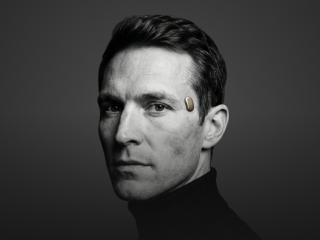
Temple Wearable Enters Early Access: Zomato Co-Founder Deepinder Goyal Says First 100 Units Ready to Ship
The device is worn on the temple and the company claims that it is designed to capture more accurate physiological signals than wrist-based trackers.
Written by Sucharita Ganguly | Updated: 5 May 2026 19:31 IST

Photo Credit: Temple
Goyal says the first 100 Temple units are ready are ship
Click Here to Add Gadgets360 As A Trusted Source

Advertisement
Deepinder Goyal has announced early access for Temple, a new wearable focused on tracking physical and cognitive health. The device is designed to be worn on the side of the head and aims to offer deeper insights into human physiology than traditional fitness trackers. The company is now inviting a select group of users to test the product. The rollout targets individuals who prioritise long-term performance, recovery, and overall well-being. Notably, Temple is based on Goyal's gravity ageing hypothesis, which links long-term gravity effects to reduced brain blood flow, though the idea remains debated within the medical community.
How to Apply for Early Access to the Upcoming Temple Wearable
According to posts shared by Deepinder Goyal on X, Temple is now open for early access applications through its official website. Goyal said the first 100 units are ready to ship. The company plans to onboard a limited group of users, including athletes, scientists, founders, doctors, and creators.
Hello world. The first 100 Temples are ready to ship. We're now inviting athletes, scientists, founders, doctors, creators, and individuals who care deeply about their physical and cognitive health to be the founding users of Temple.
— Deepinder Goyal (@deepigoyal) May 5, 2026
Apply for early access at… pic.twitter.com/aljDp0iKVi
Goyal added that the goal is to gather detailed feedback from users who can help shape the product's development. Selected users may also get an opportunity to participate in a future funding round.
Temple is positioned as a precision wearable that focuses on training, recovery, work, and sleep. Unlike wrist-based devices, it is worn on the temple area of the head. The company claims this placement allows the device to capture cleaner and richer physiological signals due to thin skin, high blood flow, and reduced motion in that region. However, these claims are yet to be independently validated.
Goyal has previously shared early comparisons of Temple's heart rate tracking against other devices. In one test conducted during a badminton session, Temple's readings were said to closely match those of Polar devices, which are widely considered a benchmark for heart rate monitoring. Wrist-based trackers, in comparison, showed less accurate results in the same scenario, according to the shared data.
The Temple wearable is said to track blood circulation to the brain, which is believed to be linked to neurological function. Continuous monitoring can help users understand patterns related to activity, stress, and rest. Reduced blood flow to the brain can lead to fatigue, poor concentration, memory issues, and age-related cognitive decline.
Comments
Get your daily dose of tech news, reviews, and insights, in under 80 characters on Gadgets 360 Turbo. Connect with fellow tech lovers on our Forum. Follow us on X, Facebook, WhatsApp, Threads and Google News for instant updates. Catch all the action on our YouTube channel.
Related Stories




Temple Wearable Enters Early Access: Zomato Co-Founder Deepinder Goyal Says First 100 Units Ready to Ship


Advertisement
Follow Us




-
06:32
Google Pixel 11 Pro XL Review: The Most Exciting Pixel Yet? | 120X Zoom + Tensor G6 -
05:20
Samsung Galaxy Watch Ultra 2 Review: Is This the Best Android Smartwatch? -
07:01
Samsung Galaxy Z Fold 8 Review: Is This the Best Foldable Phone? -
06:39
Samsung Galaxy Z Fold8 Ultra Review: Cameras, Battery, Performance Tested -
04:33
[Sponsored] JBL Live 780NC: Great Sound, Perfect Comfort, Smart ANC & 80-Hour Battery
-
₹36 हजार में लॉन्च हुआ AI सपोर्ट वाला Primebook 3 Max लैपटॉप
-
15 अक्टूबर से UPI पर बदल जाएंगे ये नियम, यहां जानें 7 बड़ी बातें
-
Redmi Note 17 Pro की सेल शुरू, ₹5000 डिस्काउंट पर खरीदने का मौका
-
iQOO का 50MP कैमरा, 7000mAh बैटरी वाला फोन हुआ सस्ता, जानें कितनी हो रही बचत
-
गेमिंग मॉनिटर बनाने वाली ViewSonic ने भारत में लॉन्च किए 65-इंच तक के Google TV
Advertisement
Popular on Gadgets
- Samsung Galaxy S26 Ultra
- Motorola Razr Fold
- ChatGPT
- OPPO Find N6
- Mobiles Under Rs. 40,000
- Vivo X300 Ultra
- Asus Zenbook S14
- iQOO 15
- Vivo X300 Pro
- Lenovo Yoga Slim 7i Aura Edition
- iQOO 15R
- Vivo X Fold 5
- Sony PlayStation 5
- HP OmniPad 12
- OnePlus Nord CE 6 Lite
- OnePlus Pad 4
- OPPO F33 Pro 5G
- Cryptocurrency
- HP OmniBook Ultra 14 (2026)
- iPhone 17
- Eureka Forbes AP 355 Room Air Purifier
- Latest Mobile Phones
- Compare Phones
Latest Gadgets
- Samsung Galaxy A08
- Itel Muzik 450L
- OPPO K14 Lite
- Samsung Galaxy A18 4G
- iPhone Duo
- OPPO A7 Pro
- Huawei Mate XT 2 Ultimate Design
- Realme 16 Pro Harry Potter Edition
- Asus Vivobook S14 (S5452MA)
- Acer Aspire G 3D 16
- Xiaomi Pad 9 Pro
- Xiaomi Pad 9
- Apple Watch Ultra 4
- Apple Watch Series 12
- Haier M70 Mini LED 65-inch
- Xiaomi TV FX Mini LED 65
- Acer Predator Atlas 8
- Asus ROG Ally
- Blue Star 1.5 Ton 5 Star Inverter Split AC (IE518ZNURS)
- Blue Star 2 Ton 3 Star Inverter Window AC (WIE324L)

- About Us
- Sitemaps
- Feedback
- Archives
- Contact Us
- RSS
- Advertise
- Career
- Privacy Policy
- Ethics
- Editorial Policy
- Terms & Conditions
- Complaint Redressal
Download Our Apps
Available in Hindi
© Copyright Red Pixels Ventures Limited 2026. All rights reserved.