- Home
- Wearables
- Wearables Reviews
- Google Pixel Buds 2a Review: New Entry Level Earbud, But Is It Worth the Price?
Google Pixel Buds 2a Review: New Entry-Level Earbud, But Is It Worth the Price?
The Google Pixel Buds 2a arrive as a budget alternative to the popular Pixel Buds Pro 2, but just how good are they?
Written by Akash Dutta, Edited by Ketan Pratap | Updated: 3 December 2025 20:41 IST
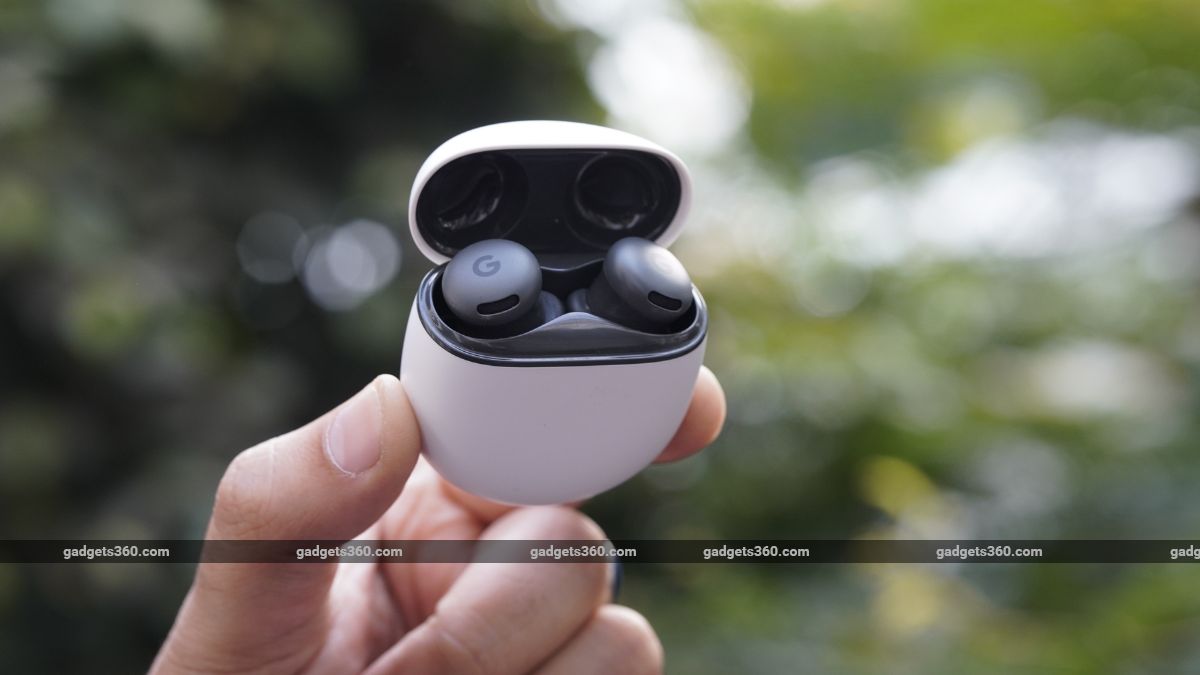
The Google Pixel Buds 2a are priced at Rs. 12,999
Click Here to Add Gadgets360 As A Trusted Source

Advertisement
In the hardware space, Google is a brand that loves to load its devices with the coolest software features to create an impressive experience. Most Pixel users are already familiar with this. However, the company is also known to struggle when it comes to pairing up the software experience with hardware shrewdness. We have recently seen this with the Pixel 10 smartphones and then with the Pixel 10 Pro Fold. These are the devices that promise a lot and almost win you over, but something always holds them back.
When I received the Google Pixel Buds 2a, the company's latest offering, I was optimistic but cautiously so. This is just the second A-series TWS earphones from the tech giant, and they have arrived four years after the inaugural device. The spec sheet promises several meaningful improvements, including active noise cancellation (ANC), fast pairing, audio switching, spatial audio (more on that later), and even a smaller, less chunky case design.
But I did not want to hand out accolades before I had the chance to test them out thoroughly. Without giving out too much at the beginning, I'd just like to say that I have reviewed many audio devices, but the Pixel Buds 2a is perhaps the first pair that made me do a double-take at almost every stage of testing. In some cases, I was pleasantly surprised, but in others… well, let's get down to the brass tacks.
And this brings me to the pricing. Interestingly, the TWS earphones are priced at Rs. 12,999, which makes them a sub-premium offering in India. However, in the US and international markets, the earphones were launched as a budget offering. Given the dominance of brands like boAt and Noise, that pricing was never going to translate directly to India.
Google Buds 2a Design and Comfort: Compact and Stylish
- Weight - 4.7g (each bud); 47.6g (case)
- Water and dust resistance - IP54 (buds); IPX4 (case)
- Colours - Hazel, Iris
With the Pixel Buds Pro 2, Google found the sweet spot between design-led aesthetics and long-term comfort. So, it was not a surprise that the company did not change much with the Pixel Buds 2a. However, these are now smaller and lighter, making them more pocket-friendly and genuinely “bulge-free.”
Coming to the design details, you get a minimalist pebble-shaped matte plastic case with no labelling or embellishments, which I really liked. If you're into the quiet luxury aesthetic, this fits right in. There is a black band where the case opens, which also makes it more accessibility-friendly. The LED light inside the case glows brightly when you open the lid or charge it. The only moving part is a button at the bottom of the backside that triggers pairing mode.
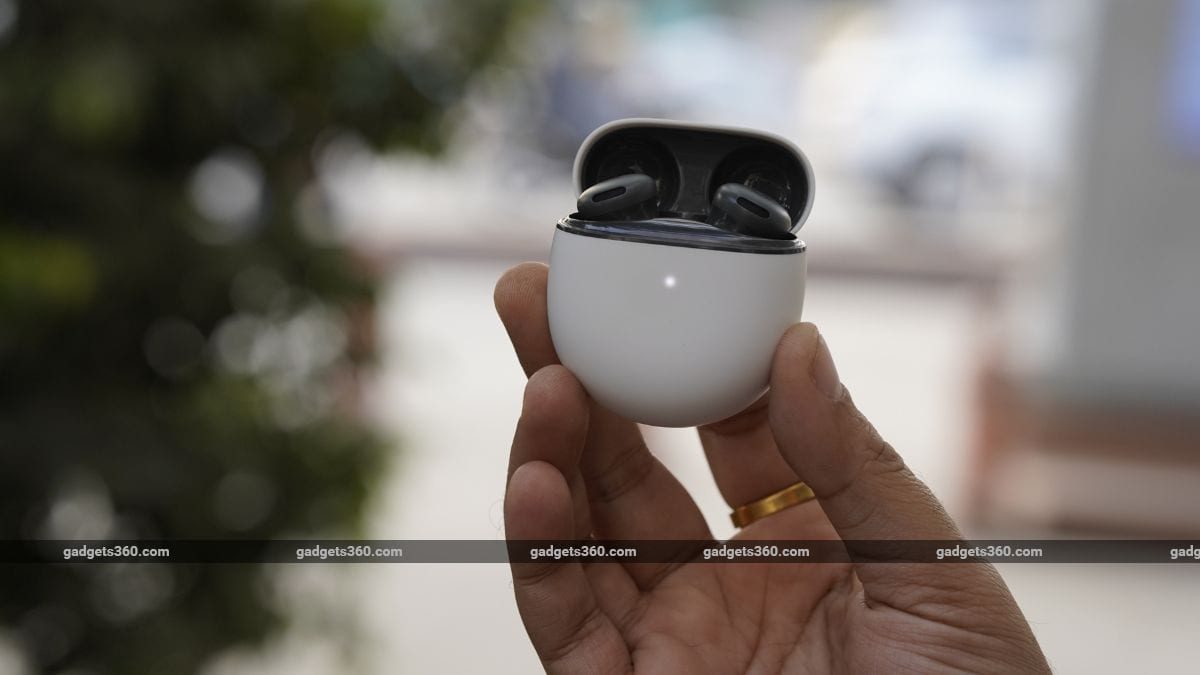
The earbuds' minimalist design and matte finish are definite highlights
The stemless buds are also made of plastic, available in both matte and glossy finishes. They retain the winglets, but these are slightly smaller, which definitely helps during long listening sessions and if you have smaller ears. The Google logo is on the back, and this is also where the touch controls for ANC, playback, and invoking the Gemini assistant are located.
The Pixel Buds 2a are lightweight, and with the twist-to-fit mechanism, they stay in place even during moderate movement. I completed entire workout sessions without them falling off. Google has also retained the spatial vent, a small opening that reduces pressure build-up in the ear. This is a blessing if you dislike the underwater feeling ANC often causes. However, this design also allows passive noise to seep in.
I do have a couple of issues with the earbuds. The biggest is the lack of wireless charging. At a similar price, the JBL Live Beam 3 offers it, but Google has opted for wired charging only, which feels like a misstep. Second, there are no volume controls on the buds, so you must pull out your smartphone for that. Finally, this is nitpicking, but the buds are optimised for smaller ears. If you have larger ears or wider ear canals, you may struggle to find the perfect seal, even with the three eartip sizes.
Google Buds 2a App and Features: The Yin-Yang Effect
- Driver - 11mm Dynamic Driver
- Companion app - Pixel Buds
- Gesture controls - Yes
The Pixel Buds 2a work with the Pixel Buds app. If you use a Pixel phone, it's pre-installed; otherwise, you'll need to download it from the Play Store (it's unavailable on iOS). Unlike brands like Sennheiser and JBL, the app is basic and, honestly, lacklustre. You get the essentials on one page, including a rudimentary equaliser, which barely affects audio quality. For more details about it, you can read our Google Pixel 2 Pro review.
Coming to the feature set, this is where the Pixel Buds 2a confused me the most. With earphones, the discussion around features is usually straightforward. Either a feature is present, or it's not. But with the Buds 2a, some features exist, but with caveats.
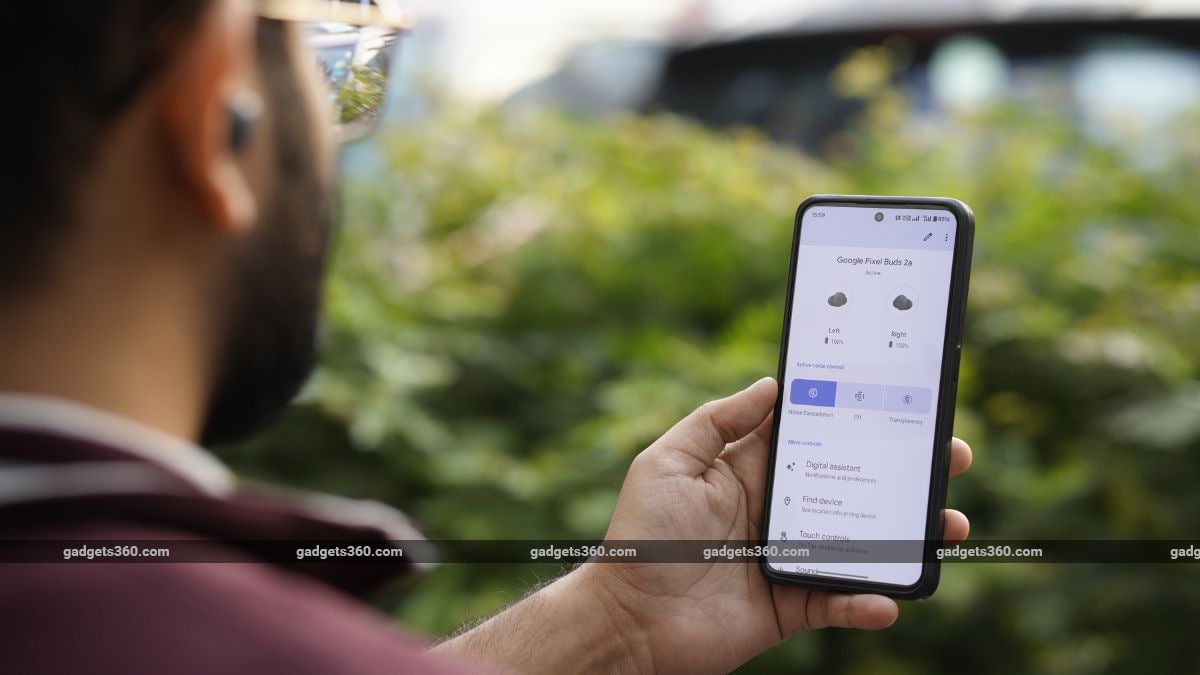
The companion app only offers very basic functionalities
The biggest example is spatial audio. The 3D soundstage effect is available only on Pixel phones. It is not supported on any other Android smartphone. And even if you're a Pixel user, unlike the Pro variant, there is no head-tracking support.
Another example is transparency mode. It works well enough for ambient awareness, but the earbuds do not have a talk-through or conversation mode. This means when you respond to someone, the music does not automatically pause; you must manually stop it or pull out a bud. Notably, JBL Live Beam 3 includes both.
But to Google's credit, software is where the company shines. From the moment you wear the earphones, you'll notice it. Fast pairing works flawlessly, and the integration goes deep with the settings appearing directly within the OS Bluetooth menu, reducing the need to hop into the app.
The earphones also support multipoint connectivity and audio switching. If you're watching a video on your laptop and get a call on your phone, the earbuds pause the video and switch seamlessly. In my testing, all of this worked intuitively and without glitches.
One point to note: the earphones do not support LDAC or LHDC. If you're into high-resolution or more dynamic audio, these might not be ideal. Once again, the JBL Live Beam 3 is a better choice for that.
Google Pixel Buds 2a Performance and Battery Life: Solid but Different
- Codec Support - AAC, SBC
- Connectivity - Bluetooth 5.4
- Battery - Up to 10 hours without ANC (Buds) + Up to 27 hours (Case)
Starting with ANC, the device performs decently well, assuming you can get a good seal. Smaller ears get a noticeably better seal and, therefore, better ANC performance. Larger ears may struggle even with the biggest tips.
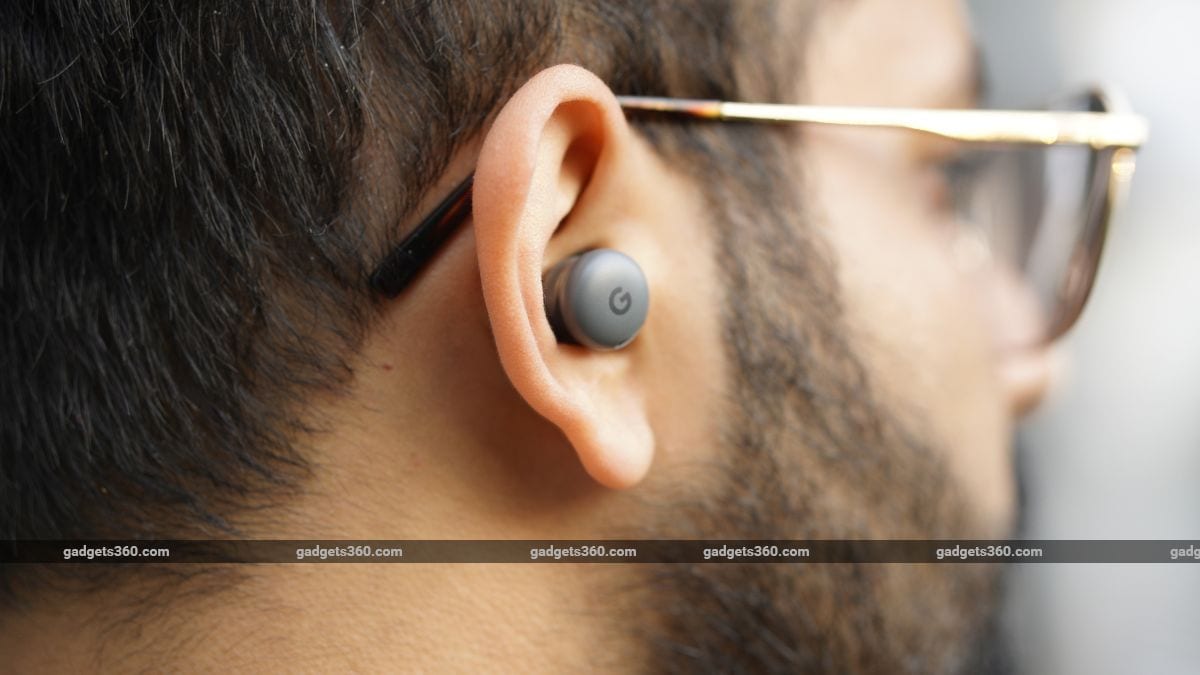
The sound profile is balanced, although the earbuds are light on the bass
In regular use, the ANC on the Google Pixel Buds 2a can block most ambient noise around the house, such as the AC, ceiling fan, or washing machine. Outdoors, it performs well but cannot eliminate loud or sharp sounds such as horns or loud voices. At this price, that's acceptable.
Coming to sound quality, expect a balanced profile with clear vocals, controlled mids, and bass that is present but not overwhelming. This is very different from JBL, Bose, and most smartphone brands, which heavily emphasise bass. So, there may be an adjustment period. But once you adapt, the sound grows on you, at least it did for me.
I tested the earbuds with a wide range of tracks — from Linkin Park's new album to Lemon Tree, Heartless, Bring Me To Life (Tiesto & FORS), Time to Love, indie hip-hop, soft Bollywood, and party hits. While the bass doesn't deliver a deep rumble, instrument separation is better than expected, the acoustics are clean, and the mids/highs are well-tuned without being sharp.
For the bassheads out there, especially those who enjoy EDM, hip-hop, or Bollywood bass-heavy tracks, JBL Live Beam 3 will offer a fuller low end. But for genres that prioritise clarity, such as classical, acoustic, soft rock, R&B, and podcasts, the Pixel Buds 2a sound excellent.
Call quality exceeded expectations. Even outdoors, the Pixel Buds 2a handled voice clarity impressively. Google's noise processing feels restrained, and that subtlety works. Your voice doesn't sound filtered or muffled. Latency is also minimal. I did not notice any lag on YouTube or Netflix. There is a slight delay in gaming, but unless you are a competitive player, you won't notice it.
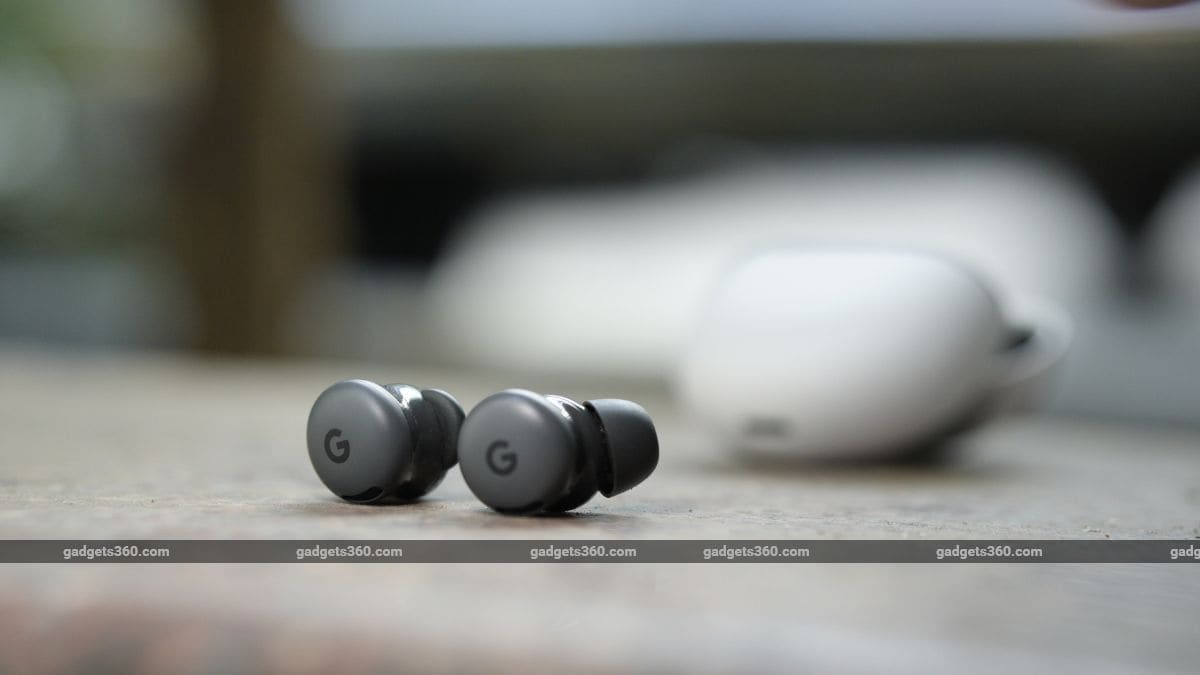
While the buds themselves offer a decent battery life, the playtime on the case could be better
Coming to battery life, I got about 5.5–6 hours with ANC on and about eight hours without it. It's decent for this size and price point. However, the case drains quickly, offering about 20–24 hours of total playback before hitting zero. This is acceptable, but the JBL Live Beam 3 provided around 48 hours and needed charging only once or twice a week. The earbuds top up quickly, offering around 40–45 minutes of playback from a five-minute charge. The case takes around 90 minutes for a full charge.
Google Pixel Buds 2a: Verdict
Reviewing products usually makes it easy to form an opinion, but with the Google Pixel Buds 2a, my opinion kept shifting the more I used them. Giving them a straightforward verdict is difficult because this is a device full of nuance.
Google has largely nailed the software experience and design aesthetic, carrying over strengths from the Buds Pro 2. However, compromises around features and battery life hold it back. Sound quality will also divide opinions, since Indian listeners typically prefer stronger bass.
If you want hassle-free earphones that look premium, deliver a polished experience and balanced sound, and work well with Gemini (and if you have smaller ears), you will find a lot of value in the Google Pixel Buds 2a. If you own a Pixel phone and the Buds Pro 2 is out of budget, these offer many of the same strengths at a lower price.
But if you don't care about Gemini and want punchier bass and better battery life, I'd recommend the JBL Live Beam 3. If you own an iPhone, go for the AirPods 4 for spatial audio and ecosystem benefits. And if you have larger ears and still want strong ANC, the Sony WF-C710N is a better fit.

- REVIEW
- KEY SPECS
- NEWS
- Good
- Design
- Fast pairing
- Comfortable fit
- Balanced sound profile
- Bad
- Battery life
- No advanced Bluetooth codec support
- Ecosystem-locked feature (Spatial audio)
- No talk-through mode
Headphone Type In-Ear
Microphone Yes
Connectivity True Wireless Stereo (TWS)
Type Earphones
Comments
Get your daily dose of tech news, reviews, and insights, in under 80 characters on Gadgets 360 Turbo. Connect with fellow tech lovers on our Forum. Follow us on X, Facebook, WhatsApp, Threads and Google News for instant updates. Catch all the action on our YouTube channel.


Advertisement
Follow Us




-
![[Sponsored] LG NANO 4K UHD AI TV NU885: Gemini Search, Dolby Atmos & 5 Years of Updates](https://www.gadgets360.com/static/desktop/images/spacer.png)
04:17
[Sponsored] LG NANO 4K UHD AI TV NU885: Gemini Search, Dolby Atmos & 5 Years of Updates -
00:57
[Sponsored] Samsung Galaxy Z Fold8 My Fan Cam in Action: Find the Moment, Then Share It -
01:41
[Sponsored] What Do You Need To Know Before Your Next Run? | Samsung Galaxy Watch Ultra2 -
01:32
[Sponsored] Big Day Tomorrow? Prep Today | Samsung Galaxy Watch Ultra2 -
04:37
[Sponsored]: CP PLUS CarKam CP-F89B: 4K Dashcam With Rear Camera, GPS & Emergency Recording
-
iPhone 16 आज भी Amazon सेल में मिल रहा ₹15 हजार से ज्यादा सस्ता
-
OnePlus 15 को Amazon Great Indian Festival Sale में खरीदें सस्ता
-
₹2250 सस्ता मिल रहा Motorola का 7000mAh बैटरी वाला फोन! Flipkart पर ऑफर
-
Poco X8s जल्द हो सकता है लॉन्च, NBTC पर हुई लिस्टिंग
-
OnePlus 16 के जल्द भारत में लॉन्च की तैयारी, 200 मेगापिक्सल हो सकता है प्राइमरी कैमरा
Advertisement
Popular on Gadgets
- Samsung Galaxy S26 Ultra
- Motorola Razr Fold
- ChatGPT
- OPPO Find N6
- Mobiles Under Rs. 40,000
- Vivo X300 Ultra
- Asus Zenbook S14
- iQOO 15
- Vivo X300 Pro
- Lenovo Yoga Slim 7i Aura Edition
- iQOO 15R
- Vivo X Fold 5
- Sony PlayStation 5
- HP OmniPad 12
- OnePlus Nord CE 6 Lite
- OnePlus Pad 4
- OPPO F33 Pro 5G
- Cryptocurrency
- HP OmniBook Ultra 14 (2026)
- iPhone 17
- Eureka Forbes AP 355 Room Air Purifier
- Latest Mobile Phones
- Compare Phones
Latest Gadgets
- Samsung Galaxy F70 5G
- Tecno Spark 50S 5G
- Vivo Y600s Pro
- Vivo Y32 (2026)
- Infinix Smart 20 HD
- Vivo V80
- Vivo S2 FE
- Vivo Y600K Turbo
- HP ZBook Ultra G3a
- Dell Pro Rugged 14
- Amazon Alexa Tablet 8
- Amazon Alexa Tablet 11
- Amazfit T-Rex Dual Solar
- OPPO Watch S2
- Toshiba 65-Inch 4K Ultra HD Smart Mini LED QLED TV (65Z670SP)
- Haier M70 Mini LED 65-inch
- Acer Predator Atlas 8
- Asus ROG Ally
- Blue Star 1.5 Ton 5 Star Inverter Split AC (IE518ZNURS)
- Blue Star 2 Ton 3 Star Inverter Window AC (WIE324L)

- About Us
- Sitemaps
- Feedback
- Archives
- Contact Us
- RSS
- Advertise
- Career
- Privacy Policy
- Ethics
- Editorial Policy
- Terms & Conditions
- Complaint Redressal
Download Our Apps
Available in Hindi
© Copyright Red Pixels Ventures Limited 2026. All rights reserved.