-
 Apple Cuts App Store Commission in China Amid Competition From Domestic Ecosystems13 March 2026
 -
Apple, Google Make Four Commitments to Improve Fairness and Transparency in App Stores11 February 2026
-
Apple Updates MacBook Shopping Flow With Ability to Configure Chip, Display Size, and More2 February 2026
-
Apple Reveals When the App Store Will Start Showing More Ads in Search Results23 January 2026
-
Apple Creator Studio Launched as New Subscription Bundle for Creators Across iPhone, iPad, and Mac14 January 2026
- Home
- Mobiles
- Mobiles News
- Apple Allows Third Party App Stores, Relaxes Payment Restrictions in Japan to Comply With MSCA Act
Apple Allows Third-Party App Stores, Relaxes Payment Restrictions in Japan to Comply With MSCA Act
Apple says users will be informed that refunds and support may not apply with non-Apple payments.
Written by Sucharita Ganguly, Edited by David Delima | Updated: 18 December 2025 14:20 IST
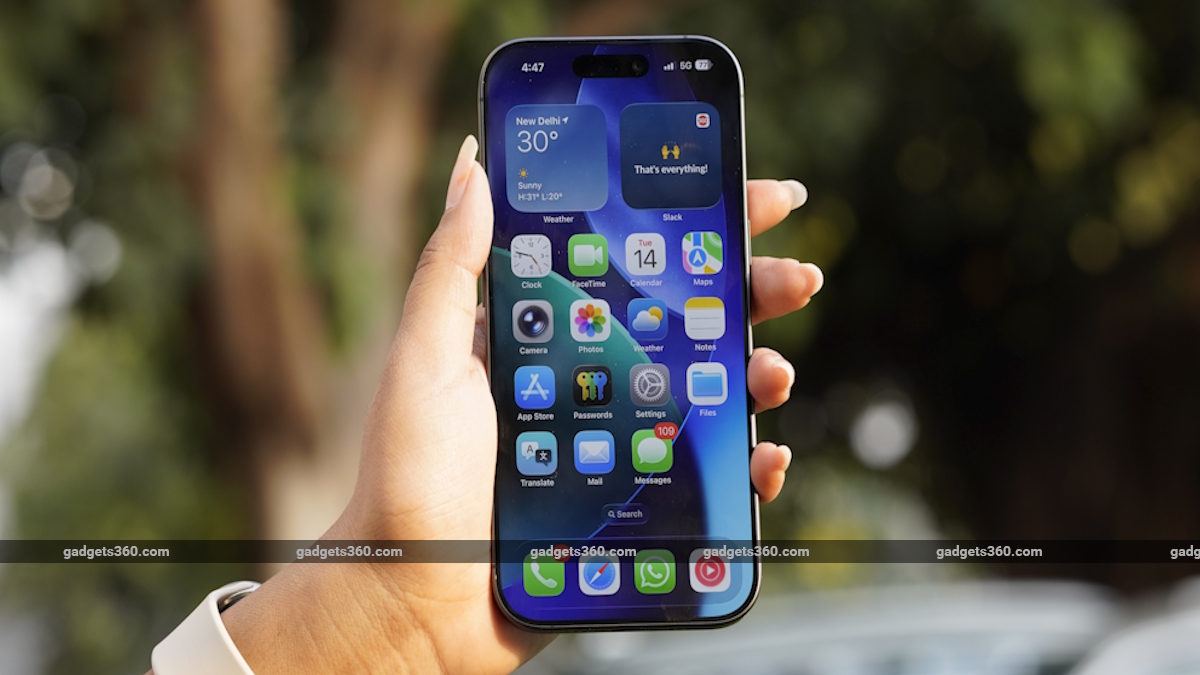
All iOS apps in Japan will undergo Apple’s Notarisation checks
Click Here to Add Gadgets360 As A Trusted Source

Advertisement
Apple has rolled out a series of changes to iOS and the App Store in Japan to meet the requirements of the country's Mobile Software Competition Act (MSCA), which takes effect on December 18. The update introduces new rules around how apps can be distributed, how payments for digital goods are processed, and how users choose default services on their iPhone. Apple says it has added new safeguards to address security, privacy, and child safety risks as iOS opens up to more competition.
Apple's iOS 26.2 Update Adds Third-Party App Store Support in Japan
The company says it worked closely with Japanese regulators while implementing the MSCA and argues that the law strikes a better balance between competition and user protection than similar regulations in Europe. Developers in Japan can begin adopting the new app distribution, payment, and platform features immediately, with further guidance available through Apple's developer site, the company stated.
The updates are included in iOS 26.2, released on December 12, and apply only to iOS apps available in Japan. Under the revised rules, Apple will permit developers to distribute iOS apps through third-party app marketplaces alongside the App Store. These marketplaces must receive Apple's approval and comply with ongoing operational standards.
Unlike the European Union, Japan's law does not allow apps to be installed directly from websites, which Apple says helps limit security risks tied to uncontrolled distribution.
Apple will continue to apply its notarisation process to all apps, regardless of how they are distributed. This review uses automated tools and human checks to ensure apps work properly and are free from known malware or major security risks. Apple notes that Notarisation is narrower in scope than full App Store review and does not involve content moderation for apps distributed outside the App Store.
Payment rules for App Store apps in Japan are also changing. Developers can keep using Apple's In-App Purchase system, but they may now offer third-party payment services or redirect users to a website to complete transactions for digital goods and services.
Apple says that developers are required to display In-App Purchase alongside alternative payment methods and make it equally visible. When users choose a non-Apple payment option, Apple adds that it will clearly notify them that refunds and customer support may no longer be handled by Apple.
To support the new distribution and payment options, Apple has introduced an updated fee structure for iOS apps in Japan. Apps on the App Store will pay a commission of either 10 percent or 21 percent on digital sales, depending on eligibility for Apple's developer programs or subscription status. Transactions processed through Apple In-App Purchase will carry an additional 5 percent payment processing fee, the company added.
Web-based purchases linked from apps will incur a 15 percent store services fee, or 10 percent for qualifying developers, Apple claims. Apps distributed through alternative marketplaces will pay a 5 percent Core Technology Commission. Apple states that the revised terms result in the same or lower fees for all developers compared to the previous system.
The Cupertino-based tech giant has also outlined new measures aimed at reducing risks for younger users. Apps listed in the Kids category will be blocked from linking to external websites for purchases. For users under 18, apps that use alternative payment systems must include a parental approval step before transactions can proceed.
Apple claims that apps used by children under 13 will be prohibited from linking to websites for payments entirely. Age ratings will remain mandatory across all distribution channels, Apple added.
iOS 26.2 introduces several user-facing changes in Japan. During setup, iPhone users will now be asked to choose their default browser and search engine, rather than having Safari and Google Search preselected. Users can also set a preferred navigation app and select an alternative app marketplace as their default source for apps. Apple says these preferences can be modified later in the Settings app.
Apple is also expanding technical options for developers. Browser developers may use non-WebKit engines, provided they meet Apple's security and privacy criteria. Developers of voice-based conversational apps can request access to a new API that allows their apps to launch using the iPhone's side button instead of Siri.
The company claimed that it will consider requests for deeper access to iOS features but may reject them if they pose privacy or security risks.
Comments
Get your daily dose of tech news, reviews, and insights, in under 80 characters on Gadgets 360 Turbo. Connect with fellow tech lovers on our Forum. Follow us on X, Facebook, WhatsApp, Threads and Google News for instant updates. Catch all the action on our YouTube channel.
Related Stories




Apple Allows Third-Party App Stores, Relaxes Payment Restrictions in Japan to Comply With MSCA Act


Advertisement
Follow Us




-
05:05
Goboult Mustang Racer Smartwatch Review: Should You Get This Mustang Smartwatch? -
04:58
OnePlus Nord Buds 4 Pro Review: Specs, Sound Quality, ANC, and Battery Backup Tested -
02:29
[Sponsored] Samsung Galaxy S26 Ultra First Look: AI Smartphone for Creators, Gaming & Productivity -
04:25
Vivo X200T Review - Full Camera, Gaming & Battery Test | Worth Buying? -
28:31
The Future of Productivity: Logitech's Anatoliy Polyanker On AI, Hybrid Work, And India's Tech Boom
-
200 मेगापिक्सल कैमरा, 7000mAh बैटरी के साथ Vivo V70 FE लॉन्च, जानें सबकुछ
-
Redmi Note 15 SE भारत में लेटेस्ट AI फीचर्स, 5800mAh बैटरी के साथ लॉन्च
-
5100mAh बैटरी, 50MP कैमरा वाला Pixel फोन हुआ 4700 रुपये सस्ता
-
Axis Bank लाया कमाल का फीचर, बैंक जाए बिना आधार से होगा मोबाइल नंबर अपडेट, जानें कैसे
-
Honor ने लॉन्च किया 7000mAh बैटरी, 512GB तक स्टोरेज वाला X80i स्मार्टफोन, जानें कीमत
Advertisement
Popular on Gadgets
- Samsung Galaxy Unpacked 2026
- iPhone 17 Pro Max
- ChatGPT
- iOS 26
- Laptop Under 50000
- Smartwatch Under 10000
- Apple Vision Pro
- Oneplus 12
- OnePlus Nord CE 3 Lite 5G
- iPhone 13
- Xiaomi 14 Pro
- Oppo Find N3
- Tecno Spark Go (2023)
- Realme V30
- Best Phones Under 25000
- Samsung Galaxy S24 Series
- Cryptocurrency
- iQoo 12
- Samsung Galaxy S24 Ultra
- Giottus
- Samsung Galaxy Z Flip 5
- Apple 'Scary Fast'
- Housefull 5
- GoPro Hero 12 Black Review
- Invincible Season 2
- JioGlass
- HD Ready TV
- Latest Mobile Phones
- Compare Phones
Latest Gadgets
- Honor X80i
- Honor Play 80 Pro
- Redmi Note 15 SE 5G
- Redmi A7 Pro
- OPPO K15 Pro
- OPPO K15 Pro+
- Lava Bold N2 Lite
- Lava Bold N2 Pro
- Xiaomi Book Pro 14
- MacBook Neo
- Vivo Pad 6 Pro
- Lenovo Legion Y700 Gen 5
- boAt Valour Watch 1R
- Xiaomi Watch S5
- Xiaomi QLED TV X Pro 75
- Haier H5E Series
- Asus ROG Ally
- Nintendo Switch Lite
- Haier 1.6 Ton 5 Star Inverter Split AC (HSU19G-MZAID5BN-INV)
- Haier 1.6 Ton 5 Star Inverter Split AC (HSU19G-MZAIM5BN-INV)

- About Us
- Sitemaps
- Feedback
- Archives
- Contact Us
- RSS
- Advertise
- Career
- Privacy Policy
- Ethics
- Editorial Policy
- Terms & Conditions
- Complaint Redressal
Download Our Apps
Available in Hindi
© Copyright Red Pixels Ventures Limited 2026. All rights reserved.