
-
 Apple Issues Critical Update for Older iPhone Models Running iOS 18 to Address DarkSword Exploit2 April 2026
 -
DarkSword iOS Toolkit Now Public on GitHub, Lowering Barrier for Potential iPhone Exploit24 March 2026
-
How to Transfer Data From Android to iPhone: A Step-by-Step Guide3 October 2024
-
Kaspersky Finds Cybersecurity Threat That Targets iPhone Users via Malicious iMessage Attachment3 June 2023
-
iPhones of At Least 9 US State Officials Said to Be Hacked by NSO Group Spyware4 December 2021
- Home
- Mobiles
- Mobiles News
- Rare iPhone Spyware Can Infect Devices With a Single Website Visit, Researchers Say
Rare iPhone Spyware Can Infect Devices With a Single Website Visit, Researchers Say
Researchers say DarkSword can hack an iPhone through Safari after a single visit to a compromised website.
Written by Akash Dutta, Edited by Ketan Pratap | Updated: 19 March 2026 13:42 IST

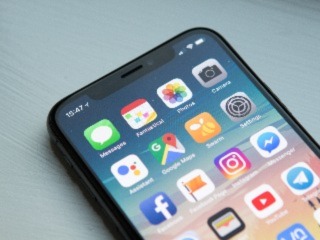
Photo Credit: Unsplash/Norwood Themes
DarkSword used Safari, GPU, and kernel exploits to move from a website visit to full iPhone compromise
Click Here to Add Gadgets360 As A Trusted Source

Advertisement
A newly documented iPhone spyware tool is said to compromise a device simply through a visit to a hacked website. As per security researchers, the toolkit, dubbed DarkSword, was used in campaigns targeting people in Ukraine and relies on a chain of exploits that lets attackers break into Safari, escape its security layers, gain deeper access to iOS, steal data, and then remove themselves within minutes. The spyware is said to only target iPhones running specific versions of iOS 18. Apple is said to have patched the vulnerabilities.
New Dangerous iPhone Spyware Discovered
Google Threat Intelligence Group (GTIG), in partnership with Lookout and iVerify, identified a new iOS full-chain exploit which leveraged multiple zero-day (undiscovered) vulnerabilities to completely compromise devices. Notably, a full-chain exploit means the toolkit links together several bugs to move from a web page to full control of the phone.
In this case, the attack starts in JavaScriptCore, the engine used by Safari and WebKit to run website code. From there, the attackers break out of Safari's sandbox, a security boundary meant to isolate risky web content. It first infects the GPU process and then moves into a more privileged iOS system service called mediaplaybackd. Finally, the chain uses kernel flaws to raise privileges even further and deploy the spyware payload.
Google said the chain used multiple vulnerabilities across Apple's software stack, including memory corruption bugs in JavaScriptCore, a flaw in ANGLE used by Safari's graphics handling, and kernel issues in XNU, the core of iOS. Some of those flaws were exploited as zero-days, meaning attackers used them before fixes were publicly available. The researchers say the relevant fixes were shipped by Apple across iOS 18.6, 18.7.2, 18.7.3, 26.1, 26.2, and 26.3, depending on the bug.
The attack is described as a watering hole campaign. That means attackers compromised websites that their targets were likely to visit, then used those sites to deliver the exploit. Google claimed a suspected Russian espionage group, UNC6353, used DarkSword in watering hole attacks on Ukrainian websites, while TechCrunch reported that the malware was designed to infect anyone who visited certain Ukrainian sites from within the country.
As per the publication, DarkSword was built to steal passwords, photos, browser history, and messages from apps, including WhatsApp and Telegram, along with SMS texts. Researchers also found code aimed at cryptocurrency wallet apps; however, it cannot be said for sure that the main objective behind spreading the spyware was financial gain.
Unlike spyware built for long-term surveillance, DarkSword appears to be designed for a quick smash-and-grab operation. Researchers said its dwell time on a device was likely measured in minutes, just long enough to collect and send data out before disappearing. GTIG also shared code snippets showing efforts to delete crash logs, which would make the intrusion harder to spot.
While it is not easy to block the spyware's attempt to break into a device after it has already been infected, users can minimise the chances of infection by avoiding unfamiliar or high-risk websites, especially in conflict-related or politically sensitive contexts. As per GTIG, the hacker group behind the spyware has also deployed the exploit chain in Saudi Arabia, Turkey, and Malaysia. The total number of infected devices is difficult to gauge.
Comments
Get your daily dose of tech news, reviews, and insights, in under 80 characters on Gadgets 360 Turbo. Connect with fellow tech lovers on our Forum. Follow us on X, Facebook, WhatsApp, Threads and Google News for instant updates. Catch all the action on our YouTube channel.
Related Stories




Advertisement
Follow Us




-
 Realme बंद कर रहा दुनिया के सबसे बड़े आबादी वाले देश में अपना काम, जानें
 -
₹2450 सस्ता मिल रहा 6000mAh बैटरी वाला Motorola स्मार्टफोन
-
Lenovo Legion R9000P लॉन्च, IJP OLED डिस्प्ले वाला पहला गेमिंग लैपटॉप
-
17 हजार सस्ता मिल रहा Realme का 7000mAh बैटरी वाला फोन!
-
Nokia 300 Power Bank पेश, 45 दिन की बैटरी वाला फोन, IP65 रेटिंग समेत कई धांसू फीचर्स, जानें कीमत
Advertisement
Popular on Gadgets
- Samsung Galaxy S26 Ultra
- Motorola Razr Fold
- ChatGPT
- OPPO Find N6
- Mobiles Under Rs. 40,000
- Vivo X300 Ultra
- Asus Zenbook S14
- iQOO 15
- Vivo X300 Pro
- Lenovo Yoga Slim 7i Aura Edition
- iQOO 15R
- Vivo X Fold 5
- Sony PlayStation 5
- HP OmniPad 12
- OnePlus Nord CE 6 Lite
- OnePlus Pad 4
- OPPO F33 Pro 5G
- Cryptocurrency
- HP OmniBook Ultra 14 (2026)
- iPhone 17
- Eureka Forbes AP 355 Room Air Purifier
- Latest Mobile Phones
- Compare Phones
Latest Gadgets
- Tecno Camon 50 Ultra 5G
- Vivo T5 Lite 5G
- Realme C100x
- Realme Narzo 100x 5G
- Motorola Edge 70 Max
- Huawei Pura 90s Pro Max
- Huawei Pura 90s Pro
- Redmi Note 17
- Asus Asus Zenbook A14 (2026)
- Acer Aspire 3 (2026, 11.6)
- Red Magic Gaming Tablet 5 Pro
- Vivo Pad 5c
- Amazfit Cheetah 2 Ultra
- Amazfit Bip Max
- Sony Bravia 9 II
- Haier HQLED P7 Pro
- Acer Predator Atlas 8
- Asus ROG Ally
- Blue Star 1.5 Ton 5 Star Inverter Split AC (IE518ZNURS)
- Blue Star 2 Ton 3 Star Inverter Window AC (WIE324L)

- About Us
- Sitemaps
- Feedback
- Archives
- Contact Us
- RSS
- Advertise
- Career
- Privacy Policy
- Ethics
- Editorial Policy
- Terms & Conditions
- Complaint Redressal
Download Our Apps
Available in Hindi
© Copyright Red Pixels Ventures Limited 2026. All rights reserved.