
-
 Fitbit Air Review: Is This Google’s Best Fitness Tracker Yet?18 October 2026
 -
ViewSonic India Bets Big on LED Displays as It Expands Beyond Monitors17 October 2026
-
Google Play Store ‘Shop Devices’ Feature Goes Live in India With Pixel Phones and Accessories15 October 2026
-
Google AI to Add More Anti-Scam Protections to Messages and Calls on Android Devices15 October 2026
-
Google Play Store Adds Vibe-Coded Apps, AI App Comparisons and Personalised Game Discovery14 October 2026
- Home
- Mobiles
- Mobiles Reviews
- Google Pixel 10a Review: More of the Same?
Google Pixel 10a Review: More of the Same?
Does Google’s Pixel a-series formula make sense in India in 2026? Here's our Pixel 10a review.
Written by Sheldon Pinto, Edited by Ketan Pratap | Updated: 6 March 2026 14:51 IST
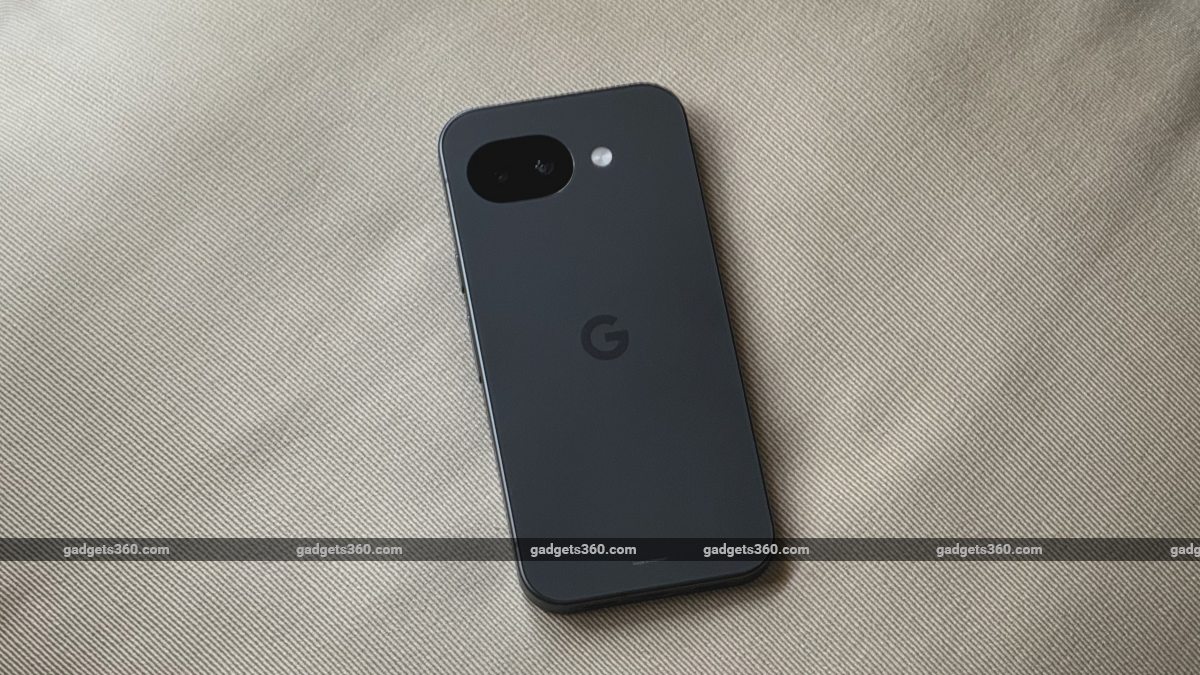
Google’s Pixel 10a is priced at Rs. 49,999 in India
Click Here to Add Gadgets360 As A Trusted Source

Advertisement
Google's Pixel a series of smartphones evolved from what were essentially mid-range devices into premium devices in India. While the transition did not make sense until the 7a, the 8a introduced some premium features like a high-refresh-rate display, wireless charging and an updated chipset to keep up with the times. With the Pixel 9a, we saw a complete redesign, one that stands out even today with the launch of the Pixel 10a. There's no device that looks like it, and there is currently no device in its segment which offers the same bloatware-free Pixel software experience (with the usual Pixel smarts). But in this competitive premium segment, does Google's a-series formula hold any water in 2026?
Google Pixel 10a Design: Minimalist magic!
- Dimensions - 153.9 x 73 x 9mm
- Weight - 183g
- Durability - IP68
We loved the Google Pixel 9a's minimalist design, and the Pixel 10a takes things a notch higher, even though it looks and feels nearly the same. The phone retains the same overall design as its predecessor, but the fine ridge around the capsule-shaped camera module is now gone, resulting in a seamless, clean appearance. While the camera modules on the standard and Pro models get bigger and thicker by the year, Google decided to retain the Pixel 9a's camera hardware, and so we still have the same flat design that oddly feels unreal.
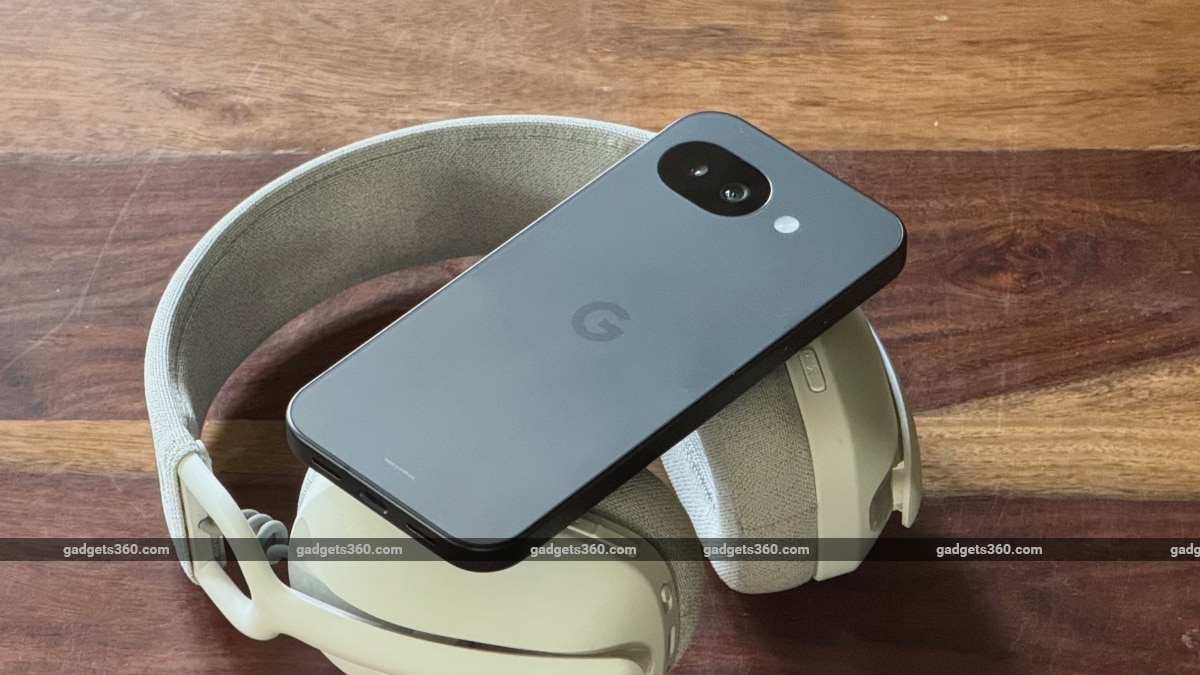
The Google Pixel 10a's build-quality and finish are top-notch, with no sharp edges or panel gaps
Hold the phone, and you quickly feel like something's missing around the back. This would be the camera module that many of us like to use as support with our index fingers. The camera module that's very much present but physically absent gives the smartphone a weird and unreal feeling. Place it on a flat table, and it's a bit hard to lift the phone because there's no raised part (because of the usual camera bump) that lets you grip the phone while picking it up.
Since there is no raised camera module at the back, the phone's 9mm thickness is actually “9mm” and nothing more. It strangely does not feel thick, unlike other premium devices with a slim body at one end and chunky camera modules at the other. And the fact that it packs a standard 5,100mAh (Li-ion) battery and wireless charging is a proper win-win situation.
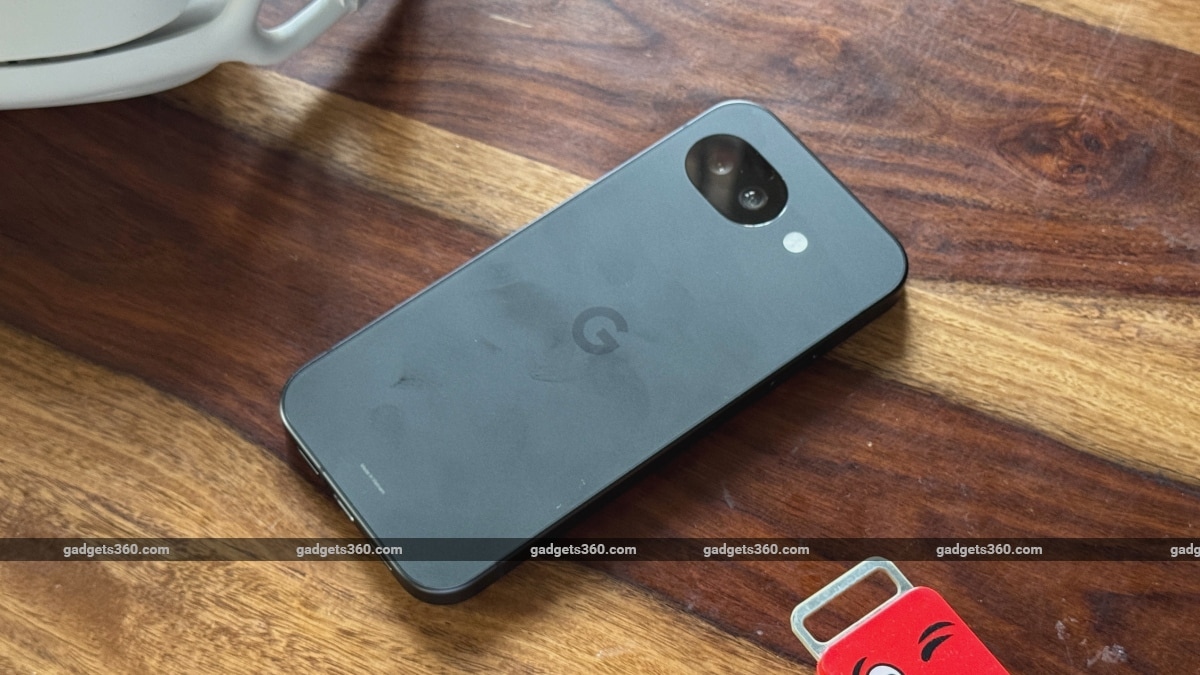
The polycarbonate rear panel quickly turns into a smudgy mess
However, what does worry me a bit is the durability of the camera glass. Unlike traditional camera modules, which have a solid metal ring protecting each lens, the Pixel 10a's rear cameras have no structural protection, which could easily lead to cracked glass after a drop.
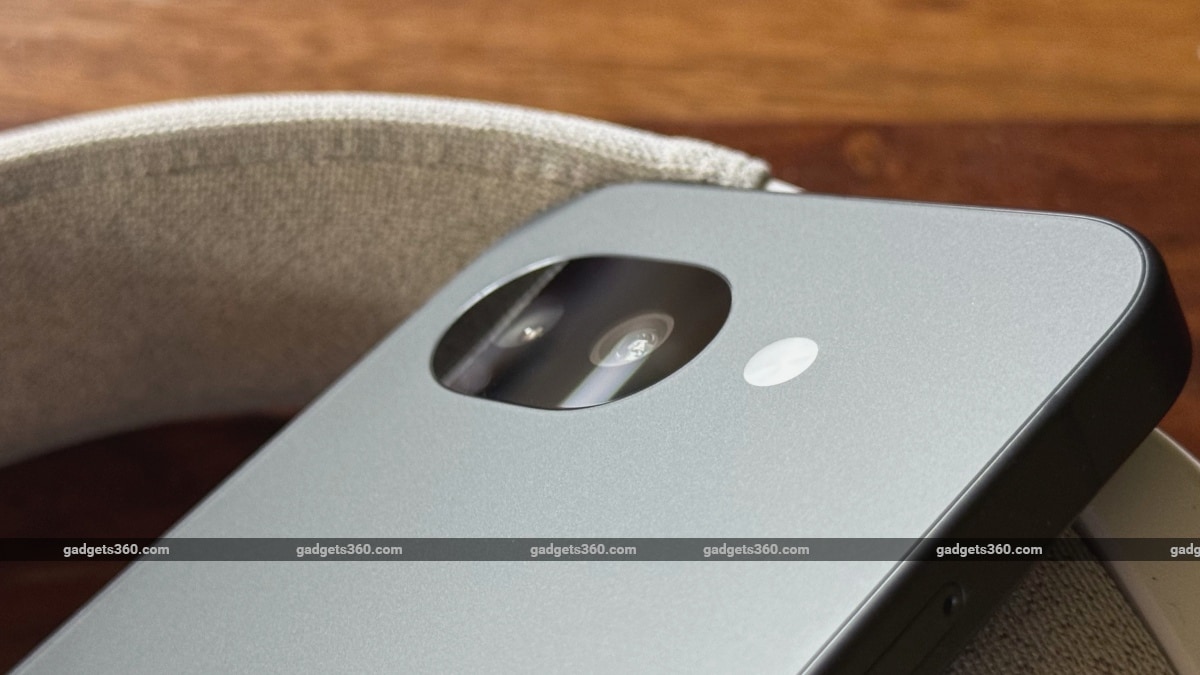
The Pixel 10a's rear camera module has been properly integrated into its rear panel
Talking about glass, the front glass screen, which protects the display, has been upgraded to Gorilla Glass 7i. While the frame still uses aluminium, the rear panel is made of polycarbonate, which makes it prone to picking up dust, fingerprints and smudges despite its matte finish.
Google Pixel 10a Display: Brighter than ever before
- Display size - 6.3-inch, 1,080 x 2,424 pixels (FHD+), 422 PPI
- Display type - P-OLED, 60-90-120Hz (LTPS)
- Display protection - Gorilla Glass 7i
Quite the contrast to the Pixel 10a's standout minimalist design is its display. It appears flat and modern, keeping up with current trends, but power it up, and you will be greeted with thick borders that feel out of place on a premium Android device. These borders instantly reminded me of the iPhone 16e (and the new iPhone 17e), but unlike Apple's “affordable” offering, this display has a hole-punch camera, which gets out of your way, unlike the former's old-school, elongated Face ID notch.
While I initially found the bezel a bit thick (especially after reviewing the Vivo V70 Elite), a day later, it was not something that concerned or bothered me. Moreover, Google has tuned its software to work well with the wide radii of its rounded corners, whereas Vivo's OriginOS cuts its software corners a bit too close to the edges.
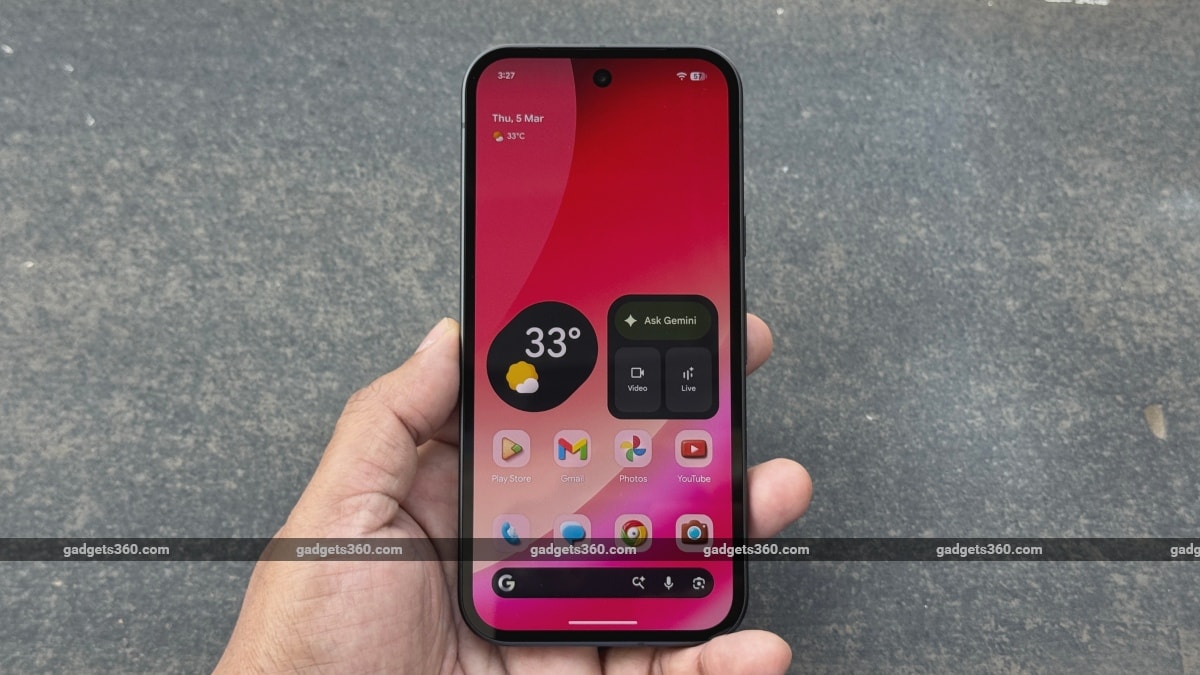
The Pixel 10a's display continues to have thick borders, but with bumped-up brightness levels
Bezels aside, the brightness and colours of the Super Actua-branded display are on point and come with upgrades. Google now claims a high-brightness mode of 2,000 nits and a peak brightness mode of 3,000 nits. I did not need to squint at the display when viewing video outdoors, so the upgrades are definitely worth it. Viewing angles are good too, and so was the touch-sampling rate, which kept up while playing fast-paced FPS games. I'm glad to see Google offering a 120Hz LTPS panel. However, the feature is turned off (or set to 60Hz) by default, so ‘Smooth display' has to be enabled in ‘Display and touch settings'.
The Pixel 10a supports Widevine L1 with Full HD playback resolution. Its bright display is also put to good use, given that it supports HDR10 and HDR10+ capabilities. Supported content appears as expected.
The fingerprint reader embedded into the display worked reliably during the review. Unlike the Pixel 10, we still don't have the more secure (Class 3) face unlock as the selfie camera module remains unchanged.
Google Pixel 10a Software: Typically Pixel
- Android version - 16
- Software - Pixel UI
- Software commitment - 7 years OS + 7 years SMR
Since the Pixel 10a is the only 10-series smartphone that's stuck with an older chipset, there are a few AI-features that have been left out. Key among these are the Pixel Screenshots app and the useful Magic Cue feature I used on the Pixel 10 Pro Fold. Google strangely managed to squeeze in Auto Best Take, a Photos tool that basically makes capturing and editing faces in group photos easy. Camera Coach also makes it to a Pixel a-series device to make snapping great photos easier, provided you are willing to learn.
Apart from the above, all the usual AI features found in the Pixel 10 and Pro are available on the Pixel 10a, which is pretty impressive if that's something you do enjoy using.
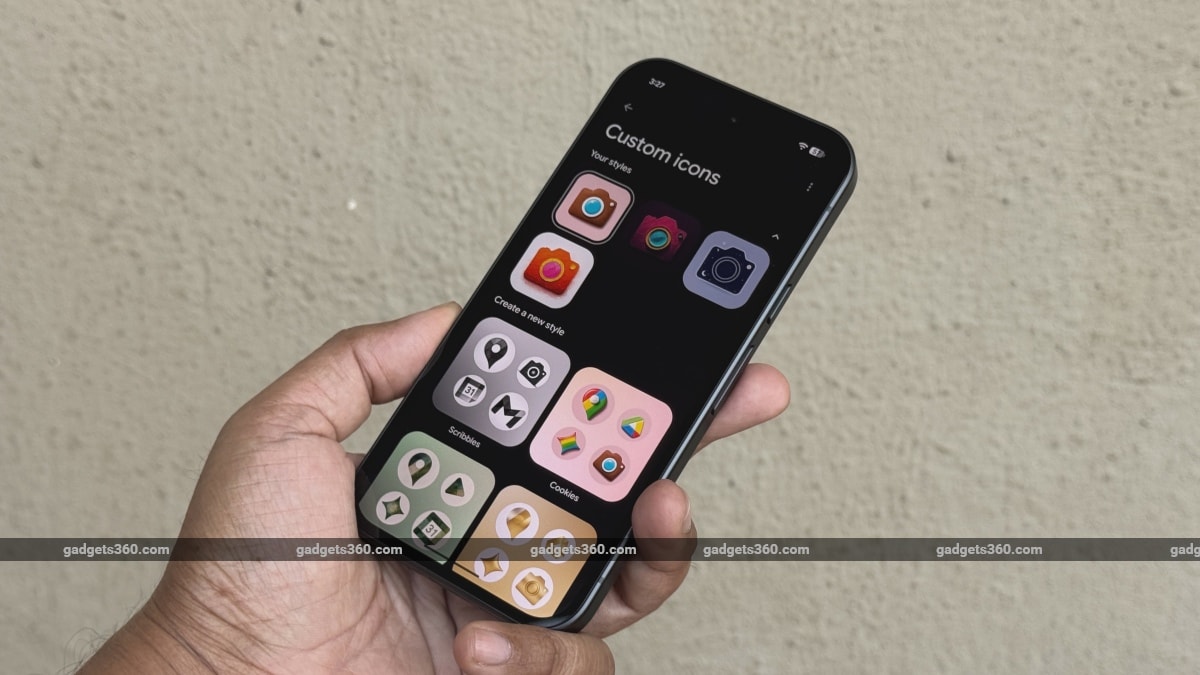
Google Pixel 10a comes with a ton of customisation options
Google Pixel UI still has the cleanest Android interface, and Android 16 has only made things smoother and more fluid. The latest Pixel drop also introduced a new AI icons feature that lets you generate an icon pack out of thin air using AI. It works in a manner similar to its AI-generated wallpapers feature, using select prompts to let you make icons that look like cookies, using certain backgrounds and different colour sets and materials.
Software performance and multitasking are not issues, and everything works as expected from a premium device. Lastly, there's no bloatware or third-party apps, something that you will find in competing smartphones by other manufacturers.
Google Pixel 10a Performance: Not bad at all
- Processor - Google Tensor G4, 3.1GHz, 4nm
- RAM - 8GB (LPDDR5X)
- Storage - 256GB (UFS 3.1)
Google seems to have absorbed some of the memory costs (and dealt with the memory crisis) by simply not changing any of the performance-related hardware at all. The phone uses the same chip as on last year's 9a, and the same applies to the RAM and storage as well. While software performance is smooth and fluid, our synthetic benchmark testing indicates that the Pixel 10a falls short of expectations versus the OnePlus 13s, but is on par with the Vivo V70 Elite.
| Benchmarks | Google Pixel 10a | Vivo V70 Elite | OnePlus 13s |
|---|---|---|---|
| Display resolution | FHD+ | 1.5K | 1.5K |
| Chipset | Google Tensor G4 (4nm) | Snapdragon 8s Gen 3 (4nm) | Snapdragon 8 Elite (3nm) |
| AnTuTu v10 | 14,31,1143 | 18,21,492 | 24,49,859 |
| PCMark Work 3.0 | 15,152 | 12,897 | 14,491 |
| Geekbench 6 Single | 1,724 | 1,911 | 2,874 |
| Geekbench 6 Multi | 4,347 | 4,753 | 8,741 |
| Geekbench AI CPU (Quantized) | 3,092 | 2,196 | NA |
| Geekbench AI GPU (Quantized) | 1,306 | 993 | NA |
| 3DM Wild Life | Maxed Out | 7,848 | Maxed Out |
| 3DM Wild Life Unlimited | 9,765 | 7,866 | 23,593 |
| 3DM Steel Nomad Light | 1,104 | 647 | NA |
The phone does warm up while playing CODM at Very High graphics and frame rate, but the phone pulled through, managing sustained gaming just fine. Next, I tried Ultra frame rate with Medium graphics, and it chugged along just fine at a forced 120 FPS.
Speakers sound rich and have good bass, making the phone great for watching movies and playing games. Satellite SOS, a highlight feature on the a-series this year, is not available in India.
Google Pixel 10a Cameras: You get what you pay for
- Primary camera - 48-megapixel, f/1.7, PDAF, OIS
- Ultrawide camera - 13-megapixel, f/2.2, 120-degree
- Selfie camera - 13-megapixel, f/2.2
As you can tell from the hardware specifications above, literally nothing has changed over the older model. And since the chipset remains the same as before, the imaging (via the ISP) is also similar to the Pixel 9a.
Since I had the Vivo V70 Elite with me, I decided to check which one's better, so our readers can make a more informed decision if photography is a priority.
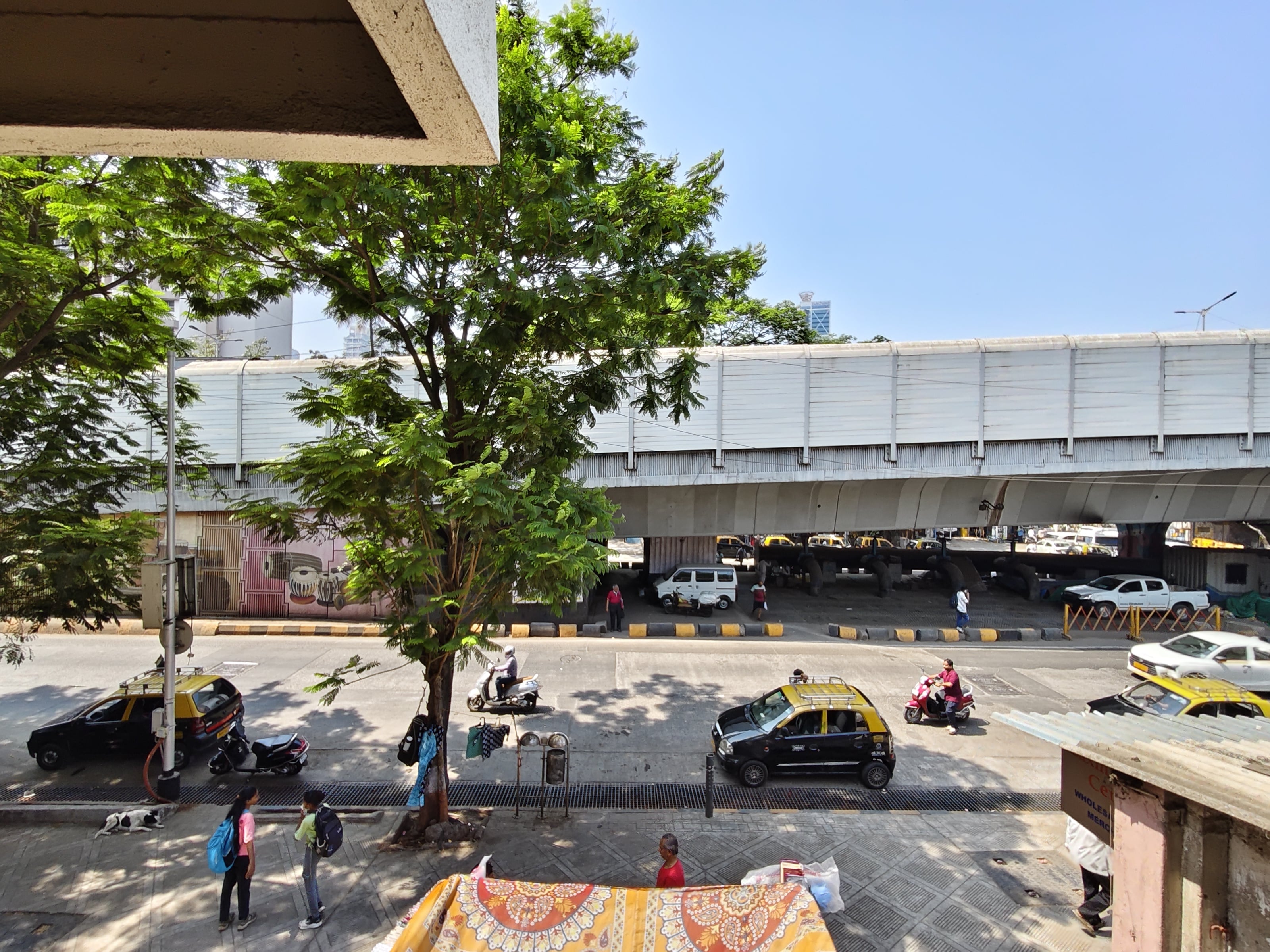
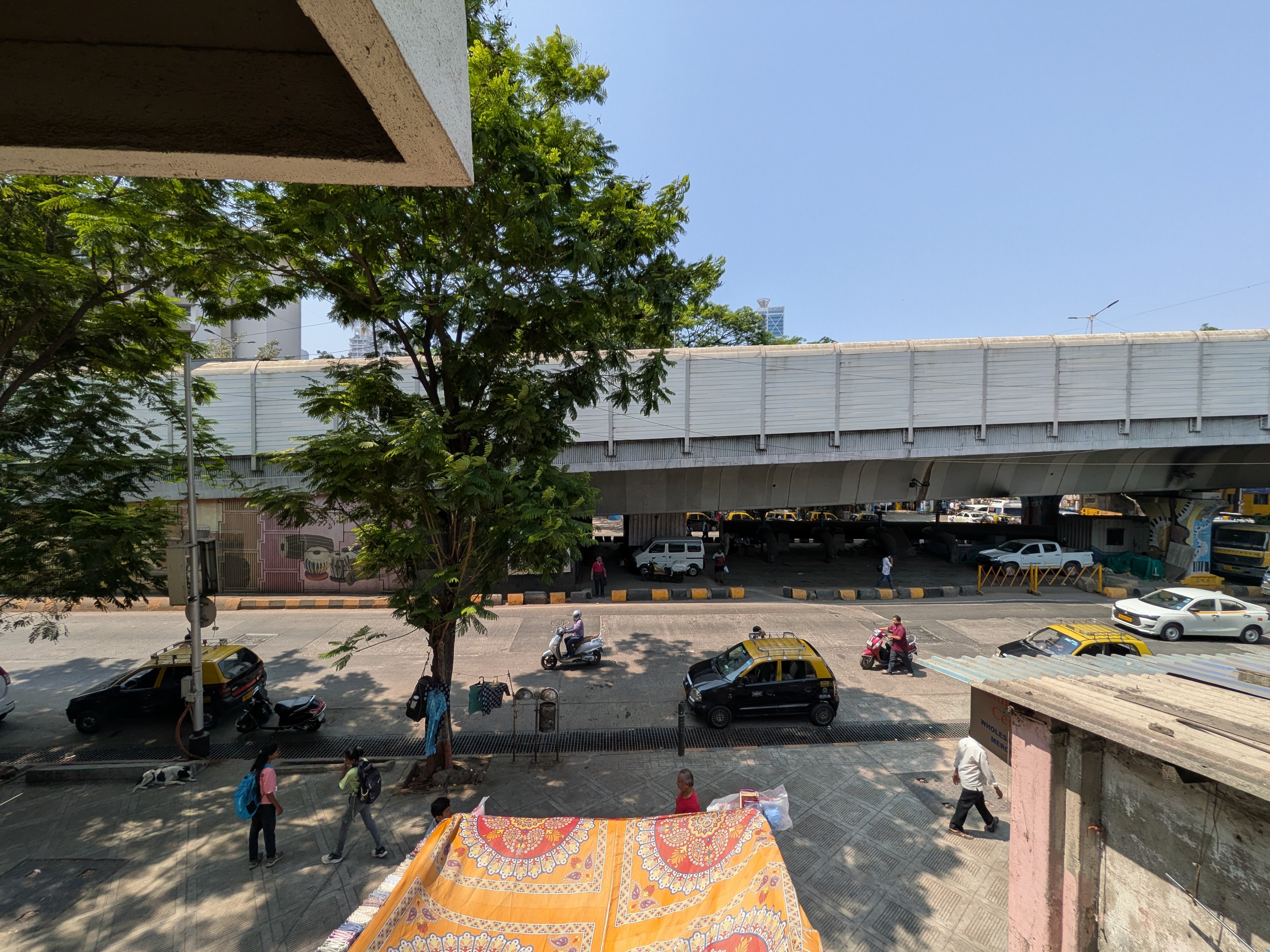
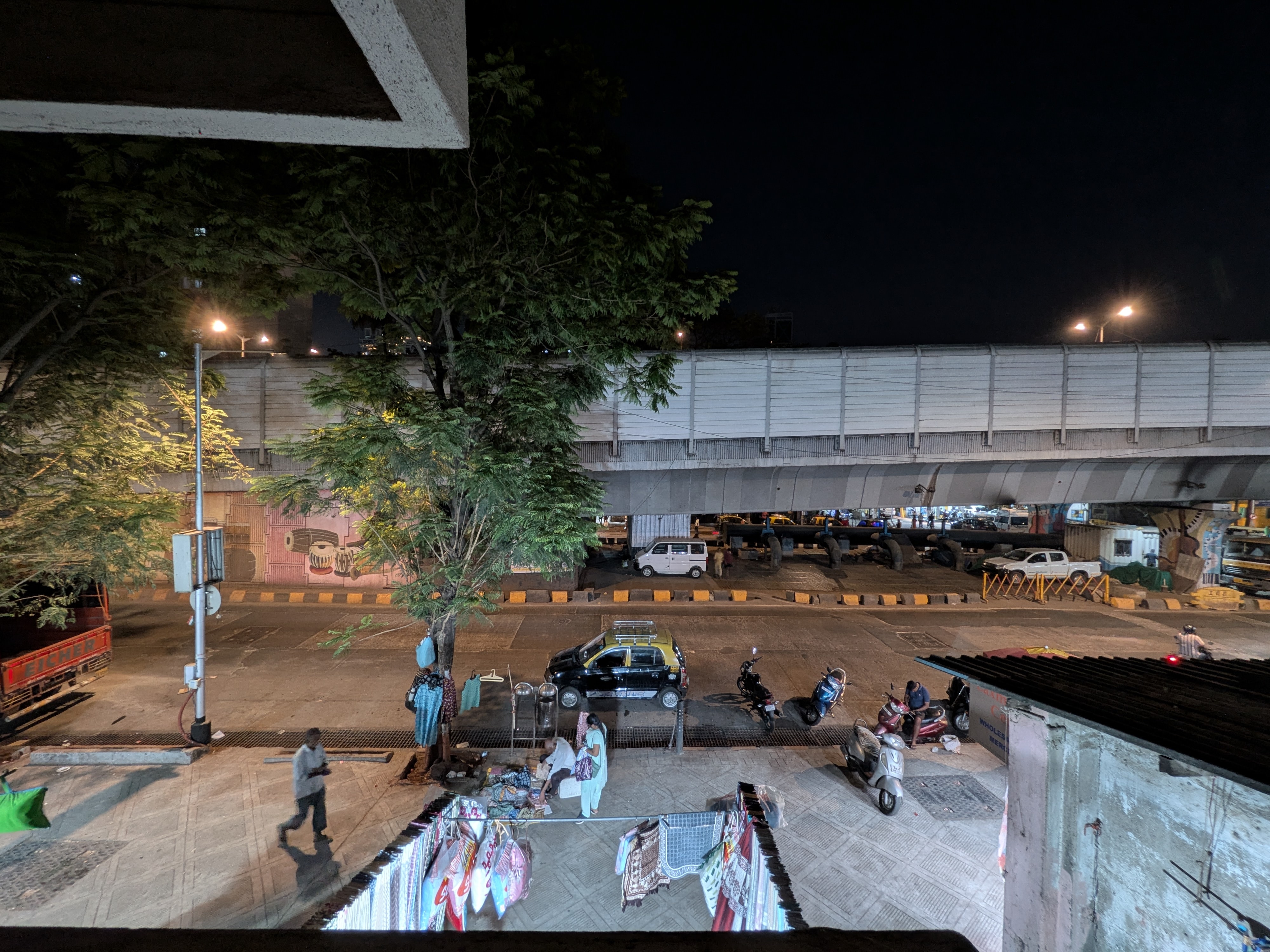
Ultrawide camera samples - Vivo V70 Elite (top), Google Pixel 10a (middle), Pixel 10a (low-light) (tap images to expand)
We start off with the ultrawide camera. The Vivo V70 Elite fared rather poorly with its ultrawide in our review, producing below-average results in broad daylight. Despite Vivo setting the bar a bit too low, Google's Pixel 10a performs really well. For beginners, photos have perfectly natural colours compared to the V70 Elite. Sharpness, detail and dynamic range are spot on. My only gripe with the 10a's ultrawide camera is that there's noticeable lens-barrel distortion near the edges (even though it's handled well) because of the super wide 120-degree field of view (FoV). In low-light, details and dynamic range are good, and noise is under control, showing mature image processing. Indeed, the Pixel 10a's ultrawide performs surprisingly well for a Rs. 50,000 premium device.
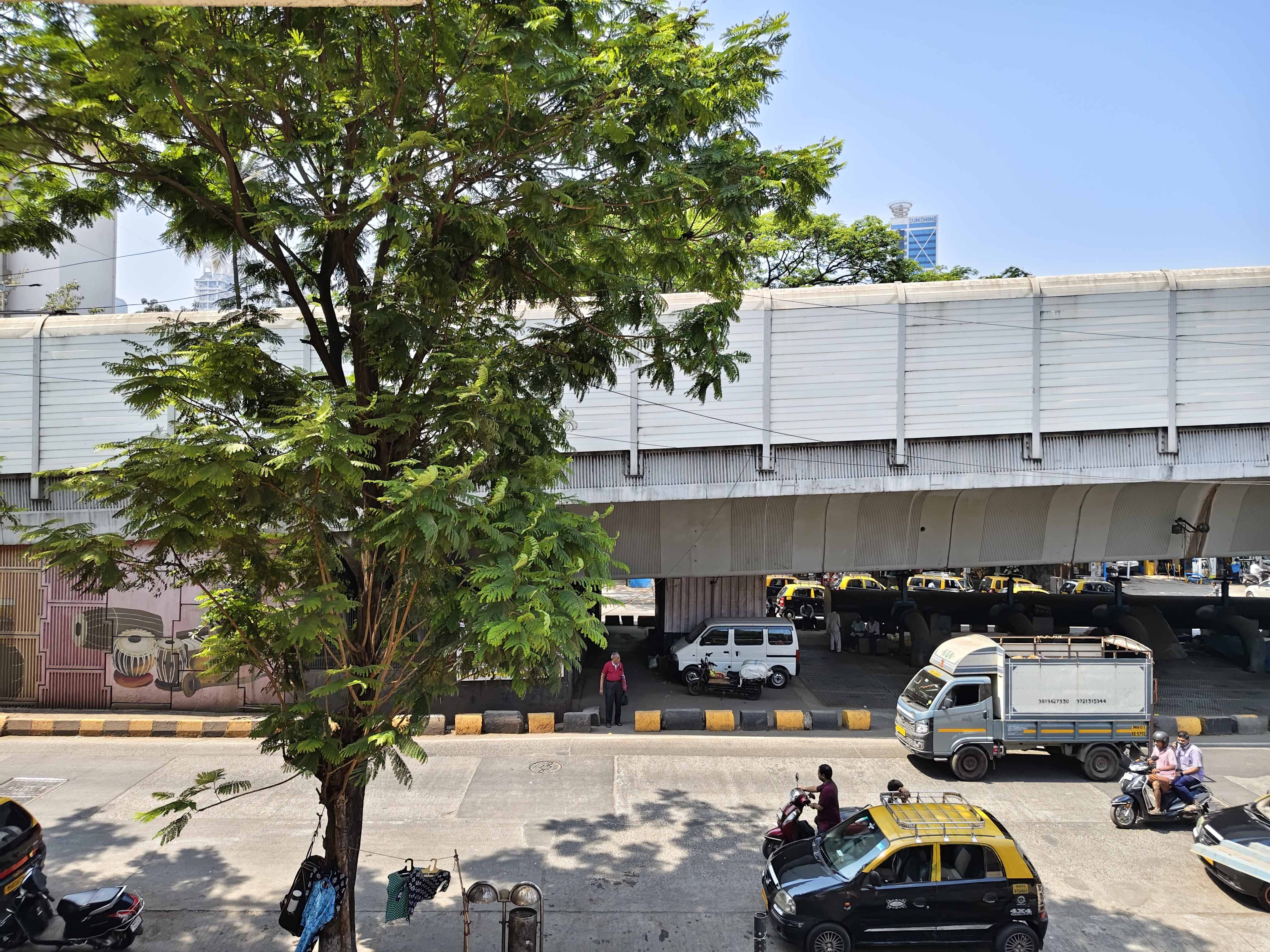
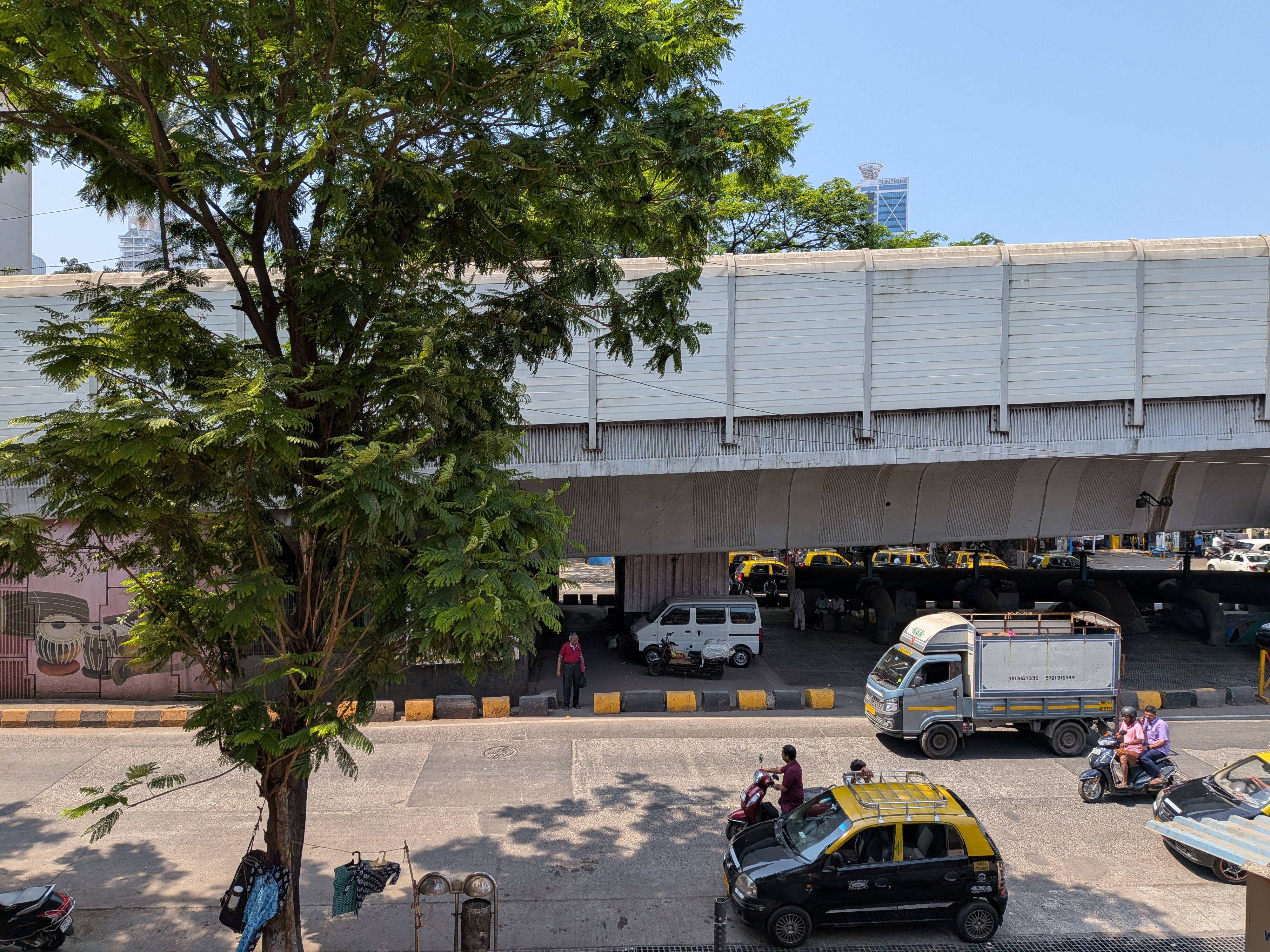
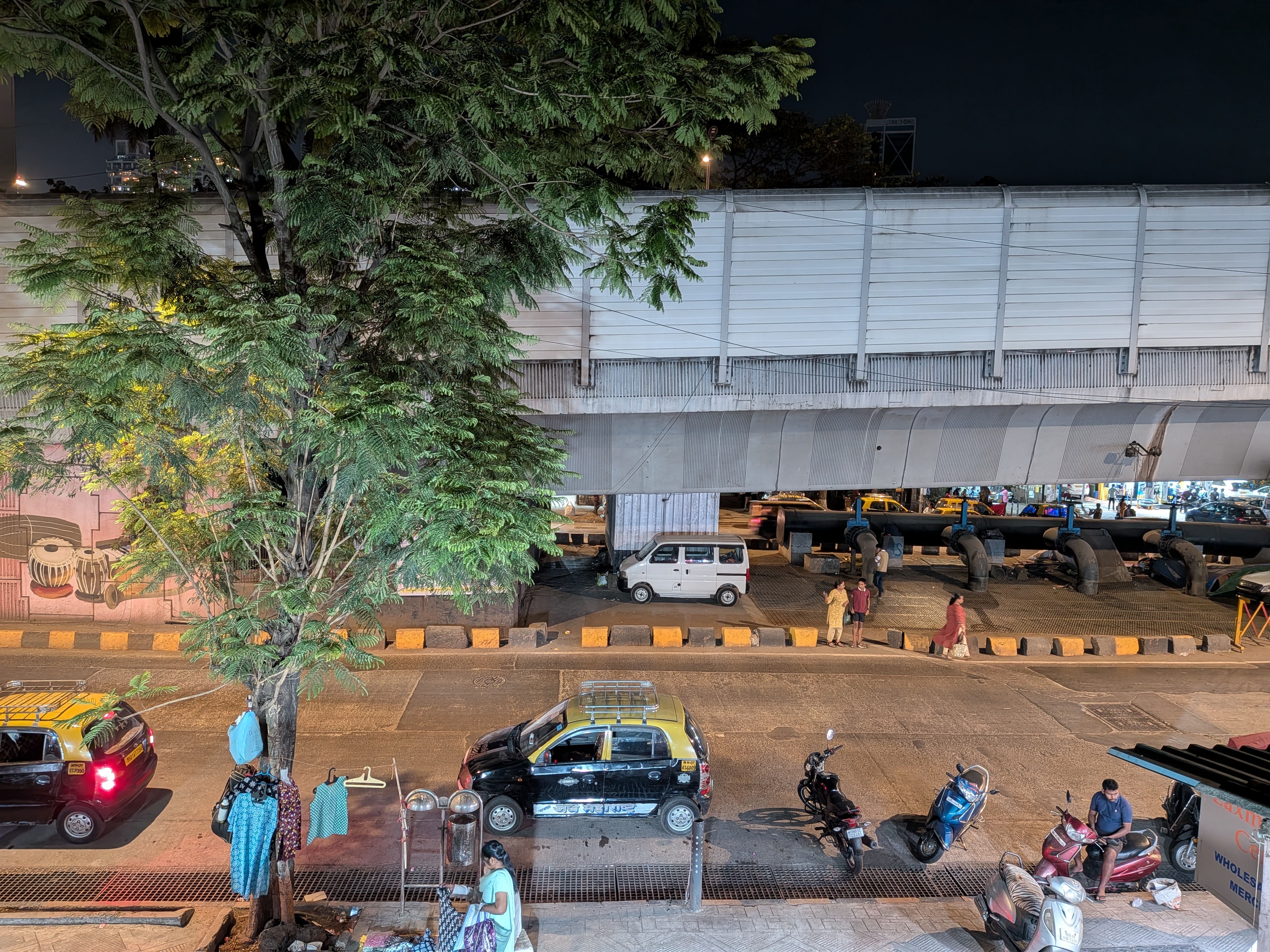
Primary camera samples - Vivo V70 Elite (top), Google Pixel 10a (middle), Pixel 10a (low-light) (tap images to expand)
Moving on to the primary camera, once again, we found the Pixel 10a's processing mature compared to the Vivo V70 Elite's samples. The 10a produces natural colours, a better dynamic range, and more resolved detail, giving textures better definition. Finer details are also processed better compared to the V70 Elite. In low-light or street-lit shooting conditions, the Pixel 10a's photos come out quite clean with minimal noise, excellent dynamic range and good detail. It also handles contrasting scenes quite well.
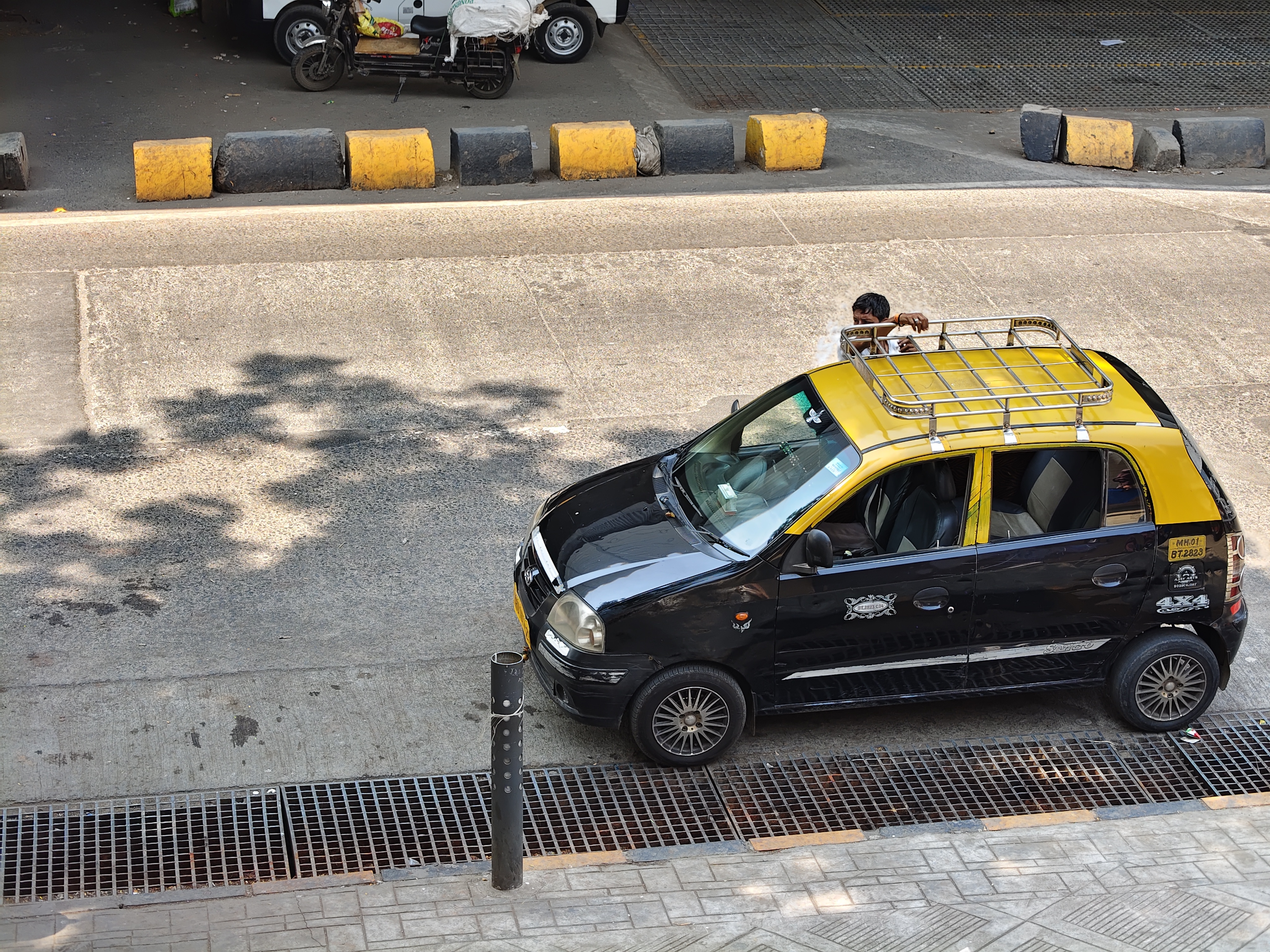
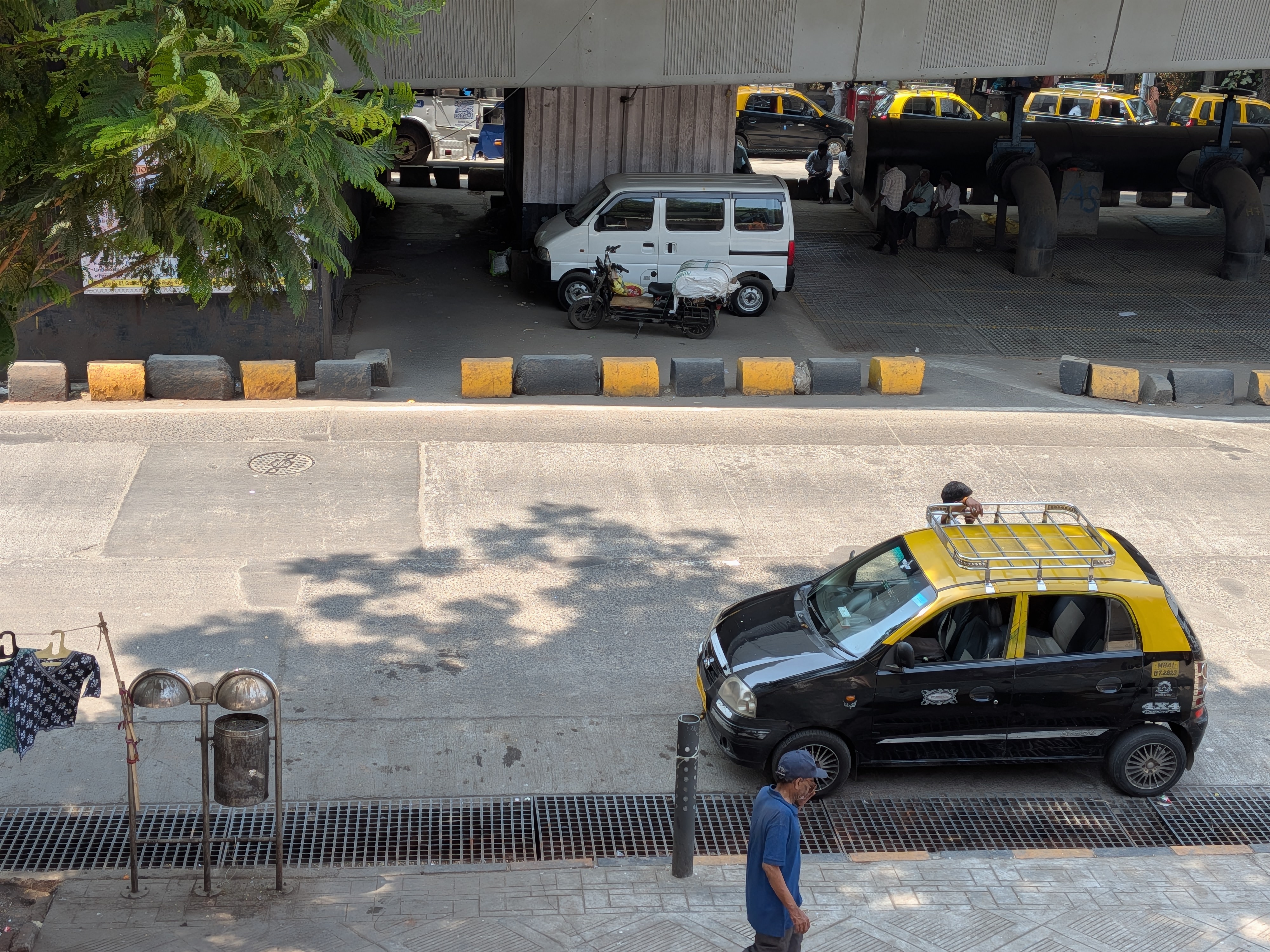
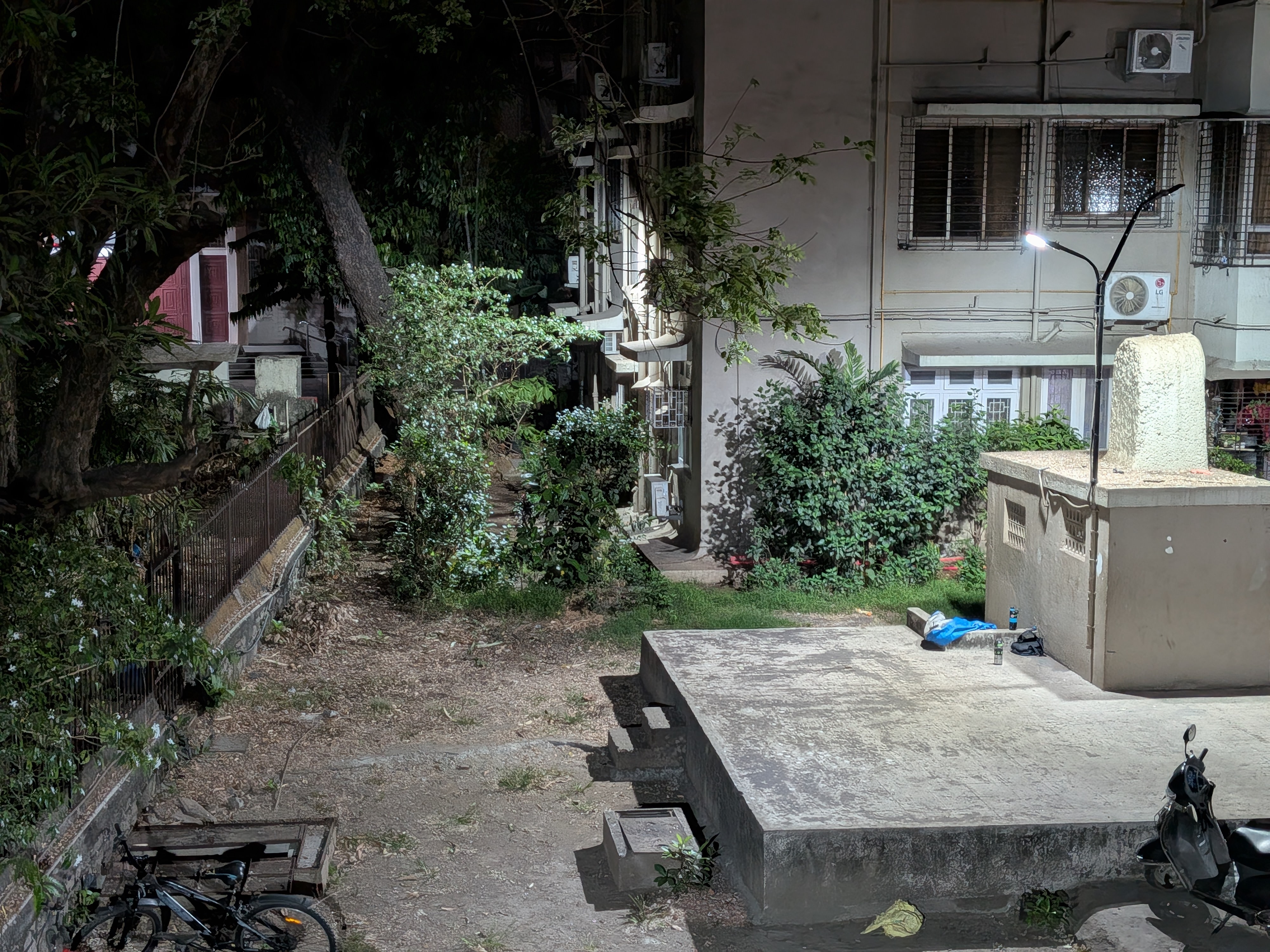
Telephoto camera samples - Vivo V70 Elite 3X optical (top), Google Pixel 10a 2X (middle), Pixel 10a (low-light) (tap images to expand)
Moving on to the telephoto capability, the Pixel 10a does not have a dedicated telephoto camera. But we do have a 2x lossless preset, which I did use while shooting. The overall image quality is surprisingly good in daylight; there is a minor drop in global detail or slightly fuzzy textures when processing foliage or intricate patterns. At 2X, the Pixel 10a still shoots better digital crops than the V70 Elite. However, its shortcomings are more visible in low-light settings. At 3X zoom, the Vivo V70 Elite stands out, producing sharp, detailed photos in both daylight and low light. The Vivo V70 Elite even manages good detail when using its AI-enhanced (and upscaled) 10X zoom preset.
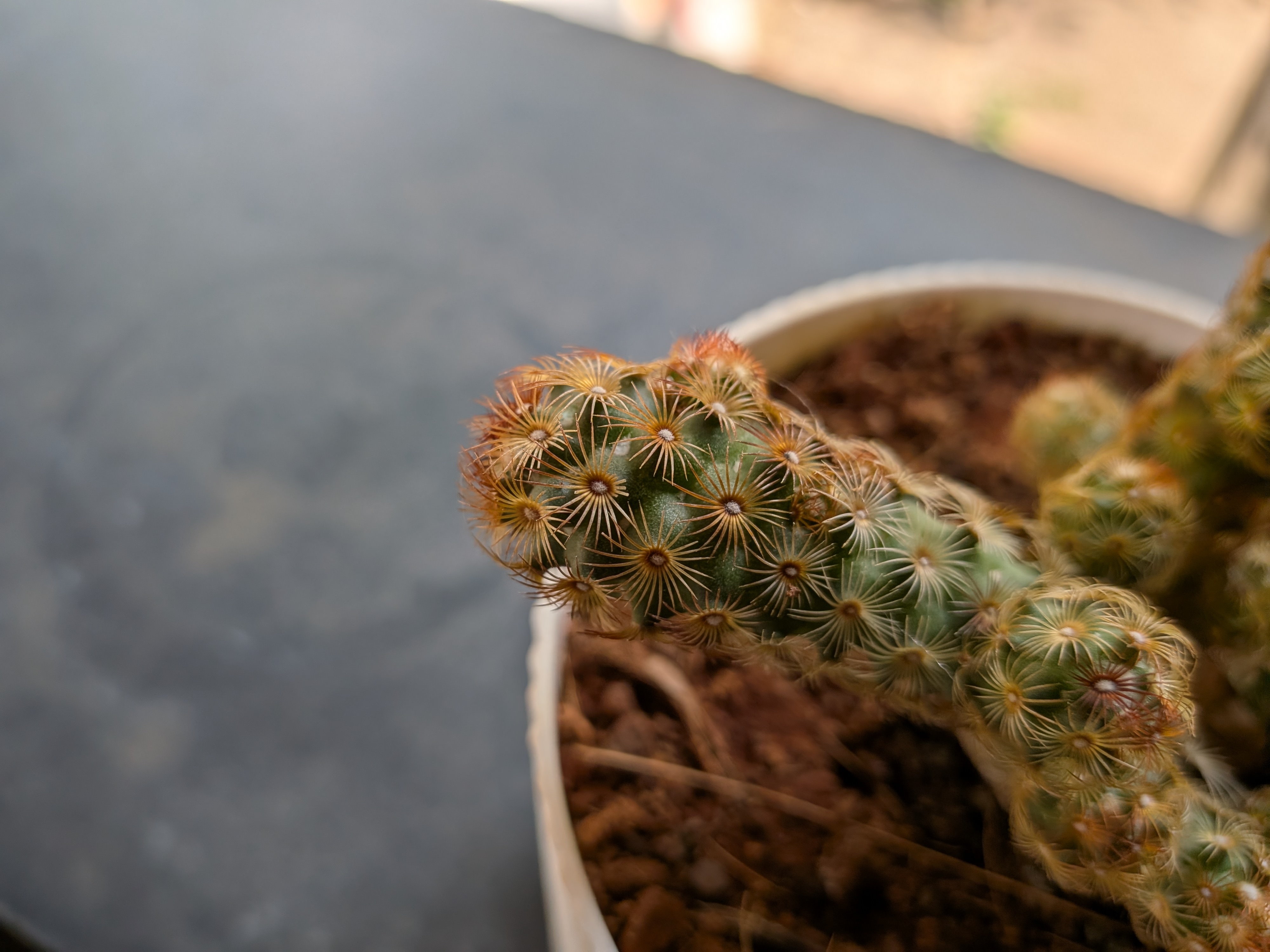
Pixel 10a macro photos come out clear and detailed (tap image to expand)


Pixel 10a, Portrait camera sample (top), selfie camera sample (bottom) (tap images to expand)
Portrait photos from both primary cameras show good detail but also appear a bit oversharpened. I found the software edge-detection a bit more accurate on the Pixel. Selfies come out well with good detail in daylight, but are a wee bit soft in low-light, as can be seen in the sample above.
Video quality on the Pixel 10a is just decent for its price. 4K 30 fps video recordings have good dynamic range and smooth stabilisation compared to the Vivo V70 Elite. However, there's visible noise when shooting even in daylight that results in this slightly hazy appearance. Low-light footage appears soft and noisy. Vivo's video appears sharper and more contrasted with good dynamic range, but appears a bit shaky in terms of stabilisation.
Google Pixel 10a Battery: Gets the job done
- Battery capacity - 5,100mAh
- Wired charging - 30W
- Wireless charging - 10W
- Charger in the box - No
Since the battery capacity and chipset remain identical to last year's Pixel 9a, the overall performance is also similar. With heavy use, the Pixel 10a, like the Pixel 9a, still remains a one-day smartphone, meaning you will have to plug it in when you hit the sack. Casual users who don't play games or use the camera much will see slightly better battery life. But don't expect it to maintain enough power to last even the first half of the next day. PCMark's Work Battery life test also managed 16 hours and 22 minutes, which reflects the above use cases.
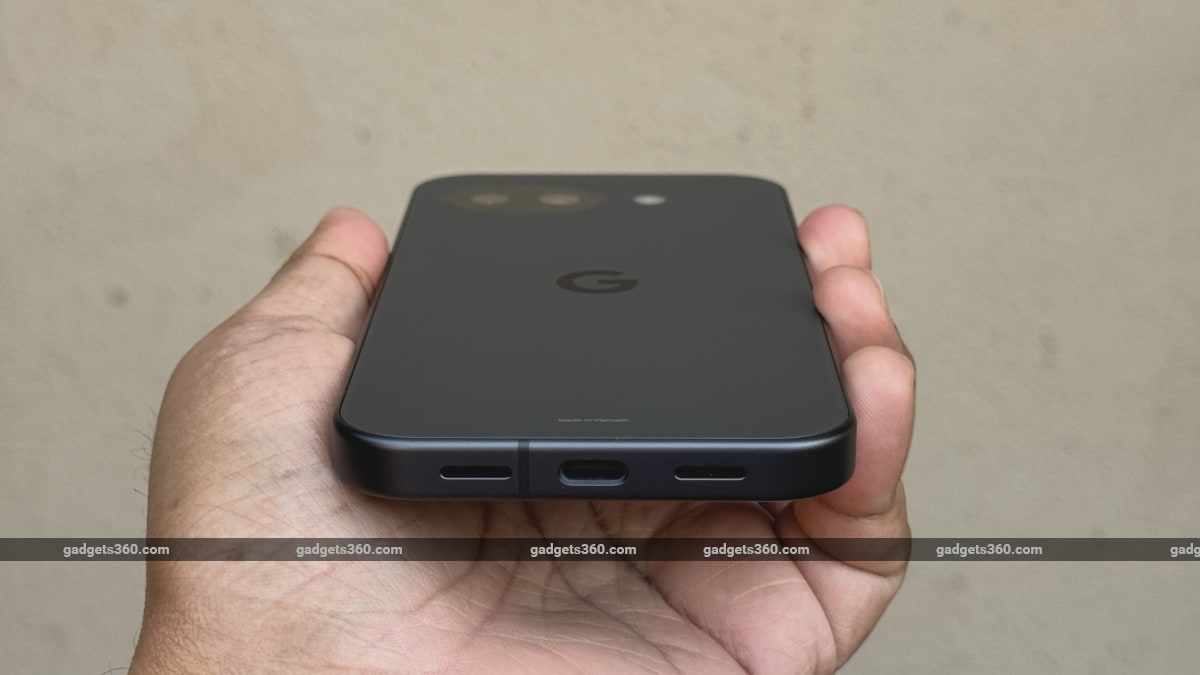
The Google Pixel 10a has a large enough 5,100mAh lithium-ion battery, but it only supports 30W charging
As you can tell from the pointers above, both wired and wireless charging speeds have received a boost this year. For a premium device sold in India, the charging speeds don't impress, managing a 42 percent charge in 30 minutes and completing the charge in 1 hour and 43 minutes when connected to a third-party 100W PD charger.
Google Pixel 10a Verdict
Yes! Google's Pixel a-series formula still works perfectly fine in 2026. With the Pixel 10a, Google proves that not everyone needs performance-oriented hardware to achieve the best results or deliver a basic premium experience. This is evident in both its software experience and its cameras. The Pixel 10a's strongest selling point remains its software experience and Android 16. Pixel UI is definitely best-in-class and choc-a-bloc with AI features. For those who like to hold on to their devices for long periods, the 7 years of software support will sweeten the deal, even at Rs. 50,000.
But then there's the Pixel 9a, which offers essentially the same raw performance, software experience, and battery life. It can be purchased online at around Rs. 39,999, which is a very good price tag given what it's capable of. So, if you are looking to buy a basic Pixel device this year, try finding a Pixel 9a before you reach for a Pixel 10a.
And for our readers in India, there is always plenty of variety. The Vivo V70 Elite (from Rs. 51,999) is a solid contender in the camera department, mainly for its 3X telephoto camera, battery life and fast charging. The OnePlus 13s is also a solid contender in a compact package with a Snapdragon 8 Elite processor.
If you are looking for full-blown gaming hardware, then the iQOO 13 (from Rs. 54,999) is a better pick. It can run any game under the sun with all settings maxed out, but it does fall a bit short in the camera department.
And lastly, for those looking to experience something new, the Apple iPhone 16e is available online for as low as Rs. 47,900. It delivers impressive battery life and good performance, but falls short in every other area, including its cameras.
- REVIEW
- KEY SPECS
- NEWS
- Good
- Minimalist and compact design
- Bright HDR-certified display
- Reliable still camera performance
- Clean UI with handy AI features
- 7 years of updates
- Wireless charging
- Good battery life
- Bad
- Thick display borders
- Average video recording quality
Read detailed Google Pixel 10a review
Display 6.30-inch
Processor Google Tensor G4
Front Camera 13-megapixel
Rear Camera 48-megapixel + 13-megapixel
RAM 8GB
Storage 256GB
Battery Capacity 5100mAh
OS Android 16
Resolution 1080x2424 pixels
Comments
Get your daily dose of tech news, reviews, and insights, in under 80 characters on Gadgets 360 Turbo. Connect with fellow tech lovers on our Forum. Follow us on X, Facebook, WhatsApp, Threads and Google News for instant updates. Catch all the action on our YouTube channel.
Further reading:
Google, Google Pixel 10a, Google Pixel 10a Specifications in India, Google Pixel 10a Price in India, Google Pixel 10a Design, Google Pixel 10a Display, Google Pixel 10a Features, Google Pixel 10a Software, Google Pixel 10a Cameras, Google Pixel 10a Battery
Related Stories





Advertisement
Follow Us




-
![[Sponsored] LG NANO 4K UHD AI TV NU885: Gemini Search, Dolby Atmos & 5 Years of Updates](https://www.gadgets360.com/static/desktop/images/spacer.png)
04:17
[Sponsored] LG NANO 4K UHD AI TV NU885: Gemini Search, Dolby Atmos & 5 Years of Updates -
00:57
[Sponsored] Samsung Galaxy Z Fold8 My Fan Cam in Action: Find the Moment, Then Share It -
01:41
[Sponsored] What Do You Need To Know Before Your Next Run? | Samsung Galaxy Watch Ultra2 -
01:32
[Sponsored] Big Day Tomorrow? Prep Today | Samsung Galaxy Watch Ultra2 -
04:37
[Sponsored]: CP PLUS CarKam CP-F89B: 4K Dashcam With Rear Camera, GPS & Emergency Recording
-
आ गई हवा में उड़ने वाली Tesla Roadster कार, आखिर सच हुआ फिल्मों वाला कमाल
-
रोबोट ने की लड़की से छेड़छाड़, पीछे से पकड़ा और किए गंदे इशारे, जानें
-
PS5 कहां मिलेगा सस्ता, Flipkart या Amazon, जानें सबकुछ
-
Samsung Galaxy F70 5G भारत में लॉन्च, 50MP तीन कैमरा, 5000mAh बैटरी वाला बजट फोन!
-
Flipkart Big Billion Sale 2026: ₹10 हजार से ₹15 हजार में मिल रहे Mivi, Lava, Boltt के AI कैमरा फोन
Advertisement
Popular on Gadgets
- Samsung Galaxy S26 Ultra
- Motorola Razr Fold
- ChatGPT
- OPPO Find N6
- Mobiles Under Rs. 40,000
- Vivo X300 Ultra
- Asus Zenbook S14
- iQOO 15
- Vivo X300 Pro
- Lenovo Yoga Slim 7i Aura Edition
- iQOO 15R
- Vivo X Fold 5
- Sony PlayStation 5
- HP OmniPad 12
- OnePlus Nord CE 6 Lite
- OnePlus Pad 4
- OPPO F33 Pro 5G
- Cryptocurrency
- HP OmniBook Ultra 14 (2026)
- iPhone 17
- Eureka Forbes AP 355 Room Air Purifier
- Latest Mobile Phones
- Compare Phones
Latest Gadgets
- Tecno Spark 50S 5G
- Vivo Y600s Pro
- Vivo Y32 (2026)
- Infinix Smart 20 HD
- Vivo V80
- Vivo S2 FE
- Vivo Y600K Turbo
- Realme P4s Lite
- HP ZBook Ultra G3a
- Dell Pro Rugged 14
- Amazon Alexa Tablet 8
- Amazon Alexa Tablet 11
- Amazfit T-Rex Dual Solar
- OPPO Watch S2
- Toshiba 65-Inch 4K Ultra HD Smart Mini LED QLED TV (65Z670SP)
- Haier M70 Mini LED 65-inch
- Acer Predator Atlas 8
- Asus ROG Ally
- Blue Star 1.5 Ton 5 Star Inverter Split AC (IE518ZNURS)
- Blue Star 2 Ton 3 Star Inverter Window AC (WIE324L)

- About Us
- Sitemaps
- Feedback
- Archives
- Contact Us
- RSS
- Advertise
- Career
- Privacy Policy
- Ethics
- Editorial Policy
- Terms & Conditions
- Complaint Redressal
Download Our Apps
Available in Hindi
© Copyright Red Pixels Ventures Limited 2026. All rights reserved.