-
 Assassin's Creed Black Flag Resynced Sells 2 Million Copies on Launch Day13 July 2026
 -
Assassin's Creed Black Flag Resynced Becomes Biggest Steam Launch in Series' History10 July 2026
-
Assassin's Creed Black Flag Resynced Console Specs, PS5 Pro Enhancements Confirmed30 June 2026
-
Assassin's Creed Shadows' Final Update Adds New Story Quest and Crossover Projects With Black Flag Resynced16 June 2026
-
Assassin's Creed Shadows' Final Update Arrives Next Week, May Tie in With Black Flag Resynced10 June 2026
- Home
- Games
- Games Reviews
- Assassin's Creed Black Flag Resynced Review: Ubisoft's Remake Unearths Buried Pirate Gold
Assassin's Creed Black Flag Resynced Review: Ubisoft's Remake Unearths Buried Pirate Gold
Black Flag Resynced is a faithful return of a beloved classic that does exceedingly well to update the original without interfering with its spirit.
Written by Manas Mitul, Edited by David Delima | Updated: 15 July 2026 13:19 IST
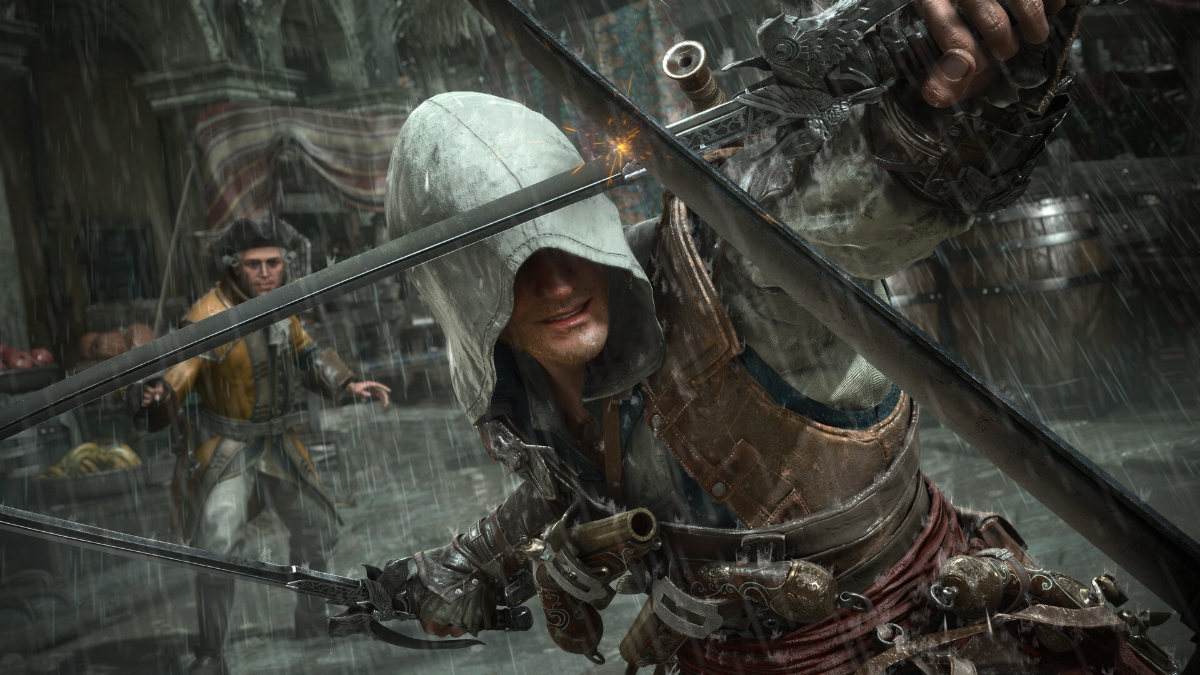
Photo Credit: Ubisoft
Assassin's Creed Black Resynced launched on PC, PS5, and Xbox Series S/X on July 9
Click Here to Add Gadgets360 As A Trusted Source

Advertisement
Assassin's Creed often takes itself a little too seriously. Under layers of conspiratorial lore about the perennial push and pull between Templars and Assassins, the long-running, history-hopping series from Ubisoft sometimes forgets to have fun. Perhaps that's why Assassin's Creed games that shift the focus from the series' impregnable foundations to an accessible outsider attempting to break it all down feel so distinct. Of course, the Assassins and Templar stuff is great, but wouldn't it be fun if you could do all of that as a pirate?
Over a decade after Assassin's Creed set sail on the high seas with Black Flag, Assassin's Creed Black Flag Resynced takes the same route to the West Indies in a new wrapper. A full remake of the acclaimed original, Black Flag Resynced comes with undeniable technical upgrades, but the real task in front of it is to find the pirate soul of a game that many still consider among the best in the series. After all, it's one thing to make a thing look pretty and another to understand what makes it beautiful.
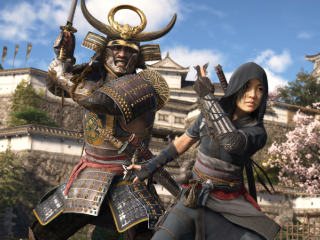
Assassin's Creed Shadows Review: Double-Edged Sword
And it's also worth questioning if a game from 2013, that holds up perfectly well both in terms of both visuals and gameplay, merits the remake treatment. Despite these concerns, it's clear that developer Ubisoft Singapore has approached the remake earnestly, with both reverence for the source material and the intention to modernise it the right way. And as a result, Assassin's Creed Black Flag Resynced understands the beauty of the original, both within and without. The remake not only appreciates Black Flag's golden sun and shimmering sea, but also adores its rebel heart. It faithfully recreates the beloved pirate adventure and enhances the experience with new chunks of story that add a little more dimension to the endearing ensemble of ragtag ruffians chasing freedom in the Caribbean.
There are imperfections here, too. Black Flag Resynced polishes the visuals of the original to give them a blinding sheen, but similar polish escapes all aspects of the gameplay, with the overhauled combat being the biggest culprit. This isn't as bug-free a release as Assassin's Creed Shadows was last year. And then there's some cut content, both from the story and gameplay parts of the original, that stops the remake from being the definitive way to experience Black Flag. In its own way, Black Flag Resynced is a reminder of both the highs and lows of Assassin's Creed. But the highs are so much fun that the lows ebb away, and you're left with pure pirate gold.
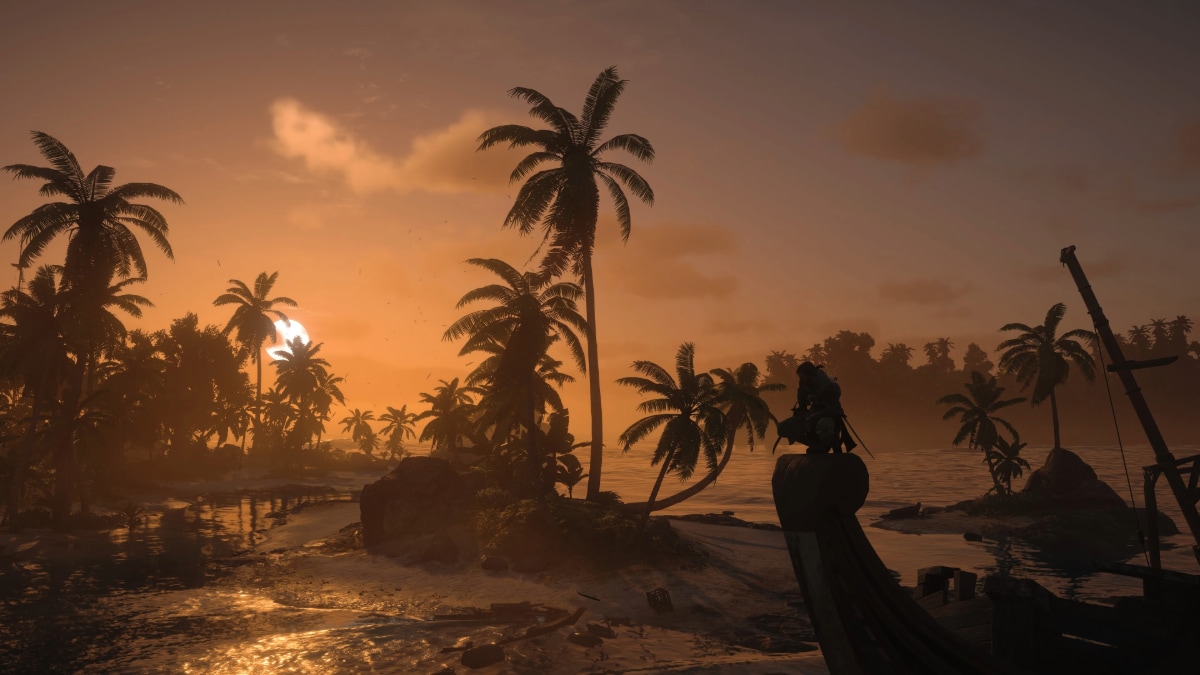
Black Flag Resynced is perhaps the best-looking Assassin's Creed game ever made
Photo Credit: Ubisoft/Screenshot – Manas Mitul
It's perhaps best to first mention just how good Assassin's Creed Black Flag Resynced looks. Before everything else, remakes are glow ups. They are meant to stand side by side in comparison to the original to show how far video game graphics have come in the intervening years. And Black Flag Resynced, rebuilt in Ubisoft's Anvil engine, transforms the tropics of the original Black Flag into a carnival of detail, colour, light. Of course, current-gen graphics have come a long way from the PS3 and Xbox 360 era, but there's more at play in the remake's visuals than a higher polygon count.
Assassin's Creed IV: Black Flag's visuals still hold up, but the remake brings a different kind of mood altogether. Perhaps it's the realistic ray-traced global lighting, or the lush foliage, or the bluer-than-blue sea that makes the West Indies of Black Flag Resynced more atmospheric and immersive. Black Flag had a somewhat duller tone, and the amped-up saturation in the remake might displease some who would prefer the style of the original preserved. But Black Flag Resynced serves a more striking, vacation version of the sea and sand locales of the game.
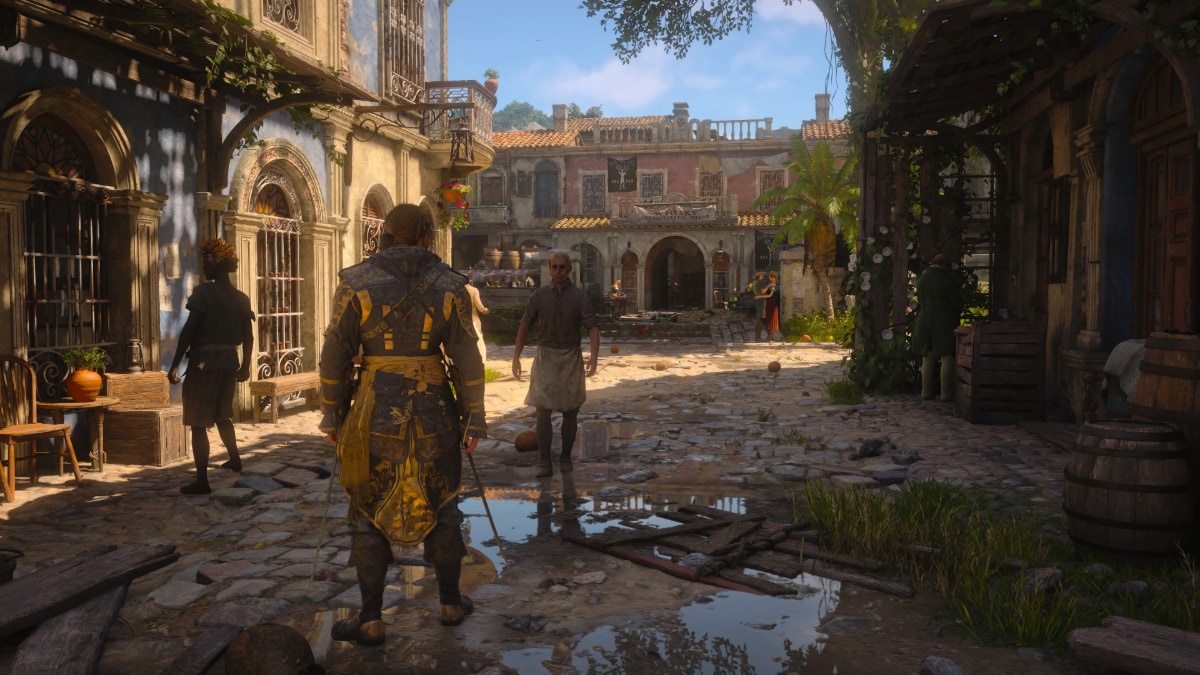
Cities are a lot more detailed in Black Flag Resynced than they were in the original
Photo Credit: Ubisoft/Screenshot – Manas Mitul
The two most obvious beneficiaries of the visual upgrade in the remake are dense urban sprawls and denser jungles spread across the islands of the West Indies. Cities like Kingston, Havana, and Nassau are now living, breathing townships teeming with NPCs, merchant shops, and side activities that return from the original game. Black Flag Resynced also removes loading screens when you dock your ship into a city, which makes the world feel like a cohesive whole. Wooded areas, on the other hand, are almost lifelike. Dense foliage combined with realistic lighting makes forested islands impossibly detailed.
When Assassin's Creed IV: Black Flag came out in 2013, it had some of the best water graphics and simulation in video games seen up to that point. The same remains true of the remake, which also expands underwater exploration, allowing players to dive anywhere they want in addition to the returning Diving Bell underwater segments from the original game. Black Flag Resynced also adds a dynamic weather system to the mix and new climate events like rogue winds, in addition to returning weather phenomena like tornadoes, thunderstorms, and rogue waves.
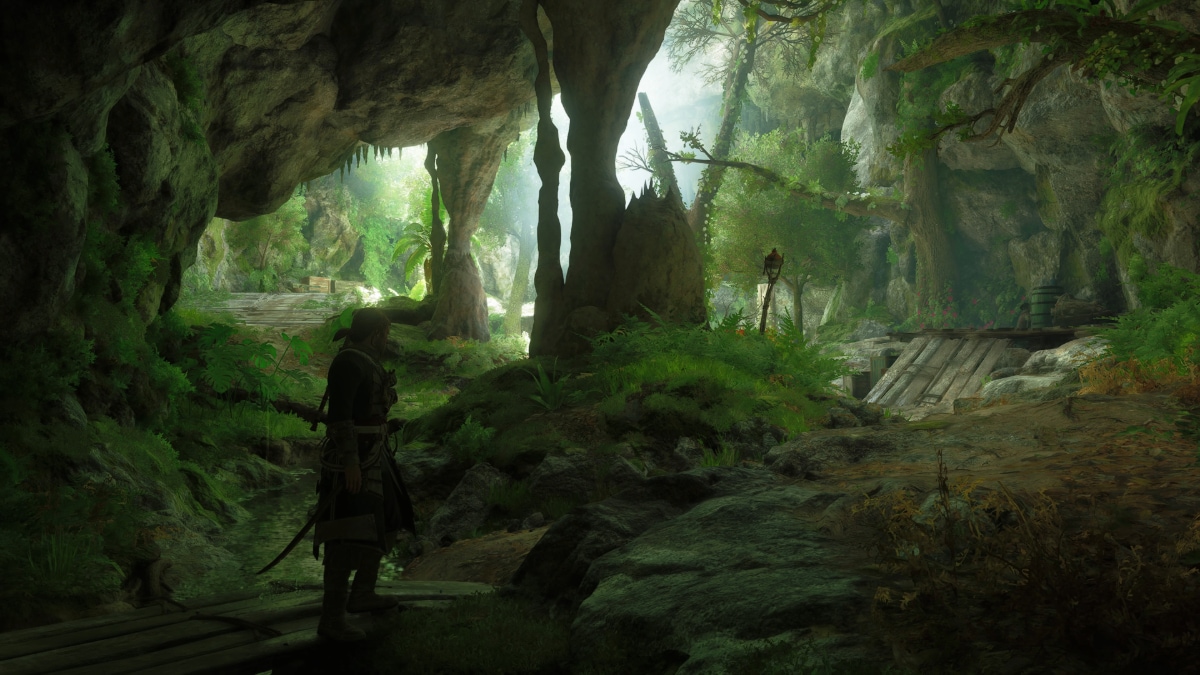
Foliage and environments look lifelike in Black Flag Resynced
Photo Credit: Ubisoft/Screenshot – Manas Mitul
The visual upgrade is undeniably considerable, but does it justify remaking a game that looks and plays perfectly well on PC and consoles? The answer to that question may vary from person to person. It is a bit puzzling, though, that Ubisoft picked a relatively recent and accessible title like Black Flag as the first remake candidate from its catalogue when the first Assassin's Creed game is not available on PS5 and would have benefitted the most from technical upgrades. But perhaps a Black Flag remake carries wider appeal; the original game remains a fan-favourite and is widely considered one of the most innovative and riotously fun games in the series.
Black Flag Resynced isn't just a prettier package, it's a meatier one too in terms of its story. The remake adds new narrative content, both cutscenes and expanded story missions, that contextualise or cap off storylines from the original in faithful and tasteful ways. Black Flag follows the story of Edward Kenway, a Welsh privateer-turned-pirate looking for freedom and finances in the West Indies. Unsatisfied with his prosaic domestic life in England, he says farewell to his estranged wife and sets out to find riches in the Caribbean. The action picks up in 1715 when Edward finds himself shipwrecked and marooned with a rogue assassin in Cape Bonevista. The events that follow throw him at the heart of the centuries-old conflict between Templars and Assassins, with the order of the world at stake.
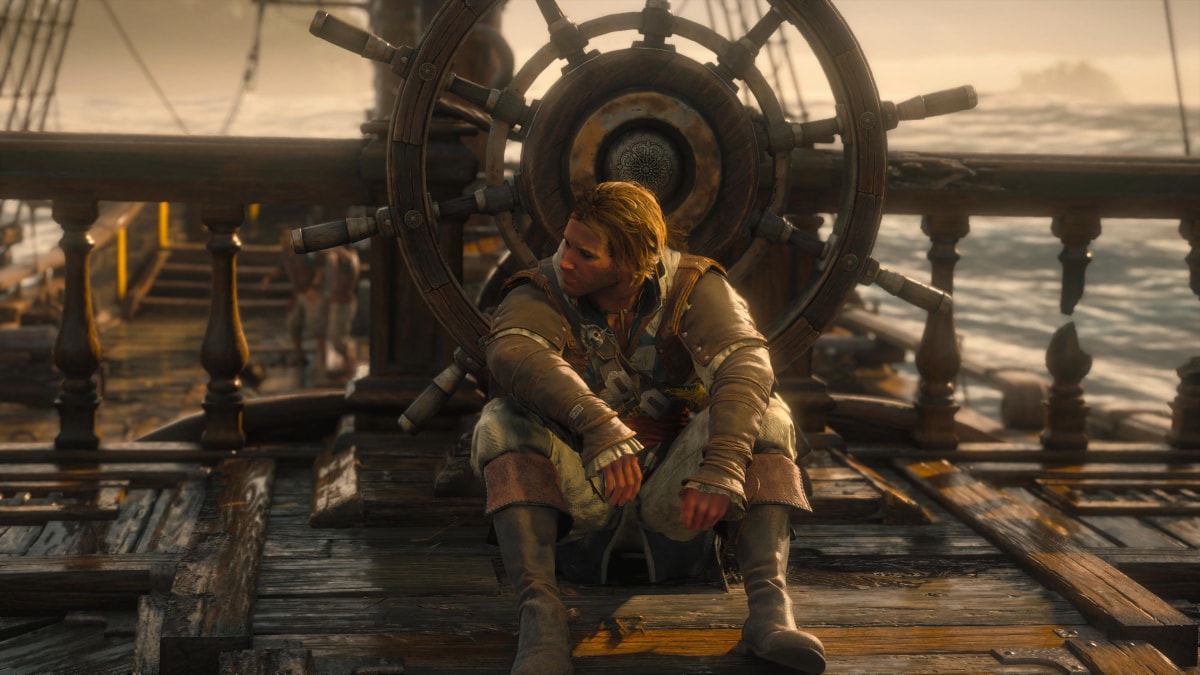
Assassin's Creed Black Flag Resynced follows the story of privateer-turned pirate Edward Kenway
Photo Credit: Ubisoft/Screenshot – Manas Mitul
Assassin's Creed IV: Black Flag charted Edward's ambitious beginnings, his deepening personal greed, and his eventual sombre realisation of things he left behind in his pursuit of gold and glory. The story, told over several years, was often disjointed, but was ultimately effective and affecting, capturing both the escalator of adventure and ambition and the descent of loss and regrets. In retrospect, it stands out as one of the series' best narratives, especially considering the dour and disconnected stories of recent RPG-era Assassin's Creed games.
At the heart of the story was Edward himself, widely considered one of the more interesting protagonists in the series. Portrayed by Welsh actor Matt Ryan with cavalier confidence, Edward is motivated by personal gain only for most of the story. He steals the identity of an assassin, sells out the brotherhood to Templars in Havana for his profit, and then double crosses the Templar order in search of the mythical Observatory, the secret Isu site in Jamaica that hides an ancient power. And while he writes occasional letters to his wife back home, Edward has all but abandoned the relationship at the altar of ambition. These choices later lead to harsh consequences that haunt the pirate captain and slowly but surely make him realise his folly.
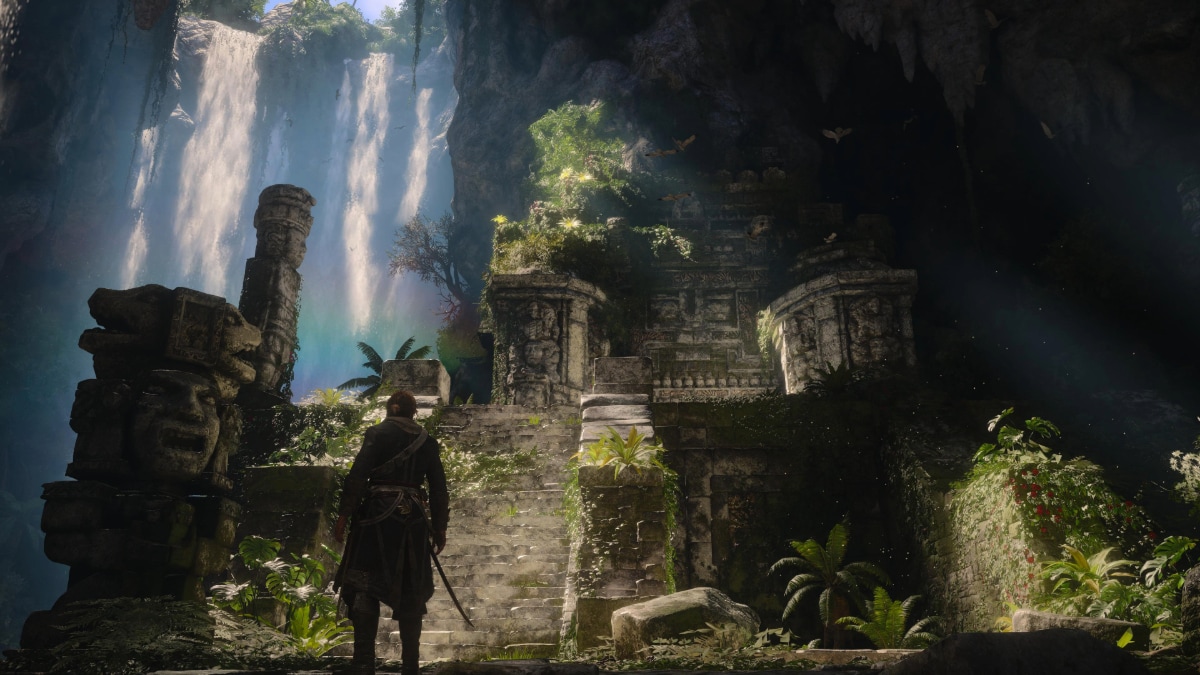
Edward sells out the Assassins for a bit of gold
Photo Credit: Ubisoft/Screenshot – Manas Mitul
And then there was the colourful cast of characters around Edward — friends and fellow pirates, historical figures like Blackbeard, Stede Bonnet, Charles Vane, Benjamin Hornigold, Anne Bonny, and James Kidd, who join him in his quest for riches and often become his moral compass. Bonnet looks up to Edward, while Blackbeard inspires him to seek greater glory. But it's James Kidd, who himself lives a double life, who pushes Edward to find purpose through the Assassin's creed of “Nothing is true, everything is permitted,” which Edward naturally finds attractive in letter, but only understands in spirit later when his actions have left him adrift.
Replaying the story in Assassin's Creed Black Flag Resynced reminded me of how narratives in the series used to be connected to a singular, unshakeable idea. Both the modern storylines and the historical settings in AC games used to be in service to a larger scheme playing out over millennia, bits of which were revealed slowly and meticulously over multiple titles. But since the series embraced the RPG approach, that connective narrative thread has been all but lost.
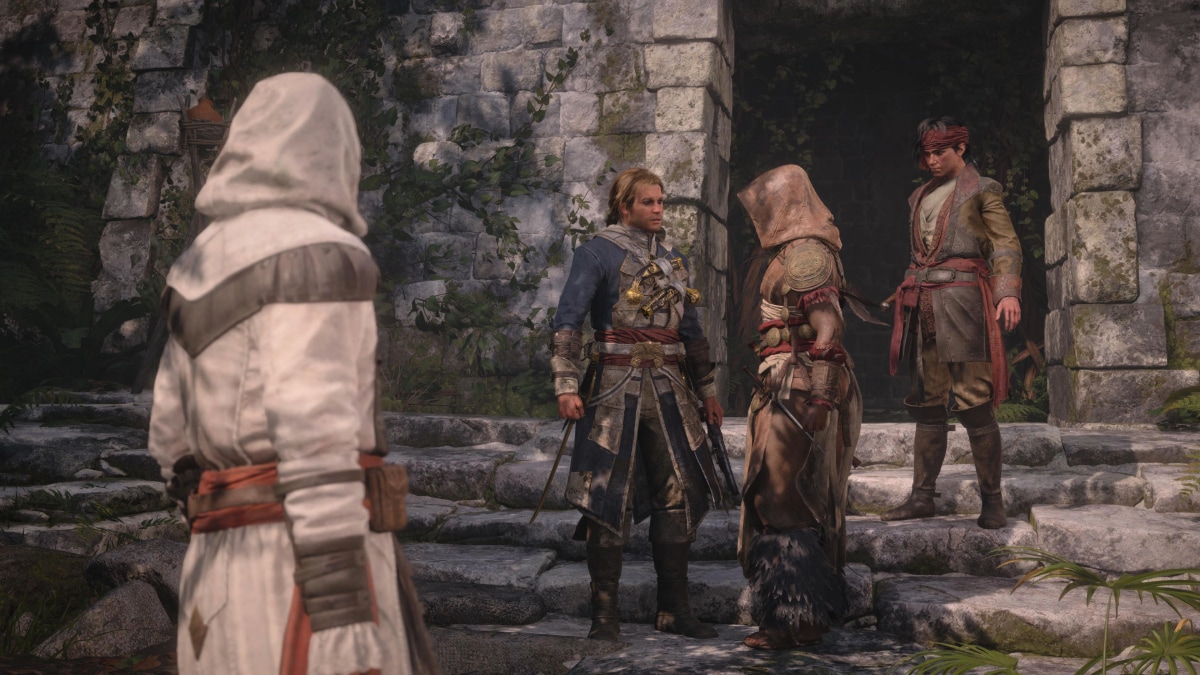
James Kidd introduces Edward to the Assassins and pushes him to find a greater calling
Photo Credit: Ubisoft/Screenshot – Manas Mitul
Black Flag Resynced also adds new story bits to the original narrative to flesh out certain arcs and further contextualise the characters. Edward and his wife Caroline, for instance, get additional scenes together in flashback sequences that underline their relationship. And Stede Bonnet and Blackbeard both get additional story missions that add a bit of emotional depth and fitting finales to their arcs. These chunks of story aren't major additions, but they do justify Black Flag Resynced's remake label.
But I wouldn't go as far as to say that the new game is the definitive way to experience the full narrative of Assassin's Creed IV: Black Flag. Crucially, the remake ditches the entire modern-day storyline of the original, which was far from perfect but formed an important connection between the Golden Age of Piracy in the West Indies and the larger Assassin's Creed lore about the First Civilisation, Isu artifacts, and Abstergo, the present-day multinational front for the Templar order in AC games. Instead, Black Flag Resynced brings back Helix rifts from Assassin's Creed Shadows that explore Edward's memories. This approach puts the focus back on the game's protagonist and attempts to connect the remake to more recent entries in the series, but it severs the relationship between modern-day Assassin's Creed lore and historic settings, which are essentially ancestral memories being investigated to uncover long-burried secrets.
Pragmata Review: The Bright Side of the Moon
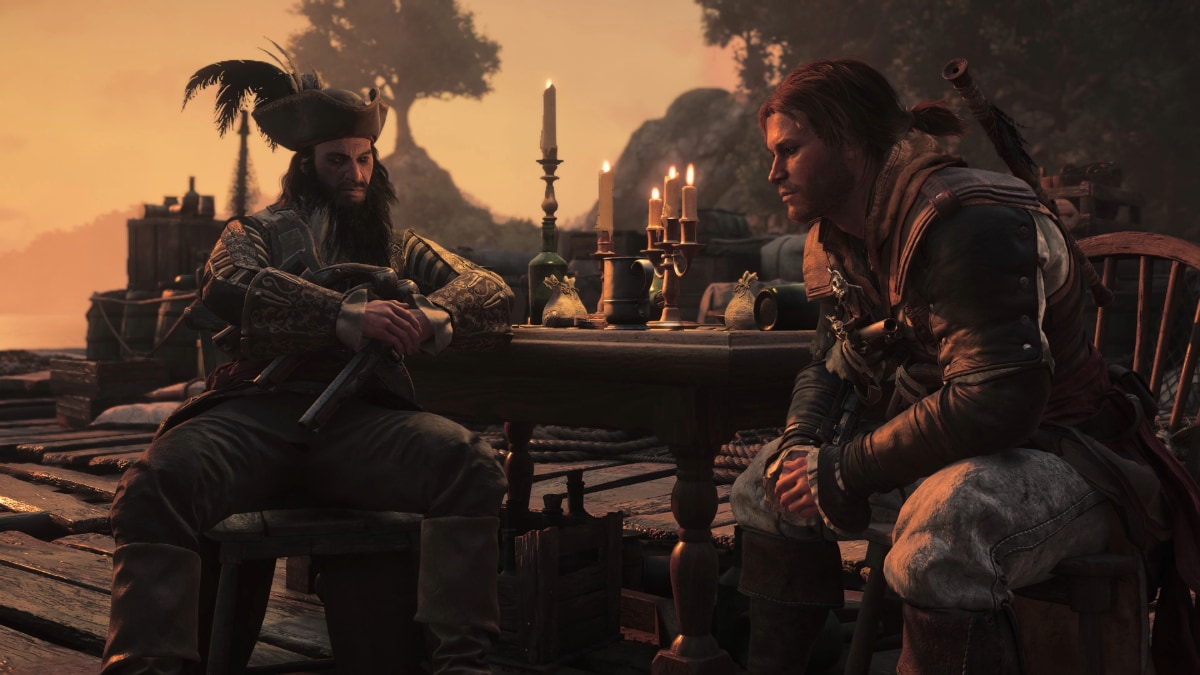
Blackbeard gets an expanded story arc in Black Flag Resynced
Photo Credit: Ubisoft/Screenshot – Manas Mitul
The remake also does not come with Black Flag's excellent Freedom Cry expansion that continued the story of Adéwalé, Edward's friend and quartermaster in the main game, as an assassin fighting slavery in the West Indies. The story DLC remains one of Assassin's Creed's most mature turns, and its omission here is a considerable loss.
There's cut content in the overhauled combat system, too. In the original game, you could temporarily pick up and start using any manner of weapons dropped by your enemies. But in the remake, you're restricted to using dual swords as your primary weapons. You can't even switch to hidden blades in combat, nor do you have the option to take on enemies unarmed and dispatch them non-lethally. What you do get is a total combat overhaul that mixes and matches parts from the original Black Flag and Assassin's Creed Shadows. Instead of the paired animation combat style seen in its source material, Black Flag Resynced opts for a parry-based system that allows for chained kills, but with limits.
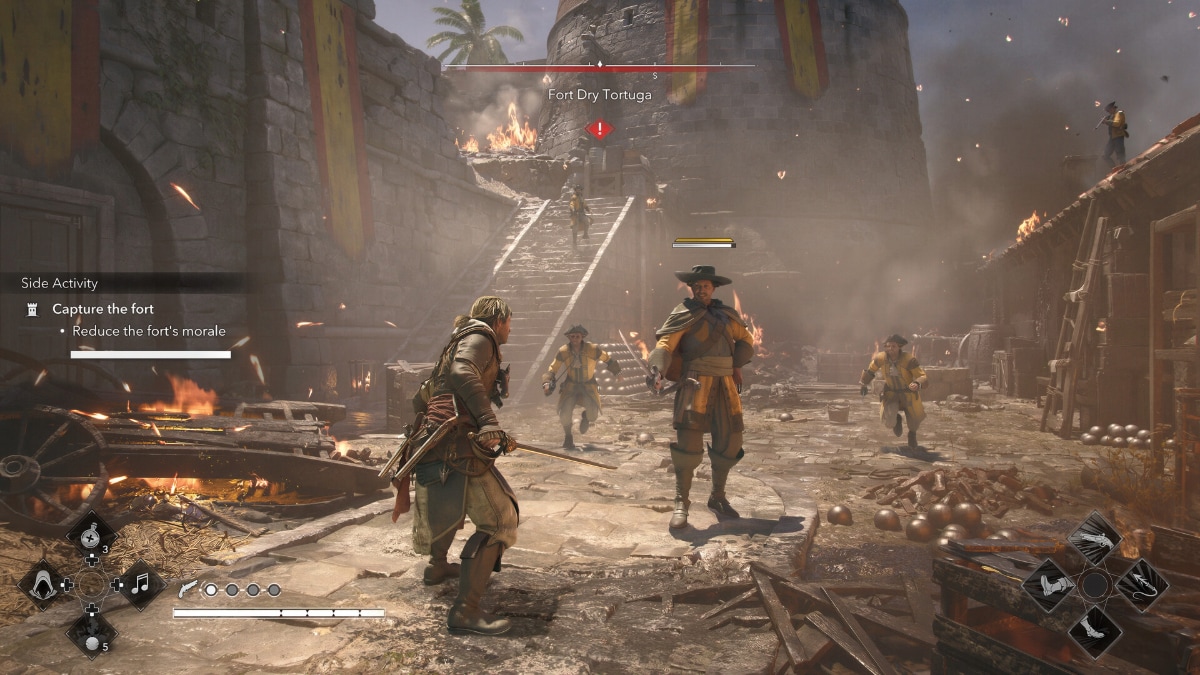
Black Flag Resynced overhauls the combat system of the original game
Photo Credit: Ubisoft
In addition to light and heavy attacks with dual swords, Edward can shoot his dual pistols to kill or stagger enemies and utilise the redesigned rope dart — unlocked earlier in the remake — without restriction to pull enemies closer or interrupt their attacks. Edward also gets two completely new moves in the remake to gain advantage in a skirmish: he can kick enemies or sweep their feet off the ground to get an opening for a quick kill. This new combat system may claim to have more depth than the one in the original game, but it strips away player choice by imposing weapon restrictions and removing the ability to fight unarmed. It's also not nearly as refined as other parts of the game. The RPG era of Assassin's Creed has struggled to craft a responsive and slick hitbox-based combat system, and recent games in the series have featured clunky and tedious combat that pales in comparison to the buttery smooth swordplay of peers like Ghost of Tsushima. Black Flag Resynced opts for simplified mechanics and thus avoids inconsistency, but the sword fights in the remake are far from satisfying.
There are significant changes to stealth actions and movement, too. Edward can now crouch at the press of a button to keep a low profile — crouching was contextually triggered in the original game. And Black Flag Resynced adopts the updated parkour system from Assassin's Creed Shadows, allowing for manual jumps and wall ejects while keeping the faster, simplified, and less deliberate free running style of modern Assassin's Creed games. This will bug the purists who still crave the more technical and intentional parkour system of older games, where the control scheme allowed for separate states of alertness and movement. But this is the best parkour has been in an Assassin's Creed game since the series' RPG era began, even if it sacrifices technical mastery in favour of fluidity. It's far from perfect and some glitches and imperfections persist, but free running across rooftops and trees in the game's bustling cities is a joy that you cannot experience in recent Assassin's Creed titles that favour flat, expansive open worlds over dense urban environments.
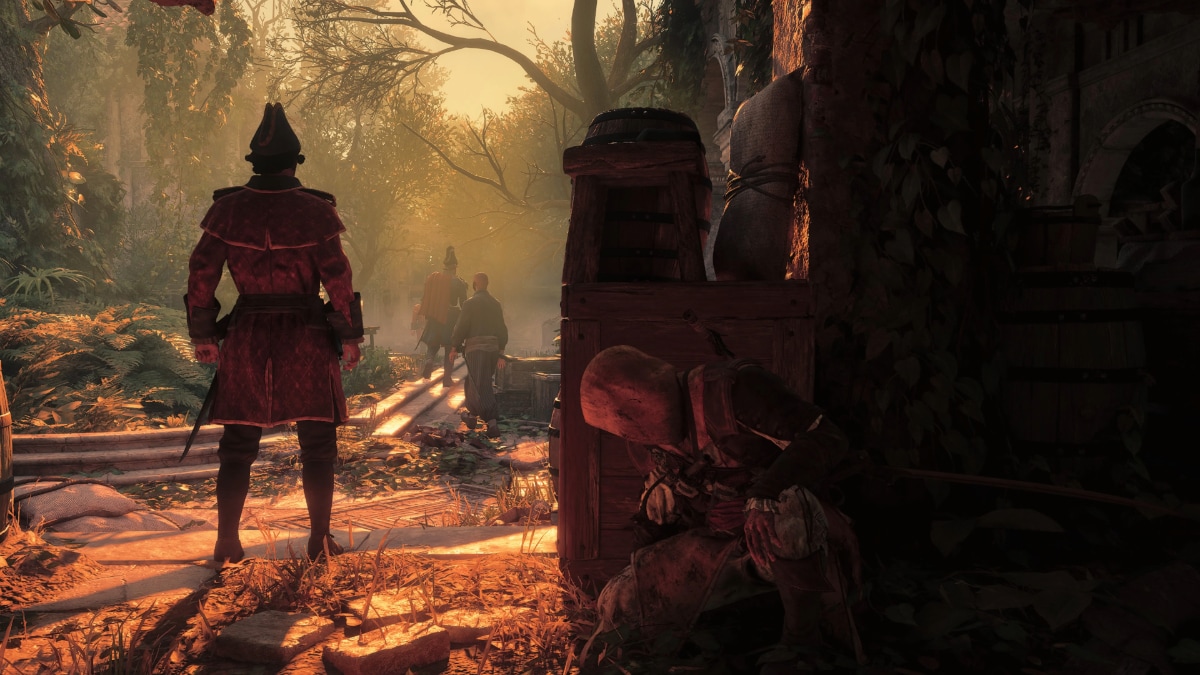
Stealth has been improved in Black Flag Resynced
Photo Credit: Ubisoft/Screenshot – Manas Mitul
These changes might not seem impactful enough to merit a remake, but the same can't be said of Assassin's Creed Black Flag Resynced's revamped mission design. Perhaps the biggest pain points in the original game were its arduous tailing and eavesdropping missions that forced players to replay from a checkpoint if they messed up a segment. The remake revises tailing missions so that they react to the player's actions and seamlessly flow from stealth to combat states. Some tedious mission segments have been done away with, while others have received greater attention. For instance, certain major enemy encounters have now turned into boss fights that stress the importance of those moments and make a showdown of what was previously a routine engagement.
Naval combat in Black Flag Resynced is excellent as ever. It is, in fact, improved in the remake, which adds secondary fire modes to each ship weapon, bringing more firepower to Jackdaw, Edward's brig in the game. There are more ship customisation options, positive changes to ship manoeuvrability, and a new timed brace mechanic that reduces incoming damage from other ships. Naval combat and exploration were the heart of the Black Flag experience, and the experience is no different in the remake. Sailing across rogue tidal waves of the Caribbean Sea and taking on a gigantic Man-o'-War as it rolls up in front of you remains a singular thrill that cannot be found in any other video game.
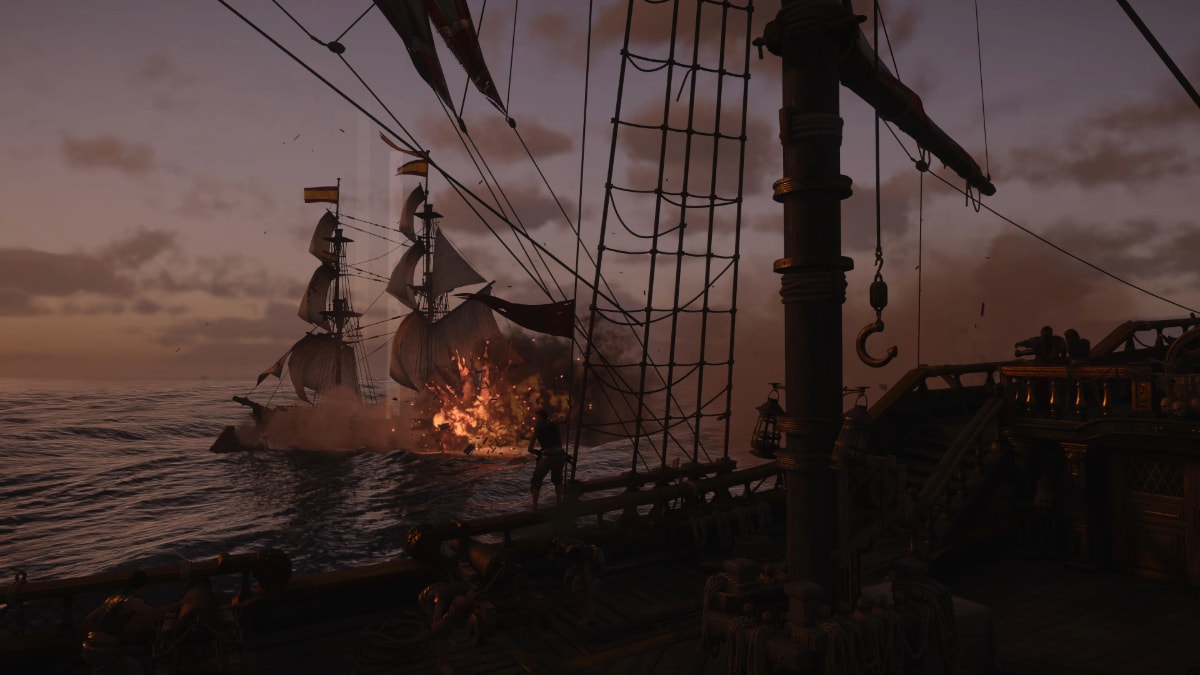
Naval combat and exploration remains a highlight
Photo Credit: Ubisoft/Screenshot – Manas Mitul
There are new and expanded features across Black Flag Resynced. The remake adds new recruitable naval officers to the mix, along with accompanying loyalty missions that fit right in with the game's larger story. It fleshes out the Great Inagua hideout, transforming it into a living, breathing economic hub that you can upgrade for greater rewards. It even has new sea shanties on top of the returning ones from the original. These changes may not make Assassin's Creed Black Flag Resynced the definitive version of the game, but they certainly make it the most impressive and accessible one. For players on consoles, the 60fps performance mode, too, represents a step above the locked 30fps experience of the original.
Because of its many omissions and some of its quirks borrowed from RPG-era Assassin's Creed games, Black Flag Resynced stops short of reaching the towering highs of the original. And a remake can never quite replicate the first-time experience of a genre-defining original. But within its remit, Ubisoft's latest Assassin's Creed title succeeds where many remakes and remasters have failed. This is a faithful return to a beloved modern classic that does exceedingly well to dust off the source material and update it without interfering with its spirit. And in the process, Assassin's Creed Black Flag Resynced has perhaps handed Ubisoft a blueprint for the road ahead. Assassin's Creed must keep its past glories in sight as it sets sail towards its future.
- REVIEW
- KEY SPECS
- NEWS
- Good
- Best-in-class visuals
- Fitting new story missions
- Improved naval combat
- Redesigned mission structure
- Excellent parkour system
- Bad
- Unsatisfying sword combat
- Bugs and glitches
- Cut story and gameplay content
Read detailed Ubisoft Assassin's Creed Black Flag Resynced review
Genre Action-Adventure
Platform PlayStation 5 (PS5), Xbox Series S/X, PC: Windows
Modes Single-player
PEGI Rating 18+
More Ubisoft Games
Comments
Get your daily dose of tech news, reviews, and insights, in under 80 characters on Gadgets 360 Turbo. Connect with fellow tech lovers on our Forum. Follow us on X, Facebook, WhatsApp, Threads and Google News for instant updates. Catch all the action on our YouTube channel.
Further reading:
Assassins Creed Black Flag Resynced, Assassins Creed Black Flag Remake, Black Flag Remake, Assassins Creed 4 Black Flag, Assassins Creed Black Flag Resynced Review, Assassins Creed, Ubisoft
Related Stories


Advertisement
Follow Us




-
![[Sponsored]: CP PLUS CarKam CP-F89B: 4K Dashcam With Rear Camera, GPS & Emergency Recording](https://www.gadgets360.com/static/desktop/images/spacer.png)
04:37
[Sponsored]: CP PLUS CarKam CP-F89B: 4K Dashcam With Rear Camera, GPS & Emergency Recording -
04:23
[Partner Content] Your Phone Can Do WAY More Than You Think | OPPO ColorOS 16 -
01:59
Samsung Galaxy Z Fold8 Ultra: Unfold the Ultra Night -
03:24
Apple Pay Launches In India: Supported Devices, Cards And Payments Explained -
00:21
[Sponsored] Samsung Galaxy Z Fold8, Fold8 Ultra
-
Flipkart Big Billion Days Sale: 11000 से ज्यादा सस्ता मिल रहा Nothing फोन
-
UPI ट्रांजेक्शन पर 15 अक्टूबर से नहीं लगेगी MDR फीस, आगे बढ़ी तारीख
-
e-SPRINTO G1 लॉन्च, सिंगल चार्ज में 130 किमी तक रेंज, कीमत 1 लाख से भी कम
-
Vivo X Fold 6 की सेल शुरू, ₹26 हजार से ज्यादा सस्ता खरीदें फोल्डेबल फोन
-
₹30 हजार में Samsung का प्रीमियम फोन चाहिए? Amazon Sale में चेक करें Galaxy A56 5G की ये डील
Advertisement
Popular on Gadgets
- Samsung Galaxy S26 Ultra
- Motorola Razr Fold
- ChatGPT
- OPPO Find N6
- Mobiles Under Rs. 40,000
- Vivo X300 Ultra
- Asus Zenbook S14
- iQOO 15
- Vivo X300 Pro
- Lenovo Yoga Slim 7i Aura Edition
- iQOO 15R
- Vivo X Fold 5
- Sony PlayStation 5
- HP OmniPad 12
- OnePlus Nord CE 6 Lite
- OnePlus Pad 4
- OPPO F33 Pro 5G
- Cryptocurrency
- HP OmniBook Ultra 14 (2026)
- iPhone 17
- Eureka Forbes AP 355 Room Air Purifier
- Latest Mobile Phones
- Compare Phones
Latest Gadgets
- Vivo Y600s Pro
- Vivo Y32 (2026)
- Infinix Smart 20 HD
- Vivo V80
- Vivo S2 FE
- Vivo Y600K Turbo
- Realme P4s Lite
- Vivo S60t
- Dell Pro Rugged 14
- Dell Pro Rugged 13 Extreme
- Amazon Alexa Tablet 8
- Amazon Alexa Tablet 11
- Amazfit T-Rex Dual Solar
- OPPO Watch S2
- Toshiba 65-Inch 4K Ultra HD Smart Mini LED QLED TV (65Z670SP)
- Haier M70 Mini LED 65-inch
- Acer Predator Atlas 8
- Asus ROG Ally
- Blue Star 1.5 Ton 5 Star Inverter Split AC (IE518ZNURS)
- Blue Star 2 Ton 3 Star Inverter Window AC (WIE324L)

- About Us
- Sitemaps
- Feedback
- Archives
- Contact Us
- RSS
- Advertise
- Career
- Privacy Policy
- Ethics
- Editorial Policy
- Terms & Conditions
- Complaint Redressal
Download Our Apps
Available in Hindi
© Copyright Red Pixels Ventures Limited 2026. All rights reserved.