-
 PSLV-C62 Failure Marks India’s First Space Launch Setback of 202614 January 2026
 -
ISRO’s PSLV Suffers Second Failure as Third-Stage Glitch Sends Rocket Off Course12 January 2026
-
ISRO to Launch PSLV-C62 With EOS-N1 Hyperspectral Satellite on January 1210 January 2026
-
Space Rocket Crashes in 2025: Why This Year Saw an Unusually High Number of Orbital Launch Failures31 December 2025
-
ISRO Plans Third Launch Pad at Sriharikota in Four Years to Support Heavier Satellites29 December 2025
- Home
- Science
- Science News
- ISRO Chief S Somanath Supports Elon Musk’s Model to Boost Space Economy
ISRO Chief S Somanath Supports Elon Musk’s Model to Boost Space Economy
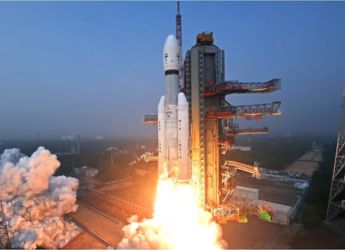
Somanath urges adopting Elon Musk’s economic model to boost India’s presence in the global space economy.
Written by Gadgets 360 Staff | Updated: 2 December 2024 14:29 IST

Photo Credit: Wikimedia
India operates 15 satellites, with plans to expand to 500.
Click Here to Add Gadgets360 As A Trusted Source


Advertisement
S Somanath, Chairman of the Indian Space Research Organisation (ISRO), emphasised the significance of adopting an economic model similar to that used by Elon Musk in space exploration. As per several reports, Somanath made the revelation at the Huddle Global 2024 event hosted by the Kerala government. The reports highlights that Somanath believes that Musk's approach of leveraging revenue-generating technology, such as rockets designed for both intercontinental travel and interplanetary missions, exemplifies a sustainable framework that relies on private funding rather than government resources.
India's Space Economy and Growth Potential
Despite India's notable accomplishments in space exploration, such as the Chandrayaan and Mars Orbiter missions, its presence in the $386 billion global space economy is limited to 2 percent, equivalent to $5 billion, according to available data. As per reports, plans to increase this figure to $500 billion by 2030 and eventually to $1.5 trillion by 2047 have been outlined at the event. Somanath remarked that enhancing satellite operations, which currently number only 15, to around 500 would be instrumental in achieving these goals.
Role of the Private Sector in Expanding Space Activities
The ISRO chief, as reported by The Financial Express, underlined the critical role of private entities and startups in bolstering India's space ambitions. The development of small satellites, geospatial solutions, communication systems, and orbital transfer vehicles was cited as areas ripe for private sector involvement. Efforts are reportedly underway to transfer ISRO's research and technology to private players through collaborations across multiple industries.
Collaborative Efforts in Future Space Missions
It has been confirmed that future projects, including Gaganyaan—India's human spaceflight programme—and the proposed Indian Space Station, will be executed through partnerships between ISRO and private enterprises. This collaborative approach is expected to expand India's capabilities in interplanetary exploration and stimulate economic growth in the sector.
ISRO's initiatives, combined with private-sector participation, aim to elevate India's status in the global space economy while fostering innovation and sustainable growth, according to ongoing discussions within the organisation.
Comments
Get your daily dose of tech news, reviews, and insights, in under 80 characters on Gadgets 360 Turbo. Connect with fellow tech lovers on our Forum. Follow us on X, Facebook, WhatsApp, Threads and Google News for instant updates. Catch all the action on our YouTube channel.
Further reading:
ISRO, Elon Musk, Space Economy, S Somanath, Satellites, Gaganyaan, Indian Space Station, Private Sector, Space Research
Related Stories



Advertisement
Follow Us




-
04:17
[Sponsored] LG NANO 4K UHD AI TV NU885: Gemini Search, Dolby Atmos & 5 Years of Updates -
00:57
[Sponsored] Samsung Galaxy Z Fold8 My Fan Cam in Action: Find the Moment, Then Share It -
01:41
[Sponsored] What Do You Need To Know Before Your Next Run? | Samsung Galaxy Watch Ultra2 -
01:32
[Sponsored] Big Day Tomorrow? Prep Today | Samsung Galaxy Watch Ultra2 -
04:37
[Sponsored]: CP PLUS CarKam CP-F89B: 4K Dashcam With Rear Camera, GPS & Emergency Recording
-
iPhone 16 आज भी Amazon सेल में मिल रहा ₹15 हजार से ज्यादा सस्ता
-
OnePlus 15 को Amazon Great Indian Festival Sale में खरीदें सस्ता
-
₹2250 सस्ता मिल रहा Motorola का 7000mAh बैटरी वाला फोन! Flipkart पर ऑफर
-
HMD Vibe 2 Max बजट फोन लॉन्च होगा 108MP कैमरा, 6,000mAh बैटरी फीचर के साथ!
-
iPhone Duo में होगी 4,800mAh से ज्यादा की बैटरी, जल्द शुरू होगी बिक्री
Advertisement
Popular on Gadgets
- Samsung Galaxy S26 Ultra
- Motorola Razr Fold
- ChatGPT
- OPPO Find N6
- Mobiles Under Rs. 40,000
- Vivo X300 Ultra
- Asus Zenbook S14
- iQOO 15
- Vivo X300 Pro
- Lenovo Yoga Slim 7i Aura Edition
- iQOO 15R
- Vivo X Fold 5
- Sony PlayStation 5
- HP OmniPad 12
- OnePlus Nord CE 6 Lite
- OnePlus Pad 4
- OPPO F33 Pro 5G
- Cryptocurrency
- HP OmniBook Ultra 14 (2026)
- iPhone 17
- Eureka Forbes AP 355 Room Air Purifier
- Latest Mobile Phones
- Compare Phones
Latest Gadgets
- Samsung Galaxy F70 5G
- Tecno Spark 50S 5G
- Vivo Y600s Pro
- Vivo Y32 (2026)
- Infinix Smart 20 HD
- Vivo V80
- Vivo S2 FE
- Vivo Y600K Turbo
- HP ZBook Ultra G3a
- Dell Pro Rugged 14
- Amazon Alexa Tablet 8
- Amazon Alexa Tablet 11
- Amazfit T-Rex Dual Solar
- OPPO Watch S2
- Toshiba 65-Inch 4K Ultra HD Smart Mini LED QLED TV (65Z670SP)
- Haier M70 Mini LED 65-inch
- Acer Predator Atlas 8
- Asus ROG Ally
- Blue Star 1.5 Ton 5 Star Inverter Split AC (IE518ZNURS)
- Blue Star 2 Ton 3 Star Inverter Window AC (WIE324L)

- About Us
- Sitemaps
- Feedback
- Archives
- Contact Us
- RSS
- Advertise
- Career
- Privacy Policy
- Ethics
- Editorial Policy
- Terms & Conditions
- Complaint Redressal
Download Our Apps
Available in Hindi
© Copyright Red Pixels Ventures Limited 2026. All rights reserved.