-
 Artemis 2: Astronauts Aboard Orion Spacecraft Begin Journey Towards the Moon on Day 23 April 2026
 -
iPhones in Deep Space: NASA Breaks Rules for Artemis 2 Crew; 5 Key Facts2 April 2026
-
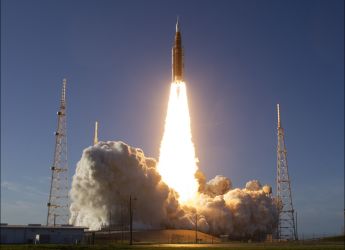
Artemis II Launched: NASA’s First Crewed Mission in 50 Years Aims for the Moon2 April 2026
-
Artemis 2: NASA's Astronaut Moon Mission Explained in Five Points1 April 2026
-
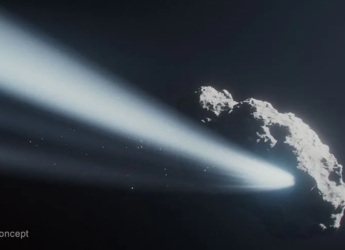
Hubble Telescope Captures Comet Reversing Its Rotation for the First Time27 March 2026
- Home
- Science
- Science News
- NASA’s Perseverance Makes History on Mars with Claude AI at the Helm
NASA’s Perseverance Makes History on Mars with Claude AI at the Helm
NASA’s Perseverance rover on Mars has completed the first drives on another world that were planned by artificial intelligence.
Written by Akash Dutta, Edited by Rohan Pal | Updated: 3 February 2026 18:03 IST

Photo Credit: NASA/JPL-Caltech
Claude used vision-language models to analyse NASA’s mission dataset
Click Here to Add Gadgets360 As A Trusted Source


Advertisement
NASA's Mars rover, Perseverance, recently completed its first drive using commands shared by Anthropic's artificial intelligence (AI) chatbot, Claude. The milestone marks the first time a generative AI model has played a direct role in planning a rover's movement on another planet. The drive took place on January 27, with Claude delivering high-level navigation instructions that were translated into precise waypoints before transmission to Mars. Typically, these complex instructions are shared manually after long calculations and planning.
Claude AI Commands NASA's Perseverance Rover on Mars
In a newsroom post, NASA's Jet Propulsion Laboratory (JPL) announced this milestone. The process began with a human mission planner providing a terrain map and scientific goals to Claude. The AI chatbot then generated a sequence of waypoints, or intermediate coordinates the rover should aim for, based on the desired route, slope constraints, and safety considerations. These waypoints were reviewed and refined by mission engineers before being uplinked to Perseverance across 362 million kilometres between Earth and Mars, Anthropic said in a post.
Perseverance drove approximately 23 metres (75 feet) on the Martian surface following the AI-generated plan, traversing rocky terrain inside Jezero Crater, where it is conducting geological and astrobiological investigations. The rover's successful movement confirmed that the AI-assisted planning produced a safe route, NASA said. The drive was monitored by the mission's navigation and engineering teams, who verified the rover's status and telemetry after execution.
For this project, Anthropic equipped Claude with vision-language models to analyse existing data from JPL's mission dataset. NASA said that the chatbot used the same imagery and data that human planners rely on to create these waypoints.
NASA highlighted that Claude did not control the rover directly or autonomously. Instead, the chatbot's role was to assist with planning and suggest waypoints for engineers to evaluate. Before this experiment, Mars rover drives were typically planned by human teams who selected traverse paths based on orbital imagery, 3D terrain models and defined mission constraints.
“The fundamental elements of generative AI are showing a lot of promise in streamlining the pillars of autonomous navigation for off-planet driving. We are moving towards a day where generative AI and other smart tools will help our surface rovers handle kilometre-scale drives while minimising operator workload, and flag interesting surface features for our science team by scouring huge volumes of rover images,” said Vandi Verma, a space roboticist at JPL and a member of the Perseverance engineering team.
Comments
Get your daily dose of tech news, reviews, and insights, in under 80 characters on Gadgets 360 Turbo. Connect with fellow tech lovers on our Forum. Follow us on X, Facebook, WhatsApp, Threads and Google News for instant updates. Catch all the action on our YouTube channel.
Further reading:
NASA, Perseverance Rover, Mars, Claude, Anthropic, AI, Artificial Intelligence, Science, Space
Related Stories


Advertisement
Follow Us




-
05:05
Goboult Mustang Racer Smartwatch Review: Should You Get This Mustang Smartwatch? -
04:58
OnePlus Nord Buds 4 Pro Review: Specs, Sound Quality, ANC, and Battery Backup Tested -
02:29
[Sponsored] Samsung Galaxy S26 Ultra First Look: AI Smartphone for Creators, Gaming & Productivity -
04:25
Vivo X200T Review - Full Camera, Gaming & Battery Test | Worth Buying? -
28:31
The Future of Productivity: Logitech's Anatoliy Polyanker On AI, Hybrid Work, And India's Tech Boom
-
Redmi 15A 5G की सेल शुरू, जानें कितने में मिल रहा 6300mAh बैटरी वाला फोन
-
7300mAh बैटरी, 50MP कैमरा वाले OnePlus फोन पर बंपर डिस्काउंट, जानें
-
Zepto बेच रहा 24 हजार रुपये सस्ता iPhone 17 Pro Max, सबसे तगड़ा डिस्काउंट
-
iPhone 17 Pro Max खरीदें 47 हजार तक सस्ता! Apple की 50वीं वर्षगांठ पर धमाका ऑफर
-
Oppo Find X9 Ultra में मिल सकती है 7,050mAh की बैटरी, 200 मेगापिक्सल टेलीफोटो कैमरा
Advertisement
Popular on Gadgets
- Samsung Galaxy Unpacked 2026
- iPhone 17 Pro Max
- ChatGPT
- iOS 26
- Laptop Under 50000
- Smartwatch Under 10000
- Apple Vision Pro
- Oneplus 12
- OnePlus Nord CE 3 Lite 5G
- iPhone 13
- Xiaomi 14 Pro
- Oppo Find N3
- Tecno Spark Go (2023)
- Realme V30
- Best Phones Under 25000
- Samsung Galaxy S24 Series
- Cryptocurrency
- iQoo 12
- Samsung Galaxy S24 Ultra
- Giottus
- Samsung Galaxy Z Flip 5
- Apple 'Scary Fast'
- Housefull 5
- GoPro Hero 12 Black Review
- Invincible Season 2
- JioGlass
- HD Ready TV
- Latest Mobile Phones
- Compare Phones
Latest Gadgets
- Honor Play 80
- Nord 6
- Honor X80i
- Honor Play 80 Pro
- Redmi Note 15 SE 5G
- Redmi A7 Pro
- OPPO K15 Pro
- OPPO K15 Pro+
- Xiaomi Book Pro 14
- MacBook Neo
- Vivo Pad 6 Pro
- Lenovo Legion Y700 Gen 5
- boAt Valour Watch 1R
- Xiaomi Watch S5
- Xiaomi QLED TV X Pro 75
- Haier H5E Series
- Asus ROG Ally
- Nintendo Switch Lite
- Haier 1.6 Ton 5 Star Inverter Split AC (HSU19G-MZAID5BN-INV)
- Haier 1.6 Ton 5 Star Inverter Split AC (HSU19G-MZAIM5BN-INV)

- About Us
- Sitemaps
- Feedback
- Archives
- Contact Us
- RSS
- Advertise
- Career
- Privacy Policy
- Ethics
- Editorial Policy
- Terms & Conditions
- Complaint Redressal
Download Our Apps
Available in Hindi
© Copyright Red Pixels Ventures Limited 2026. All rights reserved.