-
 Indian Dance Mudras May Revolutionise Robotic Hand Control, UMBC Study Shows5 December 2025
 -
New Gel-Based Robotic Skin Feels Touch, Heat, and Damage Like Human Flesh11 July 2025
-
Novel Brain-Computer Interface Improves Control of Prosthetic Hands With Thought Alone18 October 2024
-
Bionic Limbs Controlled by Brain Signals: A Leap Forward for Amputees7 October 2024
-
Bionic Hand Lets Former Paralympian Use New Gestures via Remote Updates: Details17 August 2022
- Home
- Science
- Science News
- Prosthetics That Recreate Sense of Touch in the Offing: Study
Prosthetics That Recreate Sense of Touch in the Offing: Study
By Press Trust of India | Updated: 27 October 2015 17:31 IST
Click Here to Add Gadgets360 As A Trusted Source

Advertisement
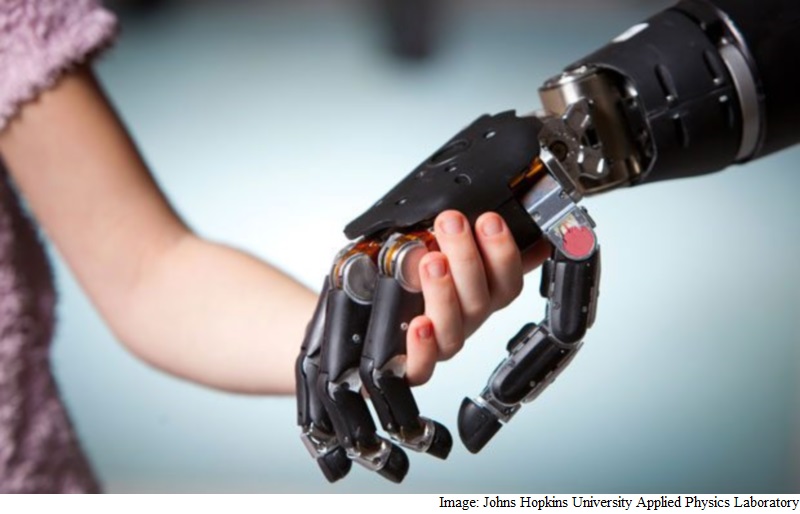
Scientists have inched closer to building prosthetic limbs for humans that can recreate a sense of touch through a direct interface with the brain.
A new study shows that artificial touch is highly dependent on several features of electrical stimuli, such as the strength and frequency of signals.
It describes the specific characteristics of these signals, including how much each feature needs to be adjusted to produce a different sensation.
"This is where the rubber meets the road in building touch-sensitive neuroprosthetics," said Sliman Bensmaia, associate professor at the University of Chicago and senior author of the study.
"Now we understand the nuts and bolts of stimulation, and what tools are at our disposal to create artificial sensations by stimulating the brain," said Bensmaia.
Bensmaia's research is part of Revolutionising Prosthetics, a multi-year Defence Advanced Research Projects Agency project that seeks to create a modular, artificial upper limb that will restore natural motor control and sensation in amputees.
Bensmaia and his UChicago colleagues are working specifically on the sensory aspects of these limbs. For this study, monkeys, whose sensory systems closely resemble those of humans, had electrodes implanted into the area of the brain that processes touch information from the hand. The animals were trained to perform two perceptual tasks: one in which they detected the presence of an electrical stimulus, and a second in which they indicated which of two successive stimuli was more intense.
During these experiments, Bensmaia and his team manipulated various features of the electrical pulse train, such as its amplitude, frequency and duration, and noted how the interaction of each of these factors affected the animals' ability to detect the signal.
Of specific interest were the "just-noticeable differences," (JND) or the incremental changes needed to produce a sensation that felt different.
For instance, at a certain frequency, the signal may be detectable first at a strength of 20 microamperes of electricity. If the signal has to be increased to 50 microamperes to notice a difference, the JND in that case is 30 microamperes.
The sense of touch is really made up of a complex and nuanced set of sensations, from contact and pressure to texture, vibration and movement. By documenting the range, composition and specific increments of signals that create sensations that feel different from each other, Bensmaia and his colleagues have provided the "notes" scientists can play to produce the "music" of the sense of touch in the brain.
"When you grasp an object, for example, you can hold it with different grades of pressure. To recreate a realistic sense of touch, you need to know how many grades of pressure you can convey through electrical stimulation," Bensmaia said.
The study was published in the journal PNAS.
Comments
Get your daily dose of tech news, reviews, and insights, in under 80 characters on Gadgets 360 Turbo. Connect with fellow tech lovers on our Forum. Follow us on X, Facebook, WhatsApp, Threads and Google News for instant updates. Catch all the action on our YouTube channel.
Related Stories





Advertisement
Follow Us




-
![[Sponsored] Samsung Galaxy Z Fold8, Fold8 Ultra](https://www.gadgets360.com/static/desktop/images/spacer.png)
00:21
[Sponsored] Samsung Galaxy Z Fold8, Fold8 Ultra -
03:41
[Sponsored] Samsung Galaxy Z Fold8: How It Fits Into an Actor’s Busy Day | Camera, Multitasking & More -
09:53
iPhone 18 Goes On Sale In India: Huge Crowds, Long Queues At Apple Stores -
06:32
Google Pixel 11 Pro XL Review: The Most Exciting Pixel Yet? | 120X Zoom + Tensor G6 -
05:20
Samsung Galaxy Watch Ultra 2 Review: Is This the Best Android Smartwatch?
-
iQOO Pad Ultra 165Hz AMOLED डिस्प्ले के साथ हुआ लॉन्च
-
Apple Pay की भारत में एंट्री, सीधा iPhone और स्मार्टवॉच से होगी पेमेंट
-
भारत में बच्चों के सोशल मीडिया पर लगेगा बैन? सरकार उठा सकती है बड़ा कदम
-
Oppo K14 Plus 5G vs Vivo T5x 5G vs OnePlus Nord CE6 Lite: खरीदने से पहले जानें किसके फीचर्स बेस्ट?
-
Oppo K14 Plus 5G लॉन्च: 8000mAh की बैटरी लंबे समय तक देगी साथ, फोटोग्राफी के लिए 50MP कैमरा से लैस
Advertisement
Popular on Gadgets
- Samsung Galaxy S26 Ultra
- Motorola Razr Fold
- ChatGPT
- OPPO Find N6
- Mobiles Under Rs. 40,000
- Vivo X300 Ultra
- Asus Zenbook S14
- iQOO 15
- Vivo X300 Pro
- Lenovo Yoga Slim 7i Aura Edition
- iQOO 15R
- Vivo X Fold 5
- Sony PlayStation 5
- HP OmniPad 12
- OnePlus Nord CE 6 Lite
- OnePlus Pad 4
- OPPO F33 Pro 5G
- Cryptocurrency
- HP OmniBook Ultra 14 (2026)
- iPhone 17
- Eureka Forbes AP 355 Room Air Purifier
- Latest Mobile Phones
- Compare Phones
Latest Gadgets
- HMD Vibe 2 Pro 5G
- OPPO K14 Plus 5G
- Lava Shark 2 Pro 5G
- Ai+ Pulse 2 FE
- OPPO Reno 16t
- Itel Zeno 300
- Vivo Y600i
- Mivi One 5G
- Dell 14 Plus 2-in-1 (AMD Ryzen AI 7 350, 2025)
- Microsoft Surface Laptop, 13-inch (2nd Edition)
- iQOO Pad Ultra
- Ai+ NovaTab
- Amazfit T-Rex Dual Solar
- OPPO Watch S2
- Toshiba 65-Inch 4K Ultra HD Smart Mini LED QLED TV (65Z670SP)
- Haier M70 Mini LED 65-inch
- Acer Predator Atlas 8
- Asus ROG Ally
- Blue Star 1.5 Ton 5 Star Inverter Split AC (IE518ZNURS)
- Blue Star 2 Ton 3 Star Inverter Window AC (WIE324L)

- About Us
- Sitemaps
- Feedback
- Archives
- Contact Us
- RSS
- Advertise
- Career
- Privacy Policy
- Ethics
- Editorial Policy
- Terms & Conditions
- Complaint Redressal
Download Our Apps
Available in Hindi
© Copyright Red Pixels Ventures Limited 2026. All rights reserved.