
-
 iPhone 18 Pro Rebooting Bug to Be Fixed With an Upcoming Software Update: Report25 September 2026
 -
iPhone 18 Pro Max Charging Test Shows Major Speed Boost Over iPhone 17 Pro Max18 September 2026
-
iPhone 18 Pro Series Now Available for Purchase in India via Blinkit, Zepto, and Instamart: Price, Offers18 September 2026
-
iPhone 18 Pro, iPhone 18 Pro Max Sale Today: India Price, Offers, and Everything Else You Need to Know18 September 2026
-
Apple’s iOS 18 Warranty Terms Under Consumer Regulator’s Scrutiny in India: Report16 September 2026
- Home
- Mobiles
- Mobiles News
- iPhone 18 Pro, iPhone Air 2 May Reportedly Receive a Price Hike Amid Rising Component Costs
iPhone 18 Pro, iPhone Air 2 May Reportedly Receive a Price Hike Amid Rising Component Costs
Apple is expected to pay almost as high as $280 (roughly Rs. 25,200) for the A20/ A20 Pro chipset.
Written by Shaurya Tomer, Edited by Ketan Pratap | Updated: 3 January 2026 11:11 IST
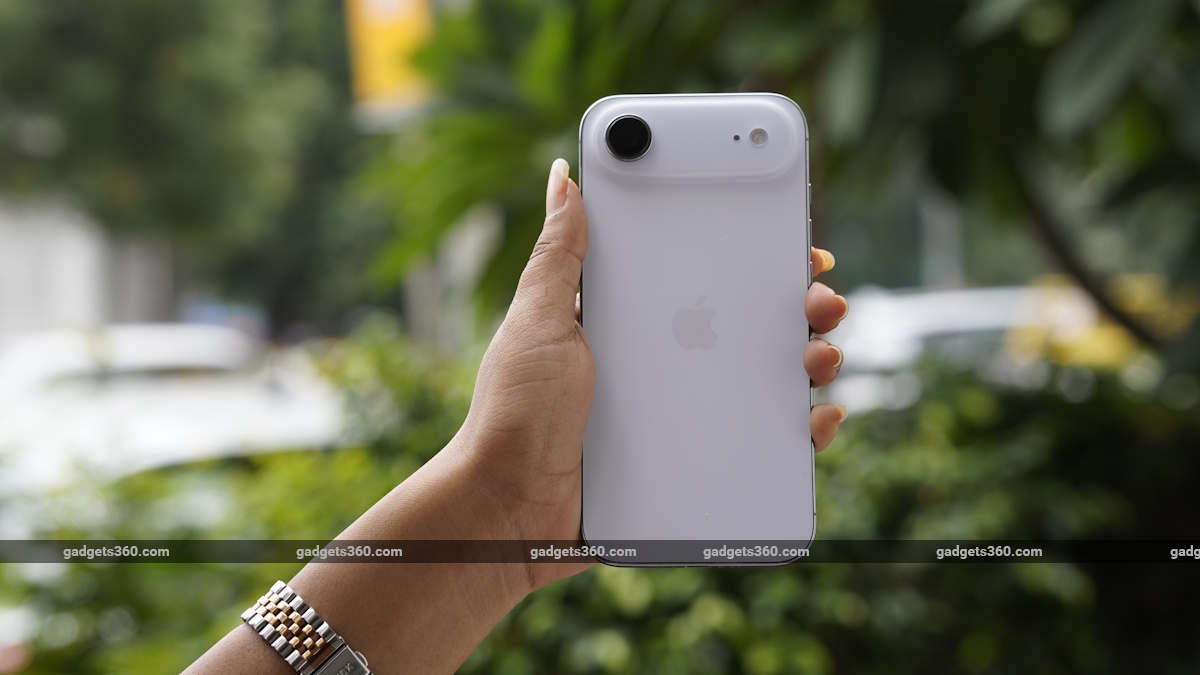
The iPhone Air (pictured) successor could be more expensive than the first-gen model
Click Here to Add Gadgets360 As A Trusted Source

Advertisement
Apple is rumoured to introduce its next-generation flagship mobile chipset based on the 2nm node in 2026, following in the footsteps of Samsung, which unveiled the 2nm Exynos 2600 in December. The development of the purported processor, however, could make future iPhone models more expensive. According to a report, the Cupertino-based tech giant will be forced to pay more money to its chip supplier due to the rising price of silicon wafers.
Price Hike for the iPhone 18 Series
Apple is expected to launch four iPhone models in September 2026 — iPhone 18 Pro, iPhone 18 Pro Max, iPhone Air successor, and iPhone Fold 2. The purported handsets may be powered by the A20 or the A20 Pro processor, fabricated on Taiwan Semiconductor Manufacturing Company (TSMC)'s 2nm process node.
According to a recent report from Taiwan, TSMC is increasing the price of the silicon wafers, which are used as the substrate on which the materials are printed. A 2nm node typically uses a 12-inch wafer, comprising 100 individual layers, with an estimated total cost of $30,000 (roughly 27 lakh).
For context, the wafer used during the 3nm fabrication process is priced around $20,000 (roughly Rs. 18 lakh).
Consequently, the iPhone maker is expected to pay almost as high as $280 (roughly Rs. 25,200) for the A20/ A20 Pro, which is said to be an 87 percent increase over what Apple paid for the current A19 Pro chipset; $150 (roughly Rs. 13,500). The reported number seems six times higher when compared against the $50 (roughly Rs. 4,500) A18 Pro processor.
The report suggests that Apple will be left with two choices — either absorb the additional cost and decrease its profit margin or hike the price of the 2026 iPhone models.
In comparison with TSMC, Samsung is reported to be charging 33 percent less than TSMC for the 12-inch silicon wafers. It reportedly charges $20,000 (18 lakh) for the 2nm GAA technology, which is about the same price as TSMC's 3nm fabrication process. However, the latter is believed to have a slightly higher yield, too.
- REVIEW
- KEY SPECS
- NEWS
- Good
- Incredibly lightweight and super thin
- Stunning display
- Solid performance
- Good primary and selfie cameras
- Bad
- A single-camera sensor at the back
- Slow charging
- Battery life could have been better
- Mono speaker leaves much to be desired
- Expensive
Read detailed Apple iPhone Air review
Display 6.50-inch
Processor Apple A19 Pro
Front Camera 18-megapixel
Rear Camera 48-megapixel
RAM 12GB
Storage 256GB, 512GB, 1TB
OS iOS 26
Resolution 1260x2736 pixels
Comments
Get your daily dose of tech news, reviews, and insights, in under 80 characters on Gadgets 360 Turbo. Connect with fellow tech lovers on our Forum. Follow us on X, Facebook, WhatsApp, Threads and Google News for instant updates. Catch all the action on our YouTube channel.
Further reading:
iPhone 18, iPhone 18 Pro, iPhone 18 Pro Max, iPhone Air 2, iPhone Fold, Apple, TSMC
Related Stories






Advertisement
Follow Us




-
![[Sponsored]: CP PLUS CarKam CP-F89B: 4K Dashcam With Rear Camera, GPS & Emergency Recording](https://www.gadgets360.com/static/desktop/images/spacer.png)
04:37
[Sponsored]: CP PLUS CarKam CP-F89B: 4K Dashcam With Rear Camera, GPS & Emergency Recording -
04:23
[Partner Content] Your Phone Can Do WAY More Than You Think | OPPO ColorOS 16 -
01:59
Samsung Galaxy Z Fold8 Ultra: Unfold the Ultra Night -
03:24
Apple Pay Launches In India: Supported Devices, Cards And Payments Explained -
00:21
[Sponsored] Samsung Galaxy Z Fold8, Fold8 Ultra
-
Flipkart Big Billion Days: Xiaomi के 5 Redmi स्मार्टफोन्स पर Deals रिवील
-
Delhi Pollution 2026: 50% Work From Home, बिना PUCC नहीं मिलेगा Fuel
-
Oppo K15x हुआ लॉन्च; 6500mAh बैटरी, 120Hz डिस्प्ले के साथ आया बजट 5G फोन
-
200MP Camera और 7,000mAh Battery वाला नया फोन, कीमत और फीचर्स देखकर खरीदने का मन करेगा!
-
Mahindra का EV मार्केट में दमदार परफॉर्मेंस, 1 लाख से ज्यादा हुई इलेक्ट्रिक SUV की सेल्स
Advertisement
Popular on Gadgets
- Samsung Galaxy S26 Ultra
- Motorola Razr Fold
- ChatGPT
- OPPO Find N6
- Mobiles Under Rs. 40,000
- Vivo X300 Ultra
- Asus Zenbook S14
- iQOO 15
- Vivo X300 Pro
- Lenovo Yoga Slim 7i Aura Edition
- iQOO 15R
- Vivo X Fold 5
- Sony PlayStation 5
- HP OmniPad 12
- OnePlus Nord CE 6 Lite
- OnePlus Pad 4
- OPPO F33 Pro 5G
- Cryptocurrency
- HP OmniBook Ultra 14 (2026)
- iPhone 17
- Eureka Forbes AP 355 Room Air Purifier
- Latest Mobile Phones
- Compare Phones
Latest Gadgets
- Samsung Galaxy F08
- Samsung Galaxy M08
- OPPO K15x
- OPPO K15s
- HMD Vibe 2 Pro 5G
- OPPO K14 Plus 5G
- Lava Shark 2 Pro 5G
- Ai+ Pulse 2 FE
- Dell 14 Plus 2-in-1 (AMD Ryzen AI 7 350, 2025)
- Microsoft Surface Laptop, 13-inch (2nd Edition)
- Samsung Galaxy Tab S12+
- Samsung Galaxy Tab S12 Ultra
- Amazfit T-Rex Dual Solar
- OPPO Watch S2
- Toshiba 65-Inch 4K Ultra HD Smart Mini LED QLED TV (65Z670SP)
- Haier M70 Mini LED 65-inch
- Acer Predator Atlas 8
- Asus ROG Ally
- Blue Star 1.5 Ton 5 Star Inverter Split AC (IE518ZNURS)
- Blue Star 2 Ton 3 Star Inverter Window AC (WIE324L)

- About Us
- Sitemaps
- Feedback
- Archives
- Contact Us
- RSS
- Advertise
- Career
- Privacy Policy
- Ethics
- Editorial Policy
- Terms & Conditions
- Complaint Redressal
Download Our Apps
Available in Hindi
© Copyright Red Pixels Ventures Limited 2026. All rights reserved.