-
 iPhone 18 Pro, iPhone 18 Pro Max Sale Today: India Price, Offers, and Everything Else You Need to Know18 September 2026
 -
MediaTek Dimensity 9600 Pro Reportedly Sees Major Price Hike Over Dimensity 9500, May Still Be Below Snapdragon 8 Elite Gen 6 Pro17 September 2026
-
Apple’s iOS 18 Warranty Terms Under Consumer Regulator’s Scrutiny in India: Report16 September 2026
-
Apple iCloud+ Plans in India Now Include Apple TV and Arcade at No Extra Cost15 September 2026
-
Mac Mini M6 Geekbench Listing Reportedly Reveals Performance Gains Over M5 Chip15 September 2026
- Home
- Mobiles
- Mobiles News
- Unpatchable Hardware Vulnerability Leaves Owners of Older iPhone XS, iPhone XR and iPhone 11 Models at Risk
Unpatchable Hardware Vulnerability Leaves Owners of Older iPhone XS, iPhone XR and iPhone 11 Models at Risk
Researchers say the vulnerability has been disclosed to Apple before publication, and the proof-of-concept code is publicly available.
Written by Shaurya Tomer, Edited by David Delima | Updated: 19 June 2026 17:21 IST
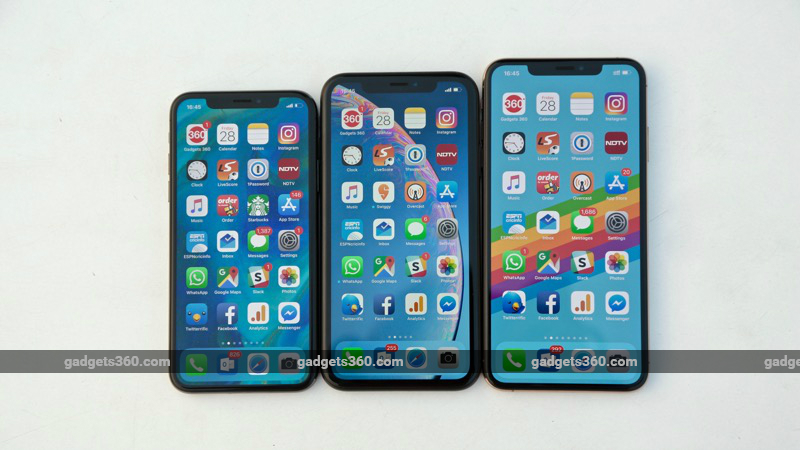
Apple's 10th and 11th generation iPhones are said to be affected
Click Here to Add Gadgets360 As A Trusted Source

Advertisement
Security researchers have published the proof-of-concept exploit, dubbed "usbliter8", which targets a vulnerability in Apple's BootROM component of iPhone, the unalterable code that runs before iOS starts loading. Since BootROM is permanently etched into a chip during the manufacturing process, researchers claimed that vulnerabilities discovered at this level cannot be fixed through software updates. The newly disclosed exploit is said to affect devices ranging from the iPhone XS lineup to the iPhone 11 series, along with several iPad models powered by the A12 and A13 SoCs.
Usbliter8 Exploit Works on Apple's A12 and A13 Chips
According to a report published by European cybersecurity research firm Paradigm Shift, the usbliter8 exploit targets a flaw in the USB controller integrated into Apple's A12 and A13 chips. The vulnerability is claimed to be significant since it exists at the BootROM level, the earliest stage of the device's boot process.
- Apple to Introduce redesigned Apple Pencil models in 2027
- Apple to introduce a new device leasing programme, Apple Upgrade tomorrow
- Apple has increased the prices of Apple Music and Apple One Subscription plans
- Apple is planning to bring OLED technology to the iPad mini
- Apple Brings Back Card Payments for App Store and iCloud Transactions in India After Five Years
During an iPhone's startup, the USB controller usually stores incoming data in memory buffers. Researchers said they discovered a way to manipulate how the controller manages those buffers by injecting a specially crafted sequence of unusually small USB packets during startup. This causes memory corruption at a very low level of the system.
While the internal memory pointer inside the USB controller is only intended to move forward, they were able to move it backwards as well, which allowed data to be written to the protected regions of the memory. The process of gaining control of the processor is claimed to be relatively straightforward, especially on A12-powered devices, once the vulnerability is triggered.
On the other hand, A13-powered models were reportedly more complex due to Apple's introduction of Pointer Authentication Codes (PAC). It is, notably, a hardware security feature that is designed to detect unauthorised memory modifications. Thus, on such devices, bypassing PAC required a multi-stage exploitation process, and code could be executed.
Once successful, however, the exploit is claimed to be capable of lowering certain security restrictions and booting unsigned software that would normally fail Apple's verification checks.
The exploit is said to be a hardware-level flaw, originating from the USB controller hardware itself rather than being a software flaw. Researchers hence claim that such BootROM flaws cannot be patched through iOS updates, and shifting to newer hardware is the most effective solution for users with affected devices.
Researchers said they reported the vulnerability to Apple before publication and coordinated disclosure with the company. The proof-of-concept code has now been released publicly. However, it's worth noting that it requires physical access to the device to exploit, does not affect Secure Enclave, and it is not a complete jailbreak at present.
Apple Devices Affected By the Hardware Flaw
The exploit affects devices based on Apple's A12 and A13 chipsets, as well as certain Apple Watch models using related silicon. The affected models include the following devices:
- iPhone XS
- iPhone XS Max
- iPhone XR
- iPhone 11
- iPhone 11 Pro
- iPhone 11 Pro Max
Additionally, several iPad models powered by the A12-series processors are also said to be vulnerable, including those based on A12, A12X, A12Z, and A13 platforms. However, the cybersecurity firm's proof-of-concept only focuses on A12 and A13-powered devices. The company also confirmed support for Apple's S4 and S5 chips used in older Apple Watch models.
What's interesting is that the A11 chip inside the iPhone X is not affected. This is due to the Cupertino-based tech giant's implementation of an additional USB pointer reset mechanism in its BootROM. Further, newer Apple devices powered by the A14 and later processors also remain protected against the exploit, since correct memory-protection mechanisms were said to have been enabled by Apple at the BootROM level.
- REVIEW
- KEY SPECS
- NEWS
- Variants
- Good
- Best-in-class performance
- Excellent cameras
- Superb display
- Dual SIM support is finally an option
- Regular, timely software updates
- Bad
- Expensive
- Dual SIM support is limited
- First-party apps not great in India
- Fast charger not bundled
Read detailed Apple iPhone XS review
Display 5.80-inch
Processor Apple A12 Bionic
Front Camera 7-megapixel
Rear Camera 12-megapixel + 12-megapixel
Storage 64GB
OS iOS 12
Resolution 1125x2436 pixels
- REVIEW
- KEY SPECS
- NEWS
- Variants
- Good
- Best-in-class performance
- Excellent cameras
- Superb display
- Dual SIM is finally an option
- Great battery life
- Regular, timely software updates
- Bad
- Expensive
- Some might find it bulky
- Dual SIM support is limited
- First-party apps not great in India
- Fast charger not bundled
Read detailed Apple iPhone XS Max review
Display 6.50-inch
Processor Apple A12 Bionic
Front Camera 7-megapixel
Rear Camera 12-megapixel + 12-megapixel
Storage 64GB
OS iOS 12
Resolution 1242x2688 pixels
- REVIEW
- KEY SPECS
- NEWS
- Variants
- Good
- Best-in-class performance
- Excellent cameras
- Dual SIM is finally an option
- Great battery life
- Regular, timely software updates
- Bad
- Low-resolution display
- Dual SIM support is limited
- First-party apps not great in India
- Fast charger not bundled
Read detailed Apple iPhone XR review
Display 6.10-inch
Processor Apple A12 Bionic
Front Camera 7-megapixel
Rear Camera 12-megapixel
RAM 3GB
Storage 64GB
Battery Capacity 2942mAh
OS iOS 12
Resolution 828x1792 pixels
- REVIEW
- KEY SPECS
- NEWS
- Variants
- Good
- Best-in-class performance
- Excellent battery life
- Great cameras
- Night Mode is a welcome addition
- iOS offers regular, timely updates
- Bad
- Low-resolution display
- Slow bundled charger
- No PiP or other software features that utilise the big screen
Read detailed Apple iPhone 11 review
Display 6.10-inch
Processor Apple A13 Bionic
Front Camera 12-megapixel
Rear Camera 12-megapixel + 12-megapixel
RAM 4GB
Storage 64GB
Battery Capacity 3110mAh
OS iOS 13
Resolution 828x1792 pixels
- REVIEW
- KEY SPECS
- NEWS
- Variants
- Good
- Best-in-class performance
- Insanely good battery life
- Great cameras
- Night Mode is a welcome addition
- iOS offers regular, timely updates
- Bad
- Expensive
- 64GB isn’t enough storage for a Pro device
- No PiP or other features that utilise the big screen
Read detailed Apple iPhone 11 Pro Max review
Display 6.50-inch
Processor Apple A13 Bionic
Front Camera 12-megapixel
Rear Camera 12-megapixel + 12-megapixel + 12-megapixel
RAM 4GB
Storage 64GB
Battery Capacity 3969mAh
OS iOS 13
Resolution 1242x2688 pixels
- KEY SPECS
- NEWS
- Variants
Display 5.80-inch
Processor Apple A13 Bionic
Front Camera 12-megapixel
Rear Camera 12-megapixel + 12-megapixel + 12-megapixel
RAM 4GB
Storage 64GB
Battery Capacity 3046mAh
OS iOS 13
Resolution 1125x2436 pixels
Comments
Get your daily dose of tech news, reviews, and insights, in under 80 characters on Gadgets 360 Turbo. Connect with fellow tech lovers on our Forum. Follow us on X, Facebook, WhatsApp, Threads and Google News for instant updates. Catch all the action on our YouTube channel.
Related Stories


Unpatchable Hardware Vulnerability Leaves Owners of Older iPhone XS, iPhone XR and iPhone 11 Models at Risk


Advertisement
Follow Us




-
06:32
Google Pixel 11 Pro XL Review: The Most Exciting Pixel Yet? | 120X Zoom + Tensor G6 -
05:20
Samsung Galaxy Watch Ultra 2 Review: Is This the Best Android Smartwatch? -
07:01
Samsung Galaxy Z Fold 8 Review: Is This the Best Foldable Phone? -
06:39
Samsung Galaxy Z Fold8 Ultra Review: Cameras, Battery, Performance Tested -
04:33
[Sponsored] JBL Live 780NC: Great Sound, Perfect Comfort, Smart ANC & 80-Hour Battery
-
₹36 हजार में लॉन्च हुआ AI सपोर्ट वाला Primebook 3 Max लैपटॉप
-
15 अक्टूबर से UPI पर बदल जाएंगे ये नियम, यहां जानें 7 बड़ी बातें
-
Redmi Note 17 Pro की सेल शुरू, ₹5000 डिस्काउंट पर खरीदने का मौका
-
iPhone 18 Pro Series Sale Live: आज से 10 मिनट में घर पहुंचेंगे नए iPhones, कीमत से ऑफर्स तक जानें सब कुछ
-
Ai+ Nova 2 Power जल्द होगा भारत में लॉन्च, MediaTek Dimensity 7100 चिपसेट
Advertisement
Popular on Gadgets
- Samsung Galaxy S26 Ultra
- Motorola Razr Fold
- ChatGPT
- OPPO Find N6
- Mobiles Under Rs. 40,000
- Vivo X300 Ultra
- Asus Zenbook S14
- iQOO 15
- Vivo X300 Pro
- Lenovo Yoga Slim 7i Aura Edition
- iQOO 15R
- Vivo X Fold 5
- Sony PlayStation 5
- HP OmniPad 12
- OnePlus Nord CE 6 Lite
- OnePlus Pad 4
- OPPO F33 Pro 5G
- Cryptocurrency
- HP OmniBook Ultra 14 (2026)
- iPhone 17
- Eureka Forbes AP 355 Room Air Purifier
- Latest Mobile Phones
- Compare Phones
Latest Gadgets
- Samsung Galaxy A08
- Itel Muzik 450L
- OPPO K14 Lite
- Samsung Galaxy A18 4G
- iPhone Duo
- OPPO A7 Pro
- Huawei Mate XT 2 Ultimate Design
- Realme 16 Pro Harry Potter Edition
- Asus Vivobook S14 (S5452MA)
- Acer Aspire G 3D 16
- Xiaomi Pad 9 Pro
- Xiaomi Pad 9
- Apple Watch Ultra 4
- Apple Watch Series 12
- Haier M70 Mini LED 65-inch
- Xiaomi TV FX Mini LED 65
- Acer Predator Atlas 8
- Asus ROG Ally
- Blue Star 1.5 Ton 5 Star Inverter Split AC (IE518ZNURS)
- Blue Star 2 Ton 3 Star Inverter Window AC (WIE324L)

- About Us
- Sitemaps
- Feedback
- Archives
- Contact Us
- RSS
- Advertise
- Career
- Privacy Policy
- Ethics
- Editorial Policy
- Terms & Conditions
- Complaint Redressal
Download Our Apps
Available in Hindi
© Copyright Red Pixels Ventures Limited 2026. All rights reserved.