
-
 Best Phones for Video Recording in India: iPhone 17 Pro Max, Galaxy S26 Ultra, and More12 September 2026
 -
Best Phones for Portrait Photography in India in 2026: Pixel 11 Pro, Vivo X300 Ultra, More12 September 2026
-
Best Compact Smartphones in India: iPhone 17, Google Pixel 11, Vivo X300 FE and More12 September 2026
-
iPhone 18 Pro, iPhone 18 Pro Max Alternatives: Pixel 11 Pro to Xiaomi 17 Ultra and More12 September 2026
-
Vivo X Fold 6 Global Variant Pops Up on Geekbench With MediaTek Dimensity 9500 Chipset11 September 2026
- Home
- Mobiles
- Mobiles Features
- Five Years In, Vivo and ZEISS Navigate the Fine Line Between Photography and Art
Five Years In, Vivo and ZEISS Navigate the Fine Line Between Photography and Art
Vivo X300 Series Launch: Here's a ZEISS perspective on why AI photography is both love and a challenge.
Written by Ketan Pratap | Updated: 15 December 2025 19:14 IST
Click Here to Add Gadgets360 As A Trusted Source

Advertisement
Vivo's partnership with legendary camera maker ZEISS has now reached five years, and there is no better time to understand the anatomy of this long-term collaboration. At the sidelines of Vivo's next camera flagship smartphones - X300 and X300 Pro India launch, Gadgets 360 met Oliver Schindelbeck, Senior Smartphone Technology Manager at ZEISS Consumer Products to understand the deep, five-year joint development between the two companies that has moved beyond a simple licencing deal to explore the challenges, learning curves and eventual synchronicity achieved by two companies with different cultures and paces.
Five Years to "One Team"
Starting with the obvious question on how the partnership has evolved, Oliver explains, "So after five years, I'm really happy that my counterpart at vivo is still the same, like from day one, and we already have a personal relationship. We do not need to discuss about basic things. We can really go into the media space. We can talk about the actual challenges we are facing. We can openly discuss what is doable, what is not doable, and what we can do. And that makes the collaboration much, much more efficient than in the beginning."
On working on the next set of products in the upcoming years, Oliver said, "I'm really looking forward to the upcoming years, having now a real team, one team. It's not two teams, it's one team, and working on the new products."
He added, "I love having Vivo as a partner, because we can learn a lot about speed. So we are very much focused on perfection. The speed of Vivo helps us a lot to focus on the major things, saying, 'Okay, you will never be perfect. Make the best of what you can do within the given time frame.'"

On AI and Computational Photography
With AI now part of almost all mid-range and premium smartphones, handset makers are focusing on gallery-based AI enhancements that make pictures superior for everyday social posting and other use cases. But, as someone who has seen the evolution of traditional cameras, what has been the biggest change for cameras on the phone? Oliver smiles and responds, "I would say the biggest change is now on the algorithmic side, on the AI side, computational photography is opening completely new spaces in imaging that were not possible five years ago, and that is a dramatic change."
He added, "I really love the potential of the AI that is opening all these ways of creativity to the user. It's no longer traditional photography. You can do things with a smartphone. You cannot do with any traditional camera."
On being asked the classic question: 'Is this still a photo, or is this art, or is it something else?' He said, "The good thing is, we are opening both spaces with the phone. So, for those who want to express their creativity easily. AI helps in all aspects here. And if you say, No, I don't want this, you can go, for example, in the professional mode and set your own settings, from exposure to everything, and create your own image and not just save it as a JPEG, also as a raw image."
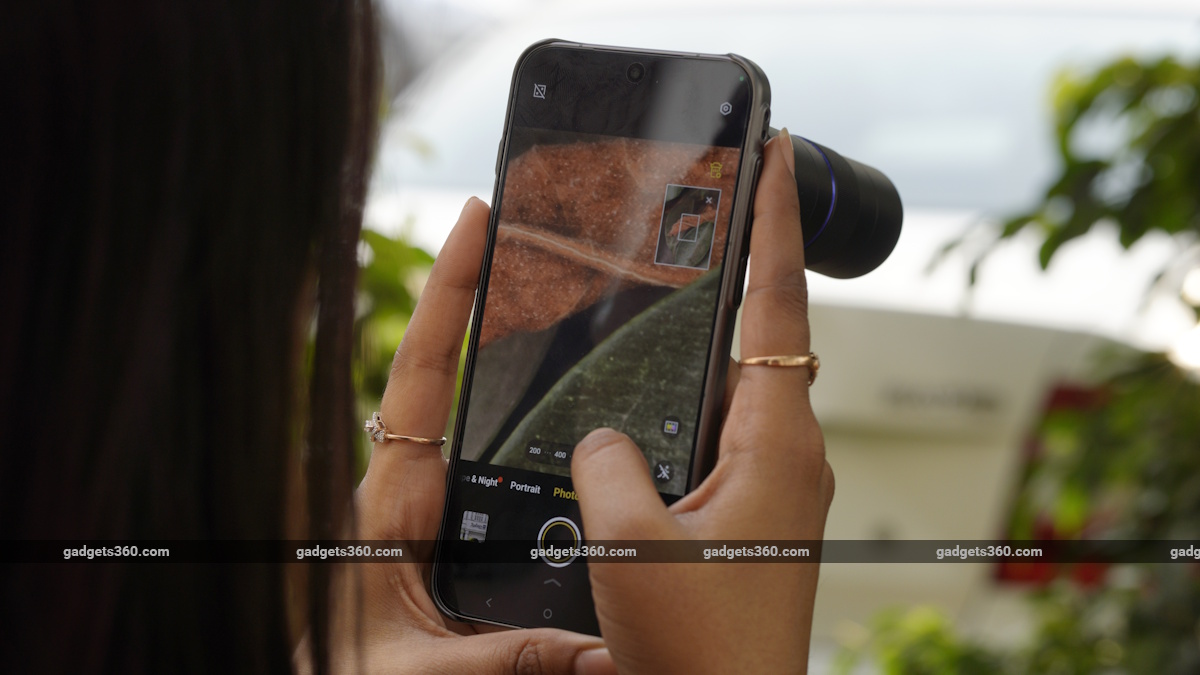
"If I had a wish for future generations of devices, it would be some kind of invisible marking in the images that gives you an indication of how strong AI was kicking in and improving the image so that you can decide on your own," he further added.
R&D and Matching Up to Vivo's Annual Update Cycle
Moving on to the R&D side of things, we wanted to understand how ZEISS match up to Vivo's speed of launching phones with camera upgrades every year.
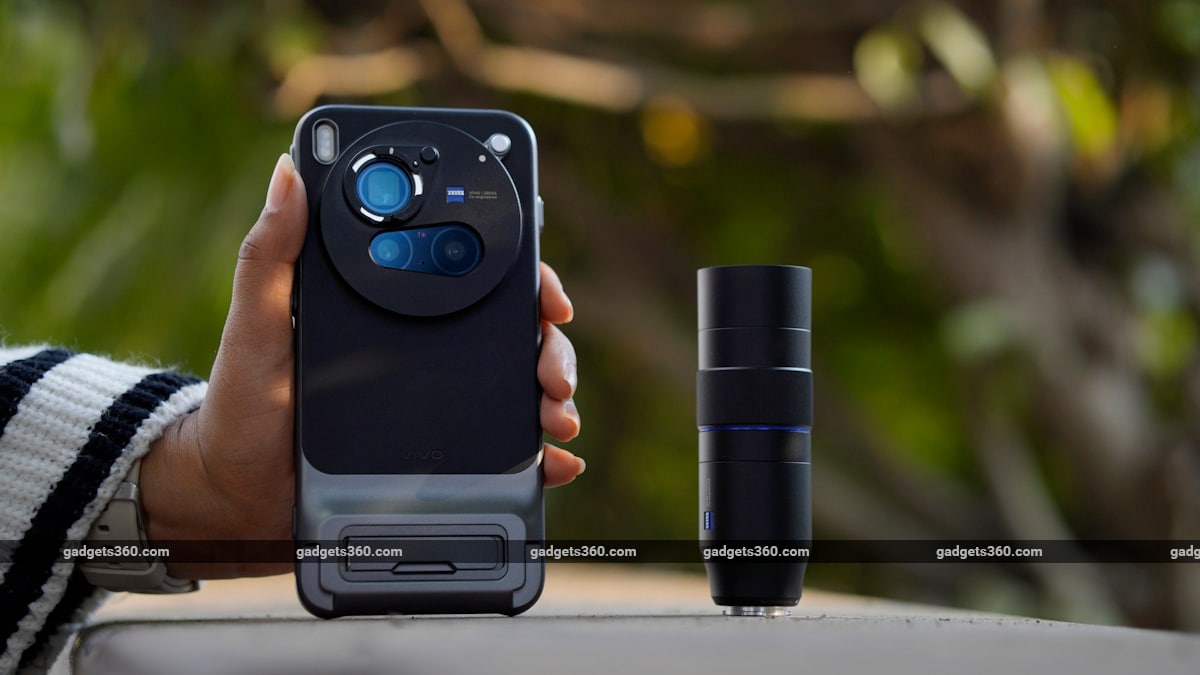
Oliver talked about short-cycle improvements focused on refining details such as coatings, mechanics, and minor design tweaks for the current 12-month product. For example, the X300's blue glass element is an example of an integrated, non-visible improvement.
"In parallel, there are many activities that are not for the current generation of the phone, maybe for the next generation, or some generation after the next generation. So, longer running development projects they can take and not may they take more than 12 months," he explained.
Talking about R&D, Oliver said, "For several years, we have been observing that the camera technology is quite material, so we are now in a way of hard work, improving the details, improving optics, design, mechanics, coatings, everything to make every generation better.
"In the early days of smartphones, the image quality, the overall image quality, was quite poor. So bringing a new technology in that phase was pretty easy because the bar wasn't very high, and now the bar is so high. And if you have a new technology, this new technology must meet this high bar, right from the start, and that is extremely hard," he added.
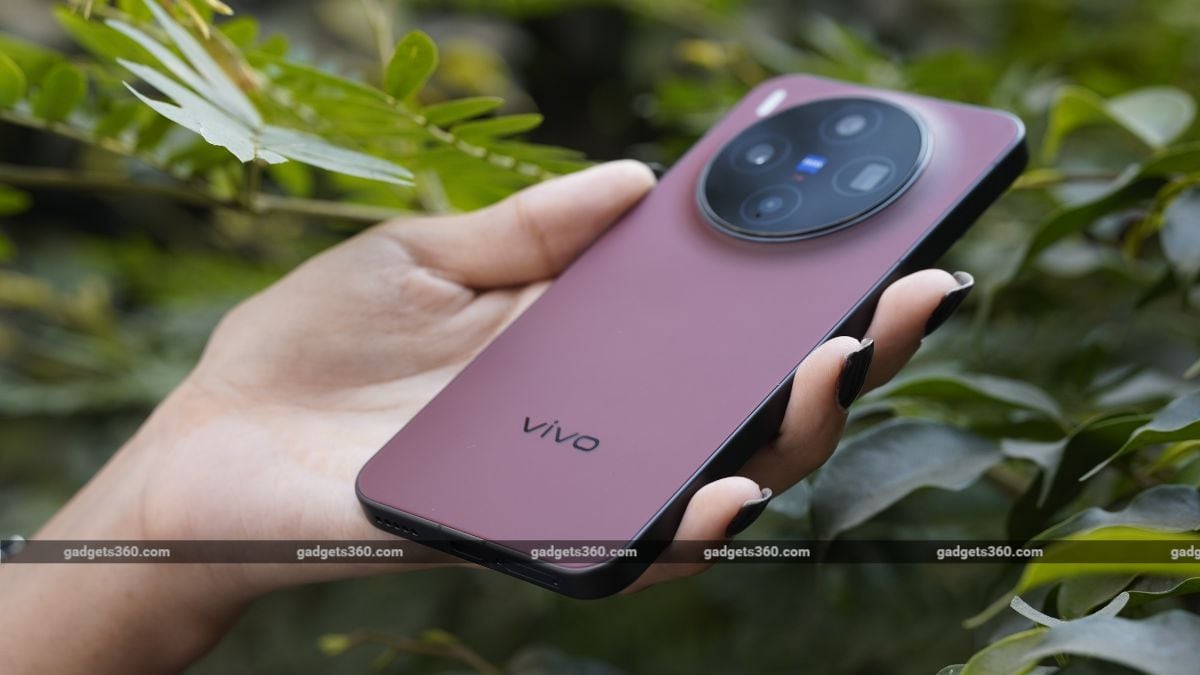
Adding a bit of nostalgia, Oliver said the longest development time he experienced at ZEISS was 10 years for a single lens.
On the Definition of "Pro"
We are about to enter 2026, and the definition of Pro has changed lately, with handset makers using this moniker more often than ever. On being asked whether it is just a marketing gimmick, Oliver explains, "Pro is not a long list of features. So in pro it stands for professional. And what is a professional? Looking for a professional who wants a reliable tool. It must be reliable."
He continues, "It must work in a very stable way, in a reliable way, colour rendition, all these things, and also we were talking earlier about professional modes, giving you giving you the control of the device, that these are the things that make a tool for me, a professional, too."
Oliver further stressed that companies like ZEISS and Vivo prioritise reliability, as it trumps features in flagship optics.
Both the Vivo X300 and X300 Pro went on sale in India last week. We have already reviewed both, and the X300 is a pocket camera champ, while the X300 Pro is for pro users who do not want to compromise on the camera.
- REVIEW
- KEY SPECS
- NEWS
- Good
- Compact and premium design
- Bright 8T LTPO AMOLED display
- Decent Battery Life
- Pro-grade cameras
- Top-notch performance
- Improved software experience
- Bad
- Speakers could have been better
- Overheating issue
Read detailed Vivo X300 review
Display 6.31-inch
Processor MediaTek Dimensity 9500
Front Camera 50-megapixel
Rear Camera 200-megapixel + 50-megapixel + 50-megapixel
RAM 12GB, 16GB
Storage 256GB, 512GB
Battery Capacity 6040mAh
OS Android 16
Resolution 1216x2640 pixels
- REVIEW
- KEY SPECS
- NEWS
- Good
- Solid and premium hand feel
- IP68 and IP69
- Excellent display
- Flagship-grade performance
- Fantastic camera setup with telephoto extender support
- Impressive battery performance
- Bad
- Phone gets hot while running games
- Single 512GB storage
- Speakers are not the best in class
- Expensive
Read detailed Vivo X300 Pro review
Display 6.78-inch
Processor MediaTek Dimensity 9500
Front Camera 50-megapixel
Rear Camera 50-megapixel + 200-megapixel + 50-megapixel
RAM 16GB
Storage 512GB
Battery Capacity 6510mAh
OS Android 16
Resolution 1260x2800 pixels
Comments
Get your daily dose of tech news, reviews, and insights, in under 80 characters on Gadgets 360 Turbo. Connect with fellow tech lovers on our Forum. Follow us on X, Facebook, WhatsApp, Threads and Google News for instant updates. Catch all the action on our YouTube channel.
Related Stories



Advertisement
Follow Us




-

05:20
Samsung Galaxy Watch Ultra 2 Review: Is This the Best Android Smartwatch? -
07:01
Samsung Galaxy Z Fold 8 Review: Is This the Best Foldable Phone? -
06:39
Samsung Galaxy Z Fold8 Ultra Review: Cameras, Battery, Performance Tested -
04:33
[Sponsored] JBL Live 780NC: Great Sound, Perfect Comfort, Smart ANC & 80-Hour Battery -
12:04
[Partner Content] OPPO Reno16 Series Deep Dive: Built for Creators?
-
iPhone Duo के लिए ₹3 लाख का बजट नहीं है? ये 4 सस्ते फोल्डेबल फोन देखिए
-
सोशल मीडिया में छाया 80s AI Photo Trend, आप भी आजमाएं ये 5 Prompts
-
Motorola के 7000mAh बैटरी वाले फोन पर ₹4,500 तक की बचत
-
Mivi One 5G सस्ता फोन भारत में आएगा तीन रंगों में, Android 16 सपोर्ट, 24 सितंबर को है लॉन्च
-
Vivo X Fold 6 के इंटरनेशनल मार्केट में लॉन्च की तैयारी, Geekbench पर हुई लिस्टिंग
Advertisement
Popular on Gadgets
- Samsung Galaxy S26 Ultra
- Motorola Razr Fold
- ChatGPT
- OPPO Find N6
- Mobiles Under Rs. 40,000
- Vivo X300 Ultra
- Asus Zenbook S14
- iQOO 15
- Vivo X300 Pro
- Lenovo Yoga Slim 7i Aura Edition
- iQOO 15R
- Vivo X Fold 5
- Sony PlayStation 5
- HP OmniPad 12
- OnePlus Nord CE 6 Lite
- OnePlus Pad 4
- OPPO F33 Pro 5G
- Cryptocurrency
- HP OmniBook Ultra 14 (2026)
- iPhone 17
- Eureka Forbes AP 355 Room Air Purifier
- Latest Mobile Phones
- Compare Phones
Latest Gadgets
- iPhone Duo
- OPPO A7 Pro
- Huawei Mate XT 2 Ultimate Design
- Realme 16 Pro Harry Potter Edition
- Samsung Galaxy A07s
- Huawei Pura X View
- Tecno Camon Slim 5G
- iQOO Z11xa
- Acer Aspire G 3D 16
- Acer Swift Air 16 (2026)
- Infinix Xpad 30 Pro
- Lenovo Yoga Tab Gen 2
- Apple Watch Ultra 4
- Apple Watch Series 12
- Haier M70 Mini LED 65-inch
- Xiaomi TV FX Mini LED 65
- Acer Predator Atlas 8
- Asus ROG Ally
- Blue Star 1.5 Ton 5 Star Inverter Split AC (IE518ZNURS)
- Blue Star 2 Ton 3 Star Inverter Window AC (WIE324L)

- About Us
- Sitemaps
- Feedback
- Archives
- Contact Us
- RSS
- Advertise
- Career
- Privacy Policy
- Ethics
- Editorial Policy
- Terms & Conditions
- Complaint Redressal
Download Our Apps
Available in Hindi
© Copyright Red Pixels Ventures Limited 2026. All rights reserved.